With UFC fight night wrapped at the White House, days of breakdown and cleanup begin

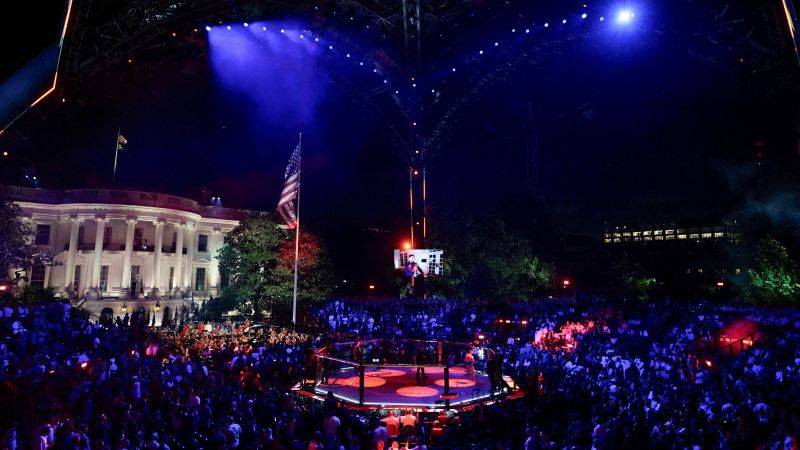
White House Prepares for Post-Fight Cleanup After UFC Event
With UFC fight night wrapped at – On the heels of a high-profile UFC fight night held at the White House, teams have begun dismantling the massive setup that transformed the South Lawn and Ellipse into a temporary event space. The evacuation of attendees from the premises marked the start of an extensive cleanup process, which is expected to span over a week. This operation, crucial for restoring the presidential estate to its usual state, includes the removal of all production elements and logistical components that were installed for the occasion.
Complex Demobilization Efforts
The breakdown of the event infrastructure has already commenced, with crews working around the clock to disassemble the structures that supported the fight night. A key part of this effort involves the dismantling of the “Claw” lighting system, which was a prominent feature of the event. While President Donald Trump had previously hinted at the possibility of keeping the Claw as a permanent fixture, its removal is now the immediate priority, signaling the end of its temporary role at the White House.
“The Claw will be disassembled immediately after the Event concludes. Plans are in place for demobilization to begin at 10:00am on June 15, 2026,” stated Joshua Fisher, the White House management and administration director, in a sworn declaration.
Fisher’s declaration, submitted as part of an unsuccessful lawsuit aiming to halt the event, underscores the meticulous planning required to execute such a large-scale gathering. The White House, which typically serves as a backdrop for formal diplomatic events, was converted into a bustling arena with seating for 4,000 spectators and advanced broadcast capabilities. Additionally, a fan festival on the Ellipse was designed to accommodate over 100,000 guests, creating a unique blend of sports and public engagement.
Logistical Scale and Planning
The scale of the setup was unprecedented, involving a year of strategic planning and weeks of intense preparation. The event, which coincided with Trump’s 80th birthday and the nation’s 250th anniversary, was a collaborative effort between the UFC and federal agencies. This partnership ensured that all aspects of the event, from security to infrastructure, were seamlessly integrated into the White House’s daily operations.
According to Fisher, the planning process was highly complex, requiring coordination across multiple public and private entities. The timeline for setup was tight, with security constraints adding to the challenge. Every day, between 20 and 30 trucks loaded with UFC equipment were inspected and deployed to the South Lawn. These trucks carried staging infrastructure, lighting systems, and other components essential to the event’s success. The coordination between the UFC and the Secret Service was particularly critical, ensuring that all installations met safety and operational standards.
Event Details and Presidential Presence
The fight night, hosted by Trump, was a highlight of the 250th-anniversary programming, drawing significant public and media attention. The president observed the matches from a cage-side seat on the South Lawn, positioned between First Lady Melania Trump and UFC CEO Dana White. This setup not only showcased the president’s personal involvement but also highlighted the event’s importance as a cultural and political spectacle.
Throughout the morning of June 15, the cleanup process advanced, with specific tasks outlined in the UFC’s detailed schedule. Security provisions, such as pedestrian barriers and anti-scale fencing, were among the first elements to be removed. Merchandise trailers, food and beverage units, and broadcast equipment were also scheduled for dismantling. The US Secret Service played a key role in deactivating magnetometers and dismantling tents around the security screening areas, ensuring that all temporary installations were efficiently taken down.
Timeline for Full Demobilization
The cleanup is a multi-day operation, with each phase carefully timed to minimize disruption. On Tuesday, restrooms were to be cleared, and camera towers began disassembly. Staging infrastructure and interior fencing would follow, with power systems and tents being dismantled as the week progressed. By Friday, the schedule indicated that the final stage of load-out would be completed, leaving the grounds largely restored.
On the following Monday, the removal of exterior fencing would be finalized, and dumpsters containing debris would be taken away. The process is expected to conclude by the end of June 23, when parking for White House staff—previously relocated to Pennsylvania Avenue—will be reopened. Concurrently, “turf remediation” will commence, addressing any damage to the lawns and ensuring the grounds are fully restored to their original condition.
Financial and Operational Costs
The UFC covered the majority of the event’s expenses, including the $60 million allocated for production, labor, construction, and promotional activities. However, the federal government provided critical support in the form of emergency equipment and services, such as first aid, law enforcement, and security operations. While the cost of these services to US taxpayers remains unspecified, their contribution was vital to the event’s smooth execution.
Coordination between the UFC and federal agencies was a defining aspect of the operation. The build-in process, which started on May 20, required not only logistical precision but also a large workforce. Over 700 to 900 subcontractors were employed, each specializing in distinct elements of the setup. From lighting systems to stage construction, every component was handled by teams with expertise in its respective field, reflecting the event’s complexity.
Legacy and Public Impact
Despite the temporary nature of the setup, the UFC event left a lasting impression on the White House and its visitors. The combination of sports and entertainment in a presidential setting created a unique atmosphere, drawing comparisons to major festivals. While some critics questioned the cost-effectiveness of hosting such an event, others viewed it as a successful way to engage the public and celebrate the nation’s bicentennial.
The decision to host the fight night at the White House was seen as a strategic move to align with the country’s historical milestones. For Trump, it was an opportunity to blend his personal interests with state functions, showcasing his ability to leverage the presidential platform for diverse events. The event also highlighted the versatility of the White House as a venue, capable of hosting everything from formal state dinners to high-energy sports spectacles.
As the cleanup progresses, the White House returns to its usual operations. The temporary alterations to the South Lawn and Ellipse will be fully reversed, with staff and visitors once again navigating the familiar spaces. The detailed schedule provided by the UFC offers a glimpse into the organized effort required to dismantle such a large-scale event, emphasizing the meticulous planning that ensured its success.
The incident also sparked discussions about the role of private entities in public events. While the UFC bore the primary financial burden, the federal government’s support was indispensable. This collaboration between the private sector and public institutions raises questions about the balance of responsibilities and the value of such partnerships in enhancing national celebrations.
With the event’s conclusion, the White House moves forward, ready to welcome new activities. The breakdown of the temporary setup serves as a reminder of the extensive preparations needed to transform the presidential residence into a multifunctional venue. As the final phases of dismantling unfold, the focus shifts to restoring the White House to its original state, ensuring that its legacy remains intact for future events.
From the initial setup to the final cleanup, the UFC fight night at the White House exemplifies the intersection of sports, politics, and public engagement. The event’s success is a testament to the dedication of all involved parties, and its completion marks the end of a complex and memorable chapter in the White House’s event history.