Why Zelensky insists it’s not personal with Trump — even though it is

Daftar Isi
Ukraine’s survival is becoming entangled with Washington’s political choices
Healfromzero.com – Volodymyr Zelensky is trying to prevent a difficult relationship with President Donald Trump from becoming the defining feature of Ukraine’s fight against Russia. But as US policy shifts in ways that appear increasingly favorable to Moscow, separating personal tension from strategic consequences is becoming far harder.
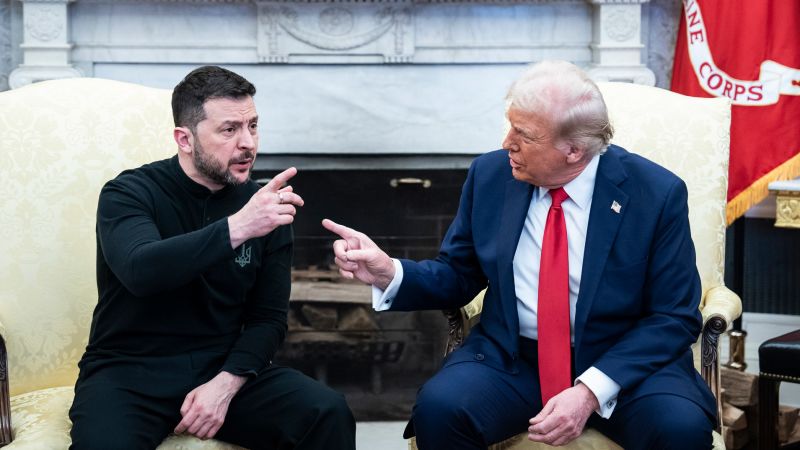
In an interview Thursday, Ukraine’s president stressed that he does not want the dispute framed as a clash of personalities. His country, however, faces decisions from Washington that could influence its ability to resist Russian attacks, protect civilians and pursue any future settlement from a position of strength.
“It’s not about personalities,” Zelensky said. “It’s not something personal between me and President Trump.”
That restraint reflects necessity as much as diplomacy. Zelensky needs to preserve working ties with the American president, who has the power to apply meaningful pressure on either side of the war. Ukraine cannot easily dismiss the United States, even while its leaders voice alarm over decisions that may offer Russia greater room to continue the conflict.
A changing balance in US policy
Trump has never concealed his dislike of Zelensky, whose actions became connected to Trump’s first impeachment despite the Ukrainian leader not being responsible for initiating it. The political history between the two men has continued to cast a shadow over a war whose stakes extend far beyond any personal rivalry.
Trump has also aligned himself with a Russian demand that Ukraine replace its president. That position adds to Kyiv’s concern that the United States is no longer treating Russia’s invasion and Ukraine’s defense as fundamentally different acts.
The broader question for Ukraine is increasingly stark: can it rely on American support while the White House appears more willing to accommodate Vladimir Putin’s preferences? Ukrainian officials must assess not only Russia’s military pressure but also whether decisions in Washington could weaken their leverage.
Trump’s approach is shaped by priorities that differ from those traditionally associated with US leadership against authoritarian aggression. His emphasis on personal influence, commercial arrangements and relationships with powerful leaders has repeatedly complicated efforts to build pressure on Russia.
A proposed diesel arrangement has raised particular concern in Kyiv because it could channel billions of dollars toward Russia’s economy and, ultimately, Putin’s war effort. The deal has emerged while Trump faces pressure to persuade midterm voters that he can reduce fuel costs. Zelensky argued that the economic benefit to Russia could directly prolong the fighting.
“It will only give much more money for Putin for this war. And that’s why I’m against it,” Zelensky said.
Ukraine has also faced pressure to limit strikes on Russian oil refineries, a tactic that has been among its more effective means of affecting Russia’s war infrastructure. Such attacks carry risks and can have broader economic effects, but Kyiv sees them as part of its effort to impose costs on the country waging the invasion.
Diplomacy without visible pressure on Moscow
For much of the past two years, Trump’s language on the war has often echoed elements of Russia’s position. More recently, the concern in Kyiv is that rhetoric is being followed by concrete actions. Trump invited Putin to the G20 summit and is weighing a meeting involving Putin and China’s Xi Jinping that could focus on ending the war without Ukraine present.
That prospect is troubling for Kyiv because any agreement affecting Ukraine’s territory, security or political future cannot be durable if Ukraine is excluded. A negotiation process built around great-power diplomacy may create the appearance of movement while leaving the country most affected by the war without a meaningful role.
At the same time, Trump has declined to provide Patriot missiles needed to counter Russia’s continuing air assault. Russia’s missile and drone campaigns have repeatedly targeted Ukrainian cities and civilian areas. Recent strikes hit civilian buses and killed a 1-year-old girl in a stroller, yet Trump did not publicly condemn those attacks.
Ukraine also says its military access to Elon Musk’s Starlink network remains disrupted. The limitations reportedly force Ukrainian drones to operate at lower speeds, reducing their effectiveness. It remains uncertain which part of the administration bears responsibility, though Trump has said he was not involved.
These developments matter because modern warfare is not decided solely by battlefield lines. Air defense systems can determine whether cities remain protected. Communications networks can affect reconnaissance, drone operations and coordination. Energy revenues can help sustain a war machine. Decisions in each area can alter the balance even without a formal declaration of policy change.
The limits of accommodation
The White House has defended some outreach to Moscow as a practical effort to secure the release of Stephen Hubbard, a US prisoner held in Russia. Trump justified his envoy Steve Witkoff’s praise of Putin in St. Petersburg, where Witkoff called the Russian leader a “humanitarian,” as part of that effort.
But for Ukraine, the image of an American envoy offering warm words to a leader accused of war crimes reinforced fears about moral and strategic compromise. Putin has continued to order deadly attacks while repeatedly undercutting claims that he is ready for a genuine peace.
The central weakness in the strategy is increasingly visible: offering concessions or incentives has not stopped the war. Russia has continued missile and drone attacks, while Ukraine is asked to consider limits on its own defensive options. That pattern risks rewarding the invading power while asking the invaded country to accept greater restraint.
Zelensky’s public posture remains deliberately measured. He did not seek a fresh confrontation with Trump, but he made clear that Ukraine cannot remain silent when its freedom is at stake. His remarks conveyed the exhaustion of a country enduring sustained violence while still refusing to accept a settlement that would validate Russian aggression.
“We will survive and we will stay strong,” Zelensky said. “We will do everything to bring peace closer. But we will not give (a) chance (to) Putin to win this war.”
The conflict is becoming more dangerous rather than less. Its eventual end will depend on whether Russia faces enough pressure to reconsider its objectives and whether Ukraine retains the means to defend itself. If neither condition is met, the war may continue to intensify, leaving civilians exposed and any diplomatic breakthrough increasingly difficult to achieve.
Related Reading
Frequently Asked Questions
What is Why Zelensky insists it s not personal?
Why Zelensky insists it s not personal is the main topic of this guide. The article explains the context, practical details, and next steps readers should understand.
Why does Why Zelensky insists it s not personal matter?
Why Zelensky insists it s not personal matters because readers are looking for a useful answer, not just a short summary. Good content should match search intent and help them decide what to do next.