
What’s in the ‘SAVE America Act’ and why is it so important to Donald Trump?
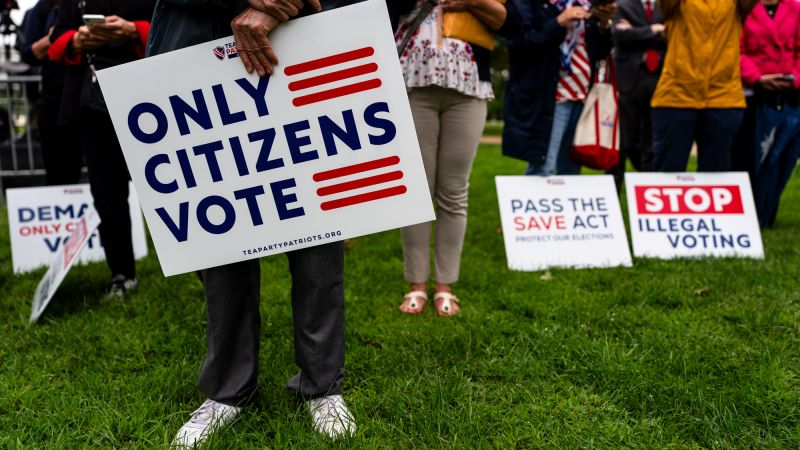
The Save America Act: Trump’s Electoral Overhaul Initiative
What s in the SAVE America – President Donald Trump has made the Save America Act a central focus of his political agenda, advocating for sweeping changes to voting procedures that he claims are essential to safeguarding the integrity of federal elections. The bill, which initially passed the House of Representatives in February, has already faced significant challenges in the Senate. However, Trump’s push to expand its provisions has only intensified the debate, creating even more obstacles for its passage. At the heart of the legislation are strict requirements for voter identification and proof of citizenship, measures that critics argue disproportionately affect certain groups while proponents insist are necessary to prevent fraud.
Key to the bill’s current iteration is the mandate for voters to provide documentation verifying their citizenship. This includes options such as birth certificates, U.S. passports, or naturalization certificates. While the requirement is straightforward in theory, its practical implementation raises concerns. For example, individuals who change their names after marriage—often due to cultural or personal reasons—would still need to present additional documentation to clarify discrepancies. This detail, though minor, highlights the complexity of the bill’s design and the potential for bureaucratic hurdles.
Supporters of the Save America Act argue that these measures are a necessary step toward modernizing the voting process. Jason Snead, a leading advocate for the bill and head of the Honest Elections Project, emphasized that the majority of voters already register in person through the Department of Motor Vehicles (DMV). He claimed that requiring in-person verification would not impose an undue burden, as it aligns with existing practices. Yet, opponents point out that millions of eligible voters lack easy access to the required documents, particularly in states with limited resources or rural populations.
“Voters who register online or by mail are now forced to take an extra step—visiting their local election office to prove their citizenship. This creates a barrier for those who rely on remote methods, especially in the lead-up to elections,” noted a political analyst in a recent commentary.
The bill also targets the widespread use of no-excuse mail voting, a practice that has been a cornerstone of voter accessibility in recent years. By eliminating this option, the Save America Act aims to reduce the potential for ballot mismanagement, but critics argue it could suppress turnout among working-class and minority voters who often rely on mail-in ballots due to scheduling constraints. Additionally, the legislation includes provisions that specifically address transgender policies, a move that has been described as a strategic effort to align with the Republican Party’s culture war priorities.
Trump’s insistence on incorporating these controversial measures has sparked tension within his own party. While the original House version of the bill focused on enhancing voter ID requirements, the president has now pushed for broader reforms, including changes to the timeline for implementation. A last-minute adjustment to the legislation, made in February, ensures that the new requirements take effect immediately upon enactment, rather than being phased in over time. This accelerated timeline has drawn criticism from lawmakers who fear it could disrupt the upcoming midterm elections.
On Wednesday, Trump demonstrated his commitment to the bill by canceling the scheduled signing of a bipartisan housing agreement. Instead, he demanded that lawmakers prioritize the Save America Act, signaling a willingness to forgo short-term compromises for long-term ideological goals. This abrupt shift underscores the importance the president places on the legislation, even as it strains relations with moderate Republicans and risks alienating voters who support easier access to the ballot box.
Voter ID Mandates and Citizenship Requirements
The Save America Act’s most contentious provision is its requirement for voters to present valid photo identification at the polls. This includes state-issued driver’s licenses, U.S. passports, and IDs for military and tribal members. However, the bill excludes school-issued identification cards from its list of acceptable forms, a decision that has drawn sharp criticism. Critics argue that this omission unfairly targets younger voters, who may not have access to the more traditional forms of ID.
For voters who opt for mail-in ballots, the requirements extend to both the request and submission stages. They must provide copies of their ID documents during the initial ballot application and again when returning the vote. While exceptions are made for certain groups, such as elderly or disabled individuals, the overall effect is a more cumbersome process for many. This has raised questions about the bill’s feasibility in a country where nearly 40% of registered voters do not have a government-issued photo ID.
Impact on Voter Registration Processes
The bill’s requirement for in-person verification has transformed the traditional voter registration process. Previously, individuals could register by mail or online, relying on attested citizenship statements. Under the Save America Act, those who use remote methods must still visit their local election office to confirm their identity and citizenship. This change, while intended to bolster accountability, has led to concerns about reduced participation, particularly in areas with limited access to polling locations.
According to the Brennan Center for Justice, a left-leaning research organization, over 21 million eligible voters lack the necessary documents to meet the new criteria. This includes individuals who may not have a passport or birth certificate on hand, such as those who have recently moved or are in transition. While the legislation is framed as a correction to existing gaps in election administration, some argue it could exacerbate disparities in voting access, especially for low-income and minority communities.
Photo Identification Standards
Although the Save America Act does not impose a nationwide voter ID requirement, it expands the definition of acceptable identification. The bill accepts state-issued licenses, passports, and IDs for military and tribal members, but excludes school-issued cards. This decision has sparked debates about the fairness of the requirements, with critics pointing to the exclusion of student IDs as a way to marginalize younger demographics. Supporters, however, maintain that these documents are sufficient for verifying identity, as they are widely recognized and used in other contexts.
Despite the bipartisan support for the idea of verifying voter identity, the implementation details have become a point of contention. For example, the requirement to submit ID copies when requesting and returning mail ballots adds logistical challenges. Some voters may struggle to obtain and retain these documents, particularly if they are frequently moving or have limited access to government services. This has led to calls for more flexible alternatives, such as accepting multiple forms of ID or allowing for temporary verification methods.
Controversies and Criticisms
Critics of the Save America Act argue that its provisions are more about political control than electoral integrity. They point to documented cases of voter fraud, noting that such incidents are exceedingly rare. The Heritage Foundation, a right-leaning think tank, has compiled data showing fewer than 100 confirmed instances of noncitizens voting improperly between 2000 and 2025. These statistics are used to defend the bill’s strict requirements, but opponents contend that the risk of fraud is minimal compared to the barriers the legislation creates for eligible voters.
Proponents, on the other hand, frame the act as a necessary response to growing concerns about election security. They argue that the current system is vulnerable to errors and that the new mandates would ensure only qualified individuals cast ballots. However, the debate over the act’s scope highlights the broader ideological divide in the U.S. political landscape. While Trump and his allies see it as a safeguard against fraud, critics view it as a tool to suppress votes and entrench conservative influence in the electoral process.
As the Senate debates the bill’s fate, the Save America Act remains a symbol of Trump’s efforts to reshape the voting landscape. Whether it becomes law or is modified to gain broader support, its impact on this year’s midterms is likely to be profound. With the president’s influence growing, the legislation’s final shape may determine the balance between voter access and election security in the years to come.