
US aircraft carrier returns home after record deployment that included Iran war, Maduro capture
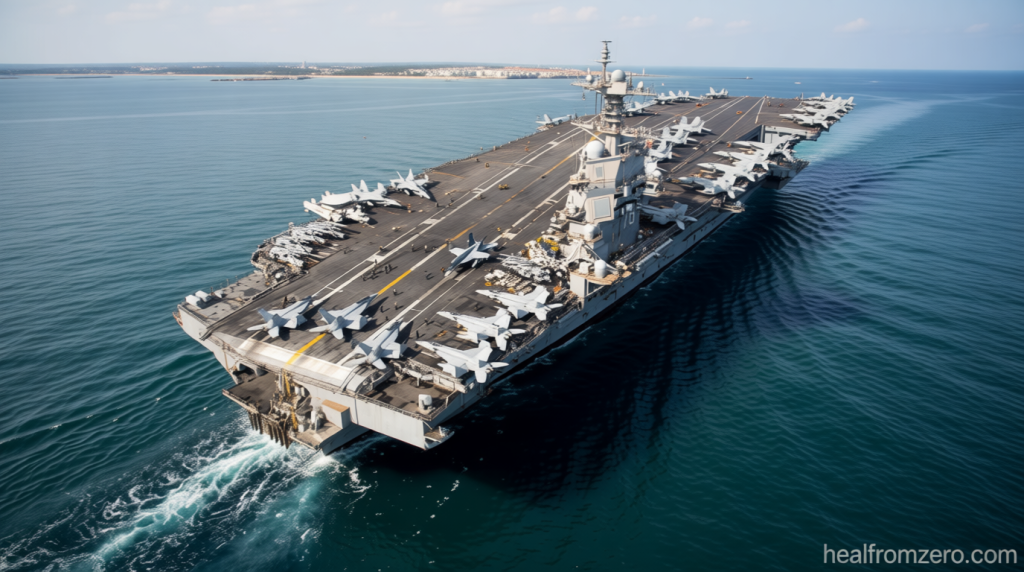
US Aircraft Carrier Returns After Record Deployment Highlighting Global Missions
US aircraft carrier returns home after – The USS Gerald R. Ford, the United States’ most advanced and largest aircraft carrier, docked in Virginia’s port on Saturday after a deployment that spanned almost a full year. This extended voyage, which included participation in the Iran conflict, the operation leading to the capture of former Venezuelan leader Nicolás Maduro, a shipboard fire, and recurring technical issues with its onboard systems, marks the longest continuous operational period for a carrier since the conclusion of the Vietnam War. The ship’s journey has been a central element of President Donald Trump’s military strategy in recent years, serving as a mobile base for a series of high-profile international operations.
A Deployment of Historic Proportions
The Ford’s deployment has been unprecedented in duration, lasting 11 months—a period longer than the standard seven-month window for such vessels. Defense Secretary Pete Hegseth praised the efforts of the crew during the ship’s return, stating, “What the Ford Carrier Strike Group did, and these destroyers did, was exceptional, phenomenal.” The extended time at sea tested the ship’s endurance and the resilience of its personnel, who faced a combination of operational demands and logistical challenges.
Key Missions and Operational Struggles
Among the highlights of the deployment was the involvement in the capture of Maduro, a mission that required the carrier’s aircraft to conduct critical strikes in the Caribbean. The Ford also played a pivotal role in the ongoing US conflict with Iran, providing a strategic platform for sustained air operations. However, the journey was not without its trials. In March, a fire erupted in the laundry area, which the crew took nearly 30 hours to extinguish, clean, and prevent from reoccurring. The incident disrupted daily routines for 600 sailors, leaving them without access to bunks for a period and forcing the ship to delay its schedule.
Compounding these issues were repeated problems with the ship’s plumbing system, which led to intermittent partial outages. These challenges required the Ford to make unscheduled port calls for repairs, adding to the complexity of its mission. Despite its cutting-edge technology, the vessel’s extended time at sea raised concerns among families of the sailors, who endured the strain of prolonged separation. Amini Osias, whose daughter served as an aviation electrician on the Ford, noted, “Families still had those doubts that something can happen.”
The Human Toll of Extended Service
For the families of the sailors, the return of the Ford represented both relief and a sense of closure. Victoria Dobson, who joined her husband in Norfolk to greet him upon his arrival, shared her emotions with CNN’s Brian Todd. “I’m very excited, I’m very relieved,” she said, recounting the difficulties of single parenting during the deployment. Her 2-year-old daughter, who was a baby when he left, now stands taller, marking the passage of time and the emotional burden of raising a child without a parent’s constant presence.
Dobson’s story is emblematic of the sacrifices made by families throughout the mission. Many had to navigate transitions such as adapting to new household routines, from switching from baby bottles to adult-sized utensils. “The most difficult part was definitely the single parenting,” she explained. “When he left, she was a baby, and now she’s a big girl.” These personal accounts underscore the impact of the Ford’s long deployment on both the crew and their loved ones.
Technical Challenges and Strategic Value
Adm. Daryl Caudle, the ship’s commander, acknowledged the difficulties of the prolonged deployment, emphasizing that he aims to avoid setting a precedent for future missions. While the Ford was initially designed for a seven-month operational window, its 11-month stay pushed the limits of its capabilities. Caudle cited a “once-in-a-lifetime confluence of events” as the reason for the extended time, including the demands of the Iran war and the Maduro operation. However, he stressed that the goal remains to operate within the ship’s intended timeframe.
Despite these hurdles, the Ford’s advanced technology has proven invaluable. Its electronic catapult system allows for the launch of everything from small drones to large fighter jets, offering commanders a versatile range of firepower options. This capability, highlighted by Brent Sadler, a 26-year Navy veteran and former submarine officer, has made the ship a key asset in recent military actions. “The Ford’s system gives a commander an array of options,” Sadler remarked, adding that other carriers lack this flexibility.
A Journey Across Continents and Conflicts
The Ford’s deployment began in June of last year, when it departed from Virginia to traverse the Atlantic. Its route initially took it to the Mediterranean and Norway as part of a planned rotation, but the mission quickly shifted to the Caribbean in January to support the operation targeting Maduro. Afterward, the ship was called back to the Middle East to assist in the Iran conflict, showcasing its adaptability in responding to evolving geopolitical situations. The return to the Atlantic this month marked the final leg of its journey, bringing it home after a series of high-stakes missions.
The ship’s ability to pivot between theaters of operation highlights its strategic importance. From the Caribbean to the Mediterranean, and now back to the Atlantic, the Ford has demonstrated its role as a versatile asset in the US military’s global reach. Its presence in these regions has underscored the administration’s focus on projecting power and maintaining a strong naval presence, even in the face of unexpected challenges.
Legacy and Future Implications
The Ford’s deployment has left a lasting impression on both military and civilian stakeholders. While its technical capabilities have been crucial in recent operations, the challenges it faced during the mission have sparked discussions about the need for improved maintenance systems and support structures. Amini Osias, reflecting on his daughter’s experience, expressed hope that the return to normalcy would allow families to find stability. “Now I can actually relax and breathe and go back to a normal sleeping pattern,” he said, anticipating time spent with his daughter sharing stories of their time at sea.
As the Ford docks in Norfolk, the event serves as a reminder of the complexities of modern naval operations. The ship’s record-breaking deployment has not only tested its systems but also the dedication of its crew and their families. While the mission’s success is evident in its participation in significant events, the lessons learned will likely shape future deployments. The Ford’s journey is a testament to the evolving role of aircraft carriers in today’s global conflicts, blending technological innovation with the human element of service and sacrifice.
This story was updated with additional information. CNN’s Brian Todd and Dugald McConnell contributed to this report.