
Kennedy, balancing MAHA and White House, says he won’t run for president in 2028
Kennedy, balancing MAHA and White House, says he won’t run for president in 2028
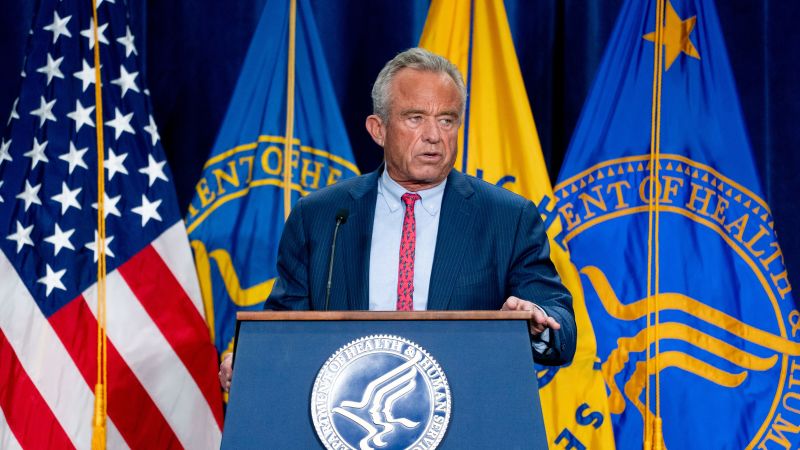
Kennedy balancing MAHA and White House – Robert F. Kennedy Jr., currently serving as the Secretary of Health and Human Services, faces a complex political landscape. His Make America Healthy Again (MAHA) supporters are pushing for more aggressive measures to limit vaccine mandates, while the White House seeks to counter the declining popularity of former President Donald Trump. This tension has become apparent during recent public appearances, where Kennedy’s advocacy for parental autonomy in vaccination choices has sparked divided reactions among audiences.
During a recent event at the Cleveland City Club, Kennedy addressed a mixed crowd of citizens as part of his ongoing tour of northern Ohio. The room buzzed with chants from protesters aligned with MAHA, reflecting the movement’s growing influence. When Kennedy emphasized the importance of individual choice in vaccinating children, half the audience responded with approval, clapping in agreement. The other half, however, showed signs of frustration, with some sighing and others expressing discontent. This split highlights the challenges Kennedy faces in maintaining a delicate balance between his ideological base and the broader political goals of the White House.
Kennedy’s itinerary is set to expand as he prepares to campaign for Republican lawmakers in key battleground states. His role in these efforts is to strengthen support for candidates in upcoming midterm elections, a strategy that underscores the mounting pressure he experiences to align with GOP priorities. Yet, his presence in these events also signals the growing rift between his anti-vaccine agenda and the administration’s push to address public health concerns in a more conventional manner. The White House has increasingly sought to redirect Kennedy’s focus away from vaccine-related policies, a move that has drawn criticism from some within the MAHA movement.
The division between Kennedy’s anti-vaccine activism and the White House’s approach is deepening. According to David Mansdoerfer, a former deputy assistant secretary for health under the first Trump administration, Kennedy’s departure from the Department of Health and Human Services could significantly weaken the movement’s impact. “If he isn’t secretary, then MAHA’s influence will severely diminish,” Mansdoerfer remarked. Meanwhile, Christopher Bosso, a political science professor at Northeastern University, noted that Kennedy’s decision to remain in his current post is a calculated move. “Kennedy is being a good soldier, but to what extent? That is going to be a question,” Bosso added.
Recent actions by the Trump administration have further fueled tensions within the MAHA community. In April, President Trump nominated Erica Schwartz, a doctor and vaccine advocate, to lead the Centers for Disease Control and Prevention (CDC). This appointment followed the dismissal of Susan Monarez, the agency’s former director, who claimed she was replaced for not preapproving vaccine recommendations. Kennedy, who had previously criticized Monarez’s tenure, now supports Schwartz, though he stated that he did not consult with Trump on her nomination. This shift has left some MAHA adherents feeling betrayed, arguing that the White House is stifling the movement’s progress by promoting more mainstream medical policies.
“Trump’s pick to head the CDC, Erica Schwartz, would likely be a disaster,” said Aaron Siri, a lawyer and Kennedy ally. “Her support for the vaccine rollout undermines the core principles of MAHA, which champions medical freedom and skepticism toward government mandates.”
Meanwhile, the administration’s withdrawal of Casey Means’ nomination for U.S. surgeon general has also drawn ire from MAHA supporters. Means, a wellness influencer and Kennedy ally, had faced pushback from certain Republican senators for questioning contraception methods and rejecting the debunked link between vaccines and autism. Her removal, along with Schwartz’s appointment, has been seen as a step toward a more conventional healthcare approach, which critics argue contradicts the movement’s radical goals.
Kennedy’s stance on his presidential ambitions remains firm. When asked by KFF Health News on May 7 whether he envisions a future run for the presidency as a Republican, he replied decisively: “I’m not running.” He dismissed claims that the White House has restricted his work, asserting that Trump has allowed him greater flexibility than any prior health secretary. “President Trump has let me do more than any HHS secretary in history,” Kennedy said. This statement suggests he sees his current role as a platform for advancing his health agenda, even as the administration shifts its priorities.
However, the potential for a 2028 presidential bid by Kennedy is still a topic of discussion. Some within the MAHA movement hope he will announce his candidacy, believing it could galvanize the movement further. Others, though, argue that his decision to stay in his position demonstrates a commitment to working within the existing framework. The administration’s efforts to distance itself from Kennedy’s anti-vaccine rhetoric, while simultaneously appointing figures like Schwartz and Saphier, have created a scenario where his political survival may depend on navigating these conflicting demands.
As the midterms approach, Kennedy’s strategy of endorsing Republican candidates appears to be a way of maintaining relevance while avoiding a direct confrontation with Trump. Yet, his continued presence in the political arena could also signal a broader realignment. If he remains in his role, the White House may retain his support for its health initiatives, even as he faces criticism from those within his own movement. The 2028 presidential race remains a pivotal moment for Kennedy, one that could either solidify his position as a key figure in the GOP or deepen the rift between his ideals and the administration’s objectives.