Trump’s 75-country immigrant visa ban struck down by judge

Daftar Isi
Federal Judge Voids Sweeping Visa Freeze Targeting 75 Nations
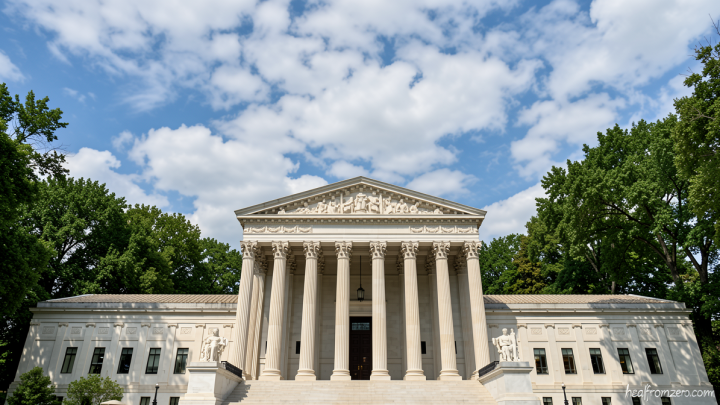
Healfromzero.com – A Manhattan federal court has invalidated the Trump administration’s blanket suspension of immigrant visa processing for citizens of 75 countries, declaring the policy “contrary to law” and beyond the statutory authority of Secretary of State Marco Rubio. The decision, handed down on Friday by Judge Jeannette Vargas of the U.S. District Court for the Southern District of New York, represents a significant legal check on the administration’s aggressive immigration enforcement agenda and leaves thousands of pending family reunification and employment petitions in limbo.
The ruling arrives amid a broader pattern of judicial pushback against executive immigration actions, and it underscores a recurring tension between the White House’s desire for categorical, country-level controls and the granular, individualized review that federal immigration statutes have long required of consular officers.
What the Ban Did and Who It Targeted
In January, the State Department effectively froze the issuance of immigrant visas for nationals of roughly 40 percent of all countries in the world. The affected roster included Brazil, Colombia, Egypt, Haiti, Somalia, and Russia, among others. Officials justified the freeze by arguing it would keep out applicants likely to “take welfare and public benefits” once settled in the United States.
The geographic spread of the targeted nations was striking. Most of the 75 countries sit outside Europe, spanning the Caribbean, sub-Saharan Africa, the Balkans, the Middle East, Central Asia, and Southeast Asia. Several long-standing U.S. partners appeared on the list, including Jordan, Egypt, and Georgia. The State Department compiled the roster using data from the Council of Economic Advisers, singling out nations where more than 30 percent of immigrant households received some form of public assistance.
The freeze applied exclusively to permanent-residence visas — the category covering family-sponsored petitions and employment-based petitions. Nonimmigrant categories such as tourist, student, and temporary business visas were untouched.
The Legal Core of the Decision
At the heart of the case lay a straightforward statutory question: under existing immigration law, an applicant may be denied a visa as a prospective “public charge” — defined as someone expected to depend on government support — only after a consular officer conducts an individualized assessment weighing that person’s finances, age, health, skills, and family circumstances. The statute does not permit a categorical, nationality-based refusal.
Vargas found that, in practice, U.S. officers had been instructed to deny visas to applicants from the listed countries regardless of their personal circumstances, even when the applicant could clearly support himself or herself. A cable dispatched by Rubio to every diplomatic and consular post worldwide, entered into the case record, directed officers to refuse applicants even when the individual “provides additional evidence that demonstrates he or she overcomes the public charge refusal.”
“The outcome is predetermined,” Vargas wrote. “The visa will be refused.”
The judge held that the policy violated two distinct statutory provisions. First, it ran afoul of a 1965 law that bars discrimination by nationality in the granting of visas. Second, it contravened a separate provision that strips the secretary of state of any authority to dictate how consular officers adjudicate individual visa cases. In Vargas’s view, Rubio’s cable converted a case-by-case judgment into a mechanical, nationality-triggered denial — a transformation the statute does not authorize.
Importantly, the ruling did not sweep away every denial issued under the ban’s shadow. Where an officer cited additional, independent legal grounds for refusal alongside the country-based policy, those denials remain intact. The precise number of reversals that will follow therefore remains uncertain.
Plaintiffs and Real-World Consequences
The case was brought by a coalition of directly affected individuals. Six U.S. citizens had filed family-based petitions seeking to bring relatives from Ghana, Jamaica, Guatemala, and Ethiopia into the country; the ban blocked those visas. Five Colombian nationals who had applied through employment-based visa categories were also plaintiffs, one of whom received a formal denial notice that explicitly cited the country-level policy as its basis.
For the families involved, the freeze meant years of separation extended indefinitely — parents unable to join adult children, spouses stranded abroad, and workers barred from accepting jobs they had already secured. The ruling restores the individualized review process for those pending petitions, though the administration retains the option to appeal.
The Administration’s Defense and a Narrow Win
In defending the policy, the administration’s legal team anchored its argument to a 2018 Supreme Court decision that upheld the third iteration of Trump’s first-term travel ban, which had barred entry by nationals of several countries, most of them majority-Muslim. The administration contended that the same broad executive discretion applied here.
Vargas distinguished the two situations sharply. The travel-ban case turned on the president’s constitutional power to decide who may physically enter the country at the border. The visa-ban question, by contrast, concerned whether a visa may be issued at all — a determination governed by statute and assigned to consular officers, not to the secretary of state by fiat.
The administration did prevail on one narrower procedural point. Vargas agreed that the policy did not constitute the kind of formal rulemaking that must be opened to public comment before implementation, meaning the State Department was not required to publish a notice-and-comment process before rolling out the freeze.
What Comes Next
Vargas, a Biden-era appointee, ordered both sides to submit proposals by September 11 outlining how to resolve whatever residual issues remain in the case. The administration has signaled its intention to appeal the ruling, which would carry the dispute to the Second Circuit Court of Appeals and, potentially, back to the Supreme Court.
The decision lands at a moment when the administration’s immigration enforcement apparatus is operating at full throttle across multiple fronts — asylum processing, interior enforcement, and border operations. A judicial invalidation of a policy that touched nearly two-fifths of the world’s nations adds another layer of legal uncertainty for consular posts, petitioners, and employers alike, and it reinforces the principle that categorical nationality-based exclusions remain outside the scope of authority Congress has granted to the executive in the visa-issuance context.
Related Reading
Frequently Asked Questions
What is Trump s 75 country immigrant visa?
Trump s 75 country immigrant visa is the main topic of this guide. The article explains the context, practical details, and next steps readers should understand.
Why does Trump s 75 country immigrant visa matter?
Trump s 75 country immigrant visa matters because readers are looking for a useful answer, not just a short summary. Good content should match search intent and help them decide what to do next.