
Trump posts new image of $100 bill with his signature
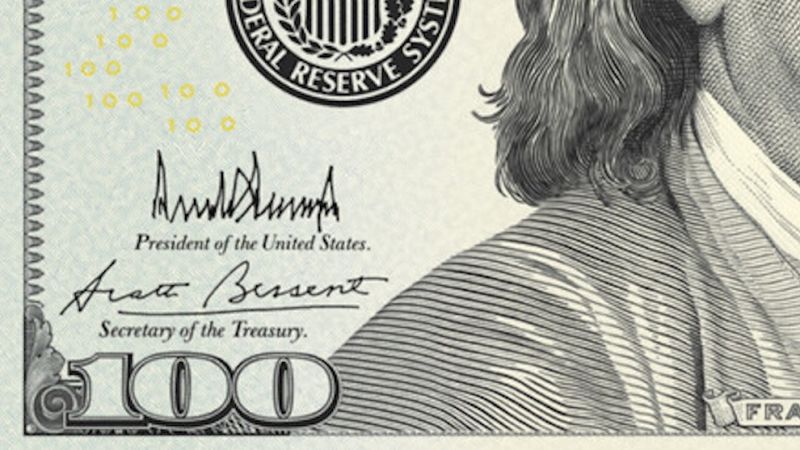
Trump Shares Image of $100 Bill Featuring His Signature
Trump posts new image of 100 bill – President Donald Trump released a fresh photograph of a $100 bill adorned with his signature on Friday, marking a new milestone in his ongoing campaign to have his name and image permanently etched into American iconography. This move follows the Treasury Department’s decision earlier this year to feature a sitting president’s signature on U.S. paper currency for the first time. The initiative, announced in March, was tied to the 250th anniversary of the United States, aiming to honor the nation’s founding by showcasing its current leader in a historic context.
The Treasury Department’s Initiative
Scott Bessent, the Treasury Secretary, revealed in March that the administration would include Trump’s signature on the $100 bill as part of commemorating the 250th anniversary of American independence. This change altered the traditional layout of the bill, which had previously displayed the signatures of the Treasury secretary and the treasurer of the United States, but not the president. The inclusion of a sitting leader’s mark on currency represents a significant departure from past practices, raising questions about the symbolism and purpose of such a feature.
“The President’s mark on history as the architect of America’s Golden Age economic revival is undeniable. Printing his signature on the American currency is not only appropriate, but also well deserved,” stated Brandon Beach, the U.S. Treasurer, during the March announcement.
Beach’s remarks emphasized the importance of recognizing Trump’s contributions to the nation’s economic growth, framing the signature as a tribute to his legacy. However, the Treasury’s decision has sparked debate, with some critics arguing that the move could blur the lines between political recognition and monetary neutrality. Despite this, the administration has proceeded with the design, ensuring that Trump’s signature appears prominently on the bill.
Trump’s Broader Efforts
Trump’s push to immortalize his presence on U.S. documents and landmarks has been a consistent theme throughout his presidency. In addition to the $100 bill, his administration has integrated his likeness and name into various initiatives, such as commemorative passports, national parks passes, and banners outside government agencies in Washington, D.C. Cultural institutions like the U.S. Institute of Peace have also been adorned with his image, reflecting a widespread effort to cement his identity as a national figure.
Florida’s decision to rename the Palm Beach International Airport after him further underscores the president’s influence beyond federal policies. These actions have not only been a personal ambition for Trump but have also served as a means to reinforce his narrative of leadership and legacy. His team has consistently framed these projects as a way to honor his achievements and connect with the American public on a more personal level.
Congressional Push for a New Currency Design
While the $100 bill with Trump’s signature is now a reality, some lawmakers have sought to go even further by proposing a $250 bill that would feature his portrait. This idea, introduced by a congressional bill, aims to create a new denomination specifically for the 250th anniversary of the United States. However, the likelihood of this bill passing remains uncertain, as it would require bipartisan support, particularly from Democratic senators who have historically been more cautious about politicizing currency.
Although the $250 bill is not yet in production, the Bureau of Engraving and Printing had already begun working on prototypes earlier this year. These designs incorporated Trump’s portrait and signature, showcasing the potential for a more expansive commemorative series. Treasury officials, including Bessent, have expressed confidence in the current approach, stating that there is no issue with featuring a living president on currency. Bessent, speaking at a White House press briefing in May, noted that the process would involve political appointees, but the team was prepared to handle any challenges that arose.
Legal Considerations and Future Prospects
The inclusion of a sitting president on U.S. currency is not without its legal implications. According to the U.S. code, only the portraits of deceased individuals are traditionally allowed on currency and securities. However, the House bill proposed to amend this rule, creating an exception for former presidents. This provision, if passed, would enable the Treasury to include living leaders on bills, a step that could set a precedent for future administrations.
Bessent’s comments during the May briefing highlighted the administration’s readiness to implement the change. “There’s nothing untoward about having the President of the United States on the 250th anniversary bill,” he said, addressing concerns about the political nature of the design. While the $250 bill may not materialize due to its reliance on Democratic support, the $100 bill’s success could pave the way for more widespread recognition of presidential figures on currency. The Treasury’s actions have already demonstrated a willingness to embrace innovation, even as they navigate the delicate balance between historical tradition and modern political symbolism.
Trump’s signature on the $100 bill has been met with mixed reactions. Supporters view it as a deserved tribute to his leadership, particularly during a period of economic growth and policy changes. Critics, however, argue that the move could compromise the impartiality of currency, turning it into a platform for political messaging. Nevertheless, the Treasury has proceeded with the design, signaling that the president’s image will continue to be a central part of the nation’s commemorative efforts.
As the U.S. continues to mark its 250th anniversary, the decision to feature Trump’s signature on the $100 bill reflects a broader trend of integrating political figures into national identity. This trend has been further amplified by the administration’s diverse array of projects, which collectively aim to solidify Trump’s place in the public consciousness. While the legal framework for the $250 bill remains in flux, the current design serves as a testament to the ongoing efforts to honor the president’s contributions through tangible, symbolic gestures.
The success of the $100 bill could influence future debates about the use of living leaders on currency. With the Treasury Department’s backing and the administration’s commitment to the project, the new design is likely to be widely circulated, ensuring that Trump’s signature becomes a familiar feature on the nation’s most common currency. This development may also encourage other presidents to pursue similar initiatives, as the precedent set by Trump’s inclusion opens the door for future commemorations of leadership in the United States.