
Trump again tries to curb birthright citizenship and ‘birth tourism’ through executive action
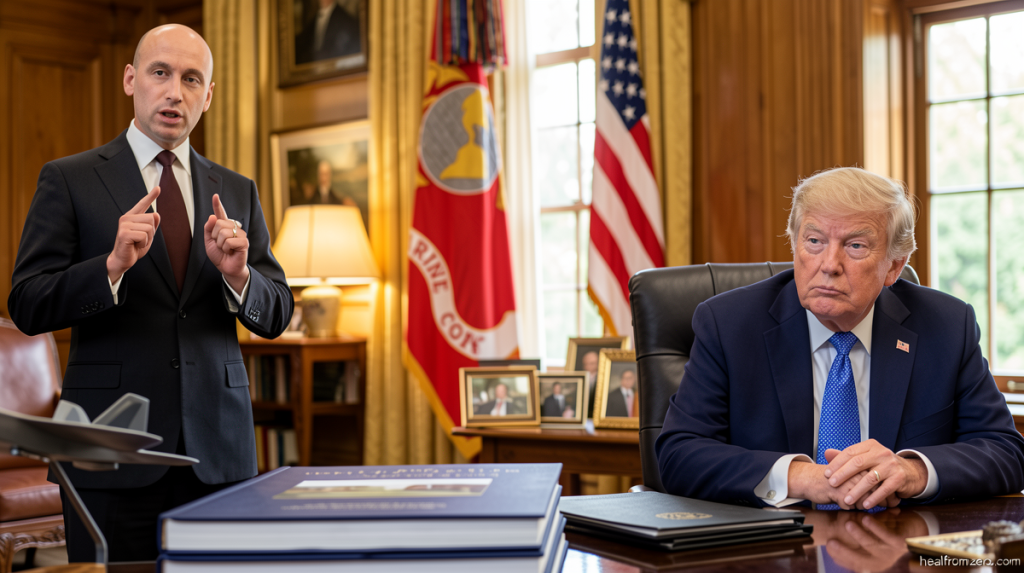
Trump Launches New Initiative to Restrict Birthright Citizenship Following Supreme Court Rejection
Healfromzero.com – President Donald Trump has initiated a fresh campaign to narrow the scope of birthright citizenship and curb what he characterizes as “birth tourism,” responding to a significant judicial setback earlier this year. The president signed two executive orders on Thursday that aim to tighten existing regulations and reduce recognized exceptions to the longstanding principle that children born on U.S. soil automatically receive citizenship.
This latest effort represents a more measured approach compared to the sweeping executive order Trump issued last year, which attempted to broadly terminate the automatic citizenship rights for children born in America to parents who are not U.S. citizens. That earlier initiative was ultimately rejected by the Supreme Court in June, with the justices invoking the 14th Amendment of the Constitution as the foundation for birthright citizenship.
Addressing the Court’s “Unfortunate Decision”
Speaking to reporters from the Oval Office on Thursday, Trump expressed his disappointment with the judicial outcome. “We had a very unfortunate decision in the Supreme Court concerning birthright,” he stated, signaling his determination to pursue alternative pathways to achieve similar objectives through executive authority.
The Supreme Court’s June 30 ruling provided a robust defense of birthright citizenship as it has been understood throughout more than a century of American history. The five-justice majority concluded that children born on American territory qualify as U.S. citizens regardless of whether their parents reside in the country legally, temporarily, or without authorization. While conservative justices dissented, arguing that the ruling failed to address the specific concerns regarding birth tourism that prompted Trump’s original initiative, the majority maintained that the constitutional guarantee remains broad and inclusive.
Two Executive Orders Target Different Categories
One of the executive orders, which Trump signed on Wednesday, specifically addresses “alien enemies,” members of foreign terrorist organizations, and individuals who lobby or act on behalf of foreign governments. According to White House deputy chief of staff Stephen Miller, who serves as the architect of the administration’s immigration policies, children born to individuals falling within these categories will no longer be eligible for birthright citizenship.
The second executive order concentrates on birth tourism, a phenomenon that has become a central concern for immigration hawks. Current U.S. law already prohibits individuals from obtaining visas “for the primary purpose of obtaining U.S. citizenship for a child by giving birth in the United States.” Miller characterized the new executive order as establishing a comprehensive ban on birth tourism, although the precise mechanisms for enforcement remain somewhat unclear, particularly given that the prohibition already exists within U.S. statutory code.
Legal Nuances and Historical Context
The Supreme Court’s comprehensive decision acknowledged that certain exceptions to birthright citizenship have long been recognized. These exceptions apply specifically to children born to diplomats and to “enemies” during periods of “hostile occupation.” However, several conservative members of the court expressed concern that the June 30 ruling would inadvertently permit the type of birth tourism that had troubled Trump.
Justice Brett Kavanaugh offered a distinct perspective, concluding that Trump’s initial executive order limiting birthright citizenship was constrained by federal law rather than by the 14th Amendment itself. Chief Justice John Roberts, a conservative voice on the court, articulated the historical significance of the amendment in his majority opinion. “Citizenship, then and now, was the right to have rights — to freely participate in our political community,” Roberts wrote. “The Framers of the Fourteenth Amendment extended that promise to ‘every free-born person in this land.’ We keep that promise today.”
Dissenting Voices Raise Concerns
The conservative dissenters were not entirely unified in their reasoning. Justice Clarence Thomas, whose dissent was joined solely by Justice Neil Gorsuch, argued that the court had fundamentally altered the original intent of the 14th Amendment. “The court has repurposed the Fourteenth Amendment to protect its own set of preferred rights that the Reconstruction Congress never contemplated and that cannot find support in its text,” Thomas wrote. “Today, the court does so again by recognizing a constitutional right to citizenship for the children of all foreign birth tourists and illegal aliens.”
Justice Samuel Alito issued a separate dissent that focused particularly on the birth tourism implications. “As interpreted by the court today, the Fourteenth Amendment confers citizenship on virtually everyone who happens to be born in this country, including the children of ‘birth tourists,’ women who come here solely for the purpose of giving birth to a child and then promptly return home,” Alito explained.
These executive orders represent Trump’s continued effort to reshape immigration policy through administrative action, even as the judiciary has affirmed the constitutional protections that underpin birthright citizenship. The administration now faces the challenge of implementing these measures within the boundaries established by both federal law and the Supreme Court’s interpretation of the 14th Amendment.
Related Reading
Frequently Asked Questions
What is Trump again tries to curb birthright?
Trump again tries to curb birthright is the main topic of this guide. The article explains the context, practical details, and next steps readers should understand.
Why does Trump again tries to curb birthright matter?
Trump again tries to curb birthright matters because readers are looking for a useful answer, not just a short summary. Good content should match search intent and help them decide what to do next.