
Rahm Emanuel to deliver ‘painful’ truths on Israel in Tel Aviv speech
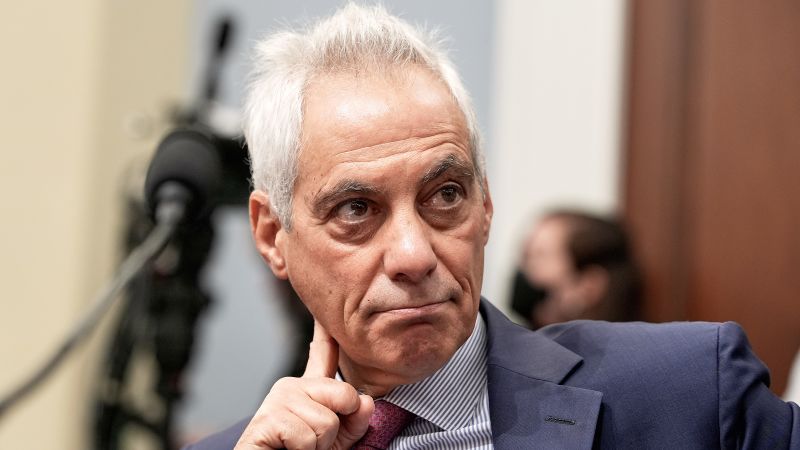
Rahm Emanuel to deliver ‘painful’ truths on Israel in Tel Aviv speech
Rahm Emanuel to deliver painful truths – Former Chicago Mayor Rahm Emanuel is set to address a critical moment in U.S.-Israel relations during a speech at Tel Aviv University. The event, which forms the core of his multi-day visit to Israel, is designed to challenge the nation’s longstanding unconditional support for the country. Emanuel, a prominent political figure with a storied career in Washington, will emphasize the need for a reevaluation of American policy, framing it as a necessary step toward fostering a more sustainable peace in the Middle East.
A Legacy of Diverging Perspectives
Emanuel’s visit carries personal weight, as it reflects his complex relationship with Israel. His journey began with a deep connection to the nation, rooted in family ties. He once visited the grave of an uncle who played a role in the Israeli independence movement, symbolizing his early ties to the cause. Yet, his views have evolved over time, particularly during his tenure as President Barack Obama’s chief of staff. In a heated exchange, he was labeled a “self-hating” Jew by Prime Minister Benjamin Netanyahu, highlighting the tensions that have shaped Emanuel’s political identity.
Now, as the former U.S. ambassador to Japan, Emanuel aims to blend his past and present perspectives. His speech will serve as a bridge between personal history and contemporary policy goals, positioning him as a voice that challenges both domestic and international perceptions of Israel. This is part of a broader strategy to prepare for a 2028 presidential run, where issues of foreign policy and national unity will be central.
Shifting Public Sentiment and Democratic Divides
The timing of Emanuel’s speech is significant, coming amid a marked decline in American public support for Israel. Since the Hamas-led attacks of October 7, 2023, and the subsequent Israeli military campaign in Gaza, opinions have polarized. Democratic voters, in particular, have increasingly viewed unconditional backing for Israel as a political liability. This shift has turned support for the nation into a litmus test, raising concerns about the growing influence of antisemitism within the party.
Emanuel acknowledges this trend, noting that the debate over Israel’s actions has become more than just a policy discussion. “In the United States, we have a saying: ‘fool me once, shame on you. fool me twice, shame on me,’” he will say, according to prepared remarks. This line underscores his belief that the U.S. must move beyond reactive support and adopt a more nuanced approach. For Emanuel, the speech is not only about reconfiguring policy but also about addressing the domestic audience that increasingly demands accountability from Israel.
Calling for a New Political Paradigm
The former Obama aide will directly address Israeli leaders, urging them to distance themselves from Prime Minister Netanyahu’s administration. “Your government is complicit in the horrors now being inflicted on innocent families in the West Bank,” he will argue, stating that this complicity undermines Israel’s standing on the global stage. The speech will also critique the current wave of Palestinian resistance, with Emanuel warning that slogans like “from the river to the sea” may not achieve their goals unless accompanied by concrete actions.
“Those chanting ‘from the river to the sea’ need to hear this loud and clear: they will never have their way,” Emanuel will declare, according to his remarks. “But those calling for a greater Israel must also hear this loud and clear: you’re never going to have your way, either.” This dual critique reflects his belief that both sides must adapt to avoid a stalemate. He will argue that Israel’s security cannot be guaranteed without concessions, while Palestinian leaders must demonstrate their commitment to peace.
As he prepares for his presidential campaign, Emanuel has been refining these arguments in collaboration with key figures. His discussions with former President Bill Clinton, a mentor who championed the peace process in his final days, have been instrumental. Clinton’s frustration over the inability to secure a lasting agreement with the Palestinians has influenced Emanuel’s vision for a new approach. The former mayor will leverage this connection to emphasize the need for a collective effort that transcends traditional alliances.
A 23-State Solution for a New Era
Emanuel’s speech will propose a bold alternative to the long-standing two-state solution. He will argue that Arab nations, not Israel, must take responsibility for Palestinian governance. “The now-discredited path to a ‘two-state solution’ should be replaced by a 23-state solution,” he will say. This concept envisions the 21 Arab countries, along with Israel and the U.S., forming a coalition to establish a governing authority in Palestine that recognizes the Jewish connection to the land.
The idea is part of a larger vision for regional cooperation, which Emanuel believes can address the root causes of conflict. “Arab leaders, not Israel, must hold the Palestinians responsible and accountable for their actions, and for being a true partner in peace,” he will assert. By framing the problem as one of Palestinian leadership, Emanuel seeks to shift the narrative from one of Israeli aggression to a call for Palestinian responsibility. This approach aligns with his argument that the U.S. should no longer bear the burden of resolving the conflict alone.
Emanuel will also highlight Israel’s strengths, urging the nation to refocus on its ingenuity and technological achievements. “The strength of Israel was always in its ingenuity, economic and technological achievements,” he will note, advocating for a future that prioritizes innovation over conflict. He acknowledges the historical pattern of Israeli offers for Palestinian sovereignty, but insists that the past should not dictate the future. “Three times since the early 1990s, you have offered the Palestinians sovereignty in exchange for your security,” he will say, “and three times your offer was not only rejected, but you were attacked as a direct consequence.”
Despite these challenges, Emanuel remains optimistic. He believes that a new era of cooperation is possible, provided both sides are willing to compromise. “The path forward cannot be held hostage to a past defined exclusively by recriminations,” he will argue. This message, delivered in Tel Aviv, is intended to resonate with both Israelis and Americans, reinforcing his position as a bridge between the two nations. As he builds his campaign, the speech represents a strategic move to position himself as a leader who can navigate the complexities of the Israel-Palestine conflict while appealing to a broad coalition of voters.
A Call for Unity and Reassessment
By delivering these “painful” truths, Emanuel aims to galvanize a renewed commitment to peace. His speech is a reminder that friendship requires honesty, even when it is uncomfortable. “The most important thing a true friend can do is to tell the truth even when it’s painful,” he will say, echoing his own journey of reconciling personal ties with political critique. As the 2028 election looms, this message is both a reflection of his past and a blueprint for his future leadership.
With the stakes high, Emanuel’s visit to Israel is more than a political maneuver—it is a test of his ability to balance ideological principles with pragmatic diplomacy. Whether his speech will spark a new era of U.S.-Israel collaboration or deepen existing divides remains to be seen. But one thing is certain: the rhetoric he employs will shape the discourse surrounding the nation’s role in the region for years to come.