Mamdani defends criticism of AIPAC after being accused of antisemitism

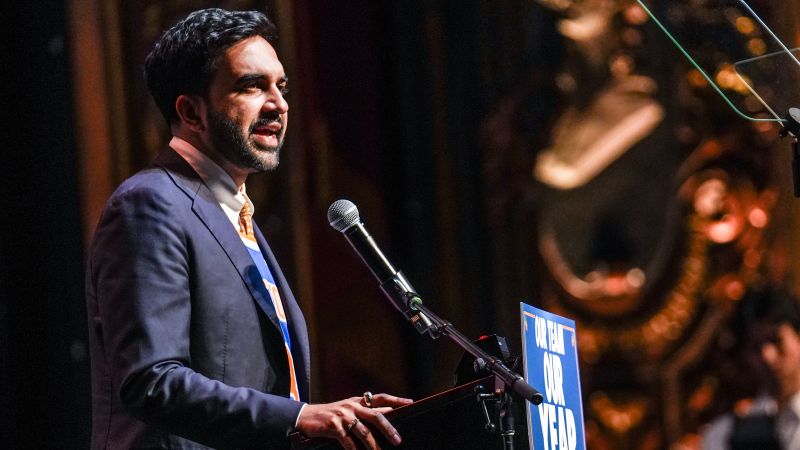
Mamdani Defends Criticism of AIPAC After Accusations of Antisemitism
Mamdani defends criticism of AIPAC after – On Monday, New York City Mayor Zohran Mamdani stood firm in his critique of the American Israel Public Affairs Committee (AIPAC), dismissing accusations that his recent comments were antisemitic. The controversy emerged after prominent Jewish leaders claimed he had crossed the line in his sharp condemnation of the pro-Israel lobby’s influence in the upcoming New York House primaries. Despite the backlash, Mamdani framed his criticism as a necessary call to action against an organization he views as entrenched in maintaining the current geopolitical order.
“When I speak about AIPAC, I’m speaking about an organization that has been supportive of the status quo, fighting any attempt to bring safety to people—not just in Palestine, but throughout the region,” Mamdani stated during a press conference at City Hall. He emphasized the group’s role in backing Israeli military operations in Gaza, arguing that its actions perpetuate a cycle of violence and moral compromise.
The mayor, a vocal critic of Israel’s policies, faced criticism for labeling AIPAC as a key player in a system that he claims prioritizes power over justice. His remarks came amid heightened tensions over the group’s financial support for pro-Israel candidates in congressional races. According to recent filings with the Federal Election Commission, AIPAC’s super PAC, United Democracy Project, allocated over $600,000 in contributions to BOLD America, a campaign group backing Rep. Adriano Espaillat. This funding was used to run ads that focus on domestic issues rather than foreign policy, a strategy Mamdani described as misleading.
Mamdani’s defense extended to his broader criticism of political spending in New York. During a rally with progressive challengers on Thursday, he accused “monsters” of using deceptive advertising to undermine his endorsed candidates. Specifically, he pointed to the targeted ads that cast doubt on the integrity of his allies, including Darializa Avila Chevalier, who is running against Espaillat in the 13th Congressional District. “These are the same tactics that flood our airwaves with false narratives, aiming to divide rather than unite,” he said.
“They move millions in dark money to accomplish a single goal—preserving their power—so that they can turn us against one another instead of our leaders focusing on the moral change we all know is essential,” Mamdani added. His comments reflected a growing frustration with the influence of super PACs in shaping public opinion and policy outcomes.
The backlash from Jewish community leaders intensified in the days following his remarks. The Anti-Defamation League (ADL) and the American Jewish Committee (AJC) condemned Mamdani’s language, warning that his use of terms like “monsters” could be interpreted as a reference to Jewish people themselves. Ted Deutch, CEO of the AJC, took to X to highlight the danger of such rhetoric, noting that the mayor’s words could echo historical antisemitic conspiracy theories.
“Mayor Mamdani, referring to fellow New Yorkers as ‘monsters’ is outrageous and dangerous. The impact of your words extends far beyond politics,” Deutch wrote. Josh Gottheimer, a Jewish Democratic congressman from New Jersey, echoed these concerns. “Swap ‘AIPAC’ for ‘Jews’ and it’s the oldest antisemitic conspiracy theory in the books,” Gottheimer tweeted. “That’s not criticizing a lobby. That’s laundering antisemitism from your podium as Mayor of a city with more than a million Jews. This bullshit is dangerous.”
Mamdani, however, maintained that his use of the term “monsters” was both intentional and contextually justified. He cited Antonio Gramsci, the founder of the Italian Communist Party, to explain his choice of words. “I used the term to describe all those who are preventing the birth of a new world,” he clarified. This included not only AIPAC but also larger super PACs that spend millions on misleading campaigns. “We see this kind of PAC spending in races against Brad Lander, Claire Valdez, and others,” he said, emphasizing the widespread nature of the issue.
He further argued that the term applied to a politics that has long asked working people to settle for less. “My use of the word is a broad critique of the status quo that literally starves people in the city, all in the name of sustaining something we should be fighting for,” Mamdani stated. This perspective ties his domestic criticisms to the broader geopolitical context, framing AIPAC’s actions as a reflection of systemic failures in leadership.
The mayor’s defense also highlighted the human cost of the conflict in Gaza. With the death toll surpassing 1,000 since the US-brokered ceasefire took effect in mid-October, Mamdani stressed the urgency of holding organizations accountable for their role in perpetuating the crisis. “When we ask ourselves how such death and destruction is happening overseas, we must name those who allow it to take place,” he said, pointing to AIPAC’s financial contributions as a key factor in sustaining the status quo.
While the Jewish community leaders focused on the rhetoric, Mamdani’s supporters defended his stance as a necessary challenge to the powerful influence of pro-Israel lobbies. They argued that the mayor’s criticism was rooted in a desire to push for progressive change, not a personal attack on Jewish identity. “The goal is not to vilify Jews but to expose how certain groups manipulate public discourse for their own interests,” one of his allies said in a statement.
As the debate continues, the incident underscores the growing divide between progressive voices and traditional Jewish leadership in New York. Mamdani’s remarks have sparked a wider conversation about the balance between critiquing political entities and avoiding accusations of antisemitism. For now, the mayor remains undeterred, insisting that his words are a call for accountability in a system he believes has long failed to prioritize justice over power.