Federal court blocks Alabama plan for new congressional districts that could help Republicans

Federal court blocks Alabama plan for new congressional districts that could help Republicans
Legal Action Halts Alabama’s Congressional Redistricting Plan
Federal court blocks Alabama plan for new – A federal court has issued a temporary injunction that halts Alabama’s effort to implement a new congressional map, which could potentially benefit the Republican Party in the upcoming midterm elections. The decision, handed down by a three-judge panel, prevents the state from switching to the revised district lines at this time. This means Alabama must continue using the court-ordered districts that were in place for the 2024 elections. The ruling comes as part of a longer-standing legal battle over the state’s redistricting process, which has been ongoing for several years.
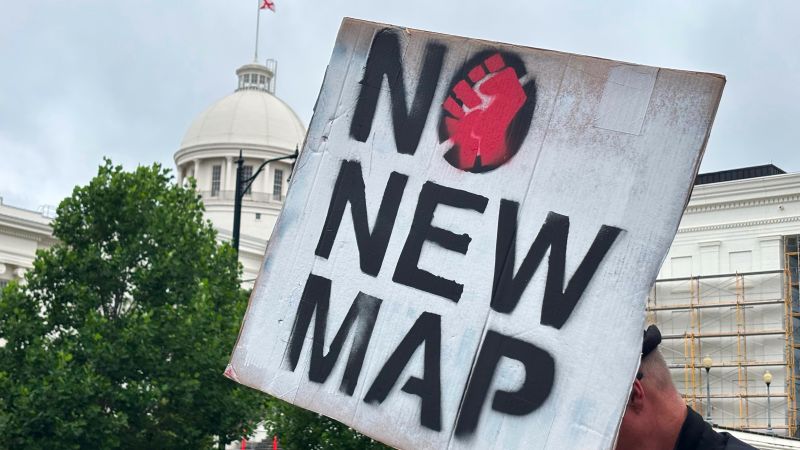
The court’s action was prompted by legal arguments from advocates representing Black voters. These lawyers contended that the state’s original map was deliberately designed to disadvantage Black communities, a claim that was previously upheld by the same panel in 2023. They further emphasized that Alabama’s attempt to redraw districts during the current election year creates unnecessary disruption, complicating the voting process for residents. The injunction ensures that the existing district boundaries remain in effect, at least until a final decision is reached.
Impact on Midterm Elections and Political Strategy
For Republicans, the ruling represents a setback in their efforts to gain an edge in the November midterms. The proposed map was intended to shift the balance of power in a critical race for a congressional seat currently held by Democratic Representative Shomari Figures. By blocking the plan, the court has denied the GOP a strategic advantage that could have influenced the outcome of the election. However, the state has the option to appeal the decision to the U.S. Supreme Court, which could provide a new avenue for changing the map.
The decision is part of a larger political and legal movement following a Supreme Court ruling earlier this year that struck down a majority-Black district in Louisiana. That ruling weakened the federal Voting Rights Act, enabling Republicans in Southern states like Alabama and Tennessee to reshape districts with significant minority populations. The act, which had long protected voting rights for racial minorities, was challenged on the grounds of requiring states to justify districts that could dilute minority voting power. The Louisiana case marked a pivotal moment in this ongoing effort to alter the electoral landscape.
Redistricting Frenzy Across Southern States
Alabama is not the only Southern state navigating this redistricting upheaval. Tennessee also moved swiftly to enact new congressional districts after the Supreme Court’s April decision, by splitting a majority-Black district based in Memphis. This change aimed to create more favorable conditions for Republicans, as it could allow them to secure all nine of the state’s House seats. The process involved temporarily reopening the candidate qualification period for August primaries, enabling new candidates to enter the race and existing ones to adjust their strategies.
Meanwhile, in South Carolina, Republican legislators proposed a plan to eliminate the June 9 congressional primary and replace it with an August election under revised districts. This adjustment would help the GOP consolidate support in areas where they previously struggled to win. The state’s governor, Jeff Landry, similarly postponed Louisiana’s congressional primaries from May 16 to later this summer, giving lawmakers time to consider a new map that would remove a majority-Black district. These actions underscore the urgency with which Southern states are trying to reshape their electoral boundaries to align with political goals.
Broader Implications for the House Majority
The redistricting campaign is part of a larger strategy by President Donald Trump to maintain Republicans’ narrow House majority. After the Supreme Court’s ruling in April, several Republican-led states, including Texas, began adjusting their district lines to optimize voting outcomes. Alabama’s effort to create a new map is seen as a direct continuation of this push, aiming to maximize Republican representation in the House. However, Democrats have not been idle, countering with their own redistricting plans in California and anticipating gains in Utah through court-imposed districts.
While the immediate effect of the Alabama ruling is to preserve the current map, the broader implications extend beyond the state. The Supreme Court’s decision in Louisiana has emboldened Republicans to pursue similar tactics in other Southern states. This trend reflects a shift in how redistricting is approached, with a focus on maximizing partisan advantage. The case also highlights the tension between state legislatures and federal oversight, as courts have become central to resolving disputes over district boundaries.
Legal and Political Context of the Ruling
The court’s temporary block on Alabama’s new map is part of a complex legal and political saga. The original redistricting case in Alabama dates back to years of debate over how districts are drawn, with critics arguing that the process has been used to marginalize minority voters. The 2023 finding by the same panel that the state map was intentionally discriminatory provides a foundation for the current legal challenge. Advocates claim that the proposed revisions would further entrench this discrimination, making the current map a critical test case for the broader redistricting strategy.
As the nation prepares for the November elections, the stakes of redistricting have never been higher. The Supreme Court’s April ruling, which weakened the Voting Rights Act, has given Republicans the green light to redraw districts in states with large minority populations. This has led to a flurry of activity across the South, with states like Alabama, Tennessee, and Louisiana taking decisive steps to alter their electoral boundaries. The result is a shift in the balance of power, with the potential to reshape the outcome of the midterms and influence the composition of Congress.
Democrats’ Response and the Future of Redistricting
Democrats have responded to the Republican redistricting efforts by filing their own plans in California and expecting to gain seats in Utah through court-ordered adjustments. These moves demonstrate that the battle over district lines is not limited to one party, but is a widespread effort to influence election results. However, the Alabama case highlights the challenges Democrats face in contesting the changes, as states with Republican control have the authority to redraw maps without significant federal intervention.
The long-term impact of the Supreme Court’s ruling in Louisiana will depend on how it is applied in other states. While Alabama’s plan has been temporarily halted, the momentum for redistricting continues. With the midterms approaching, the political stakes are high, and the final outcome could determine the future of congressional representation. The current situation also raises questions about the role of courts in overseeing redistricting, as they balance legal principles with the need for timely elections.
Conclusion: A Critical Moment in Electoral Reform
As the nation watches the unfolding redistricting battles, the Alabama case serves as a reminder of the power of judicial oversight in shaping electoral outcomes. The temporary injunction underscores the importance of maintaining fair district boundaries, particularly for minority voters. However, the Republican strategy of adjusting districts to favor their candidates remains a central focus, with the hope of securing a stronger position in the House. The decision to block the new map may delay the changes, but it does not eliminate the potential for future adjustments, especially if the case is appealed to the Supreme Court.
Ultimately, the ruling reflects the broader trend of redistricting as a tool for political influence. The weakening of the Voting Rights Act has provided states with the flexibility to redraw districts in ways that may dilute minority voting power. While this has been a major victory for Republicans, it has also sparked renewed efforts by Democrats to counteract the changes through their own legal and political actions. The final outcome of this saga will have lasting implications for how elections are conducted and who holds power in the U.S. Congress.