
A potential helipad and new parking spots are the latest changes at the White House
A Potential Helipad and New Parking Spots Are the Latest Changes at the White House
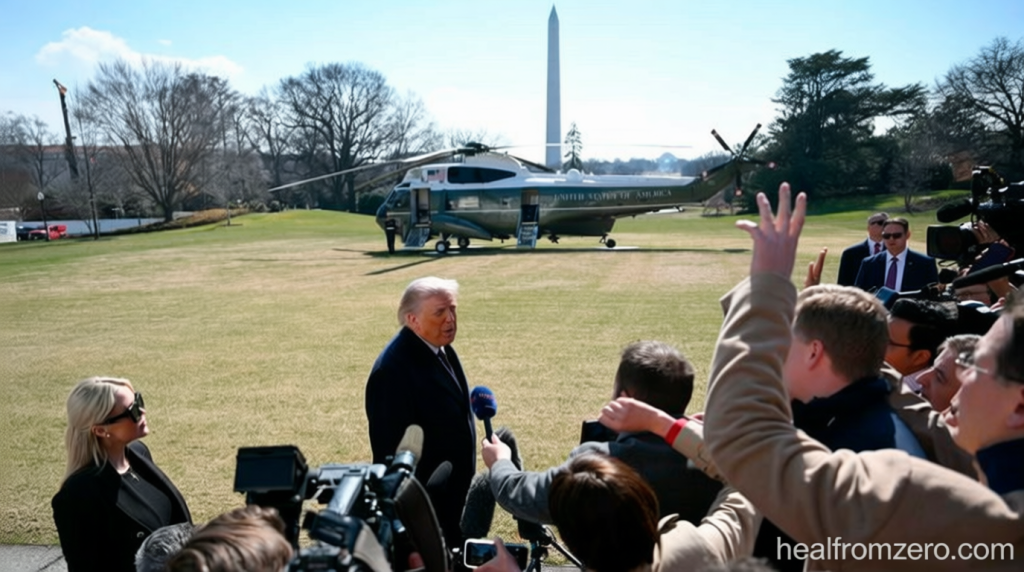
A potential helipad and new parking – Recent modifications to the White House grounds have introduced two notable projects aimed at tackling a persistent issue: vehicle storage. One initiative focuses on the landing space for Marine One, the iconic green-and-white presidential helicopter, while the other addresses the parking needs of White House staff. These updates, spearheaded by President Donald Trump, reflect his ongoing efforts to modernize the historic estate and streamline operations for future administrations.
Helipad Installation to Combat Exhaust Damage
The decision to explore a helipad installation stems from a technical challenge associated with the new VH-92A Patriot helicopter, which has been the primary presidential transport model since its deployment. The aircraft’s exhaust system generates intense heat, leading to significant scorching of the grass on the South Lawn during landing. This has become a recurring concern, as the previous setup—three small round planks placed on the lawn shortly before use—has not fully mitigated the damage over time.
According to insiders involved in the planning discussions, Trump has emphasized the importance of a permanent helipad solution. The current temporary arrangement, while functional, is not ideal for long-term use. A dedicated helipad would allow the helicopter to land directly on a non-vegetated surface, protecting the turf from further heat-related harm. This adjustment could also improve efficiency, as the existing setup requires last-minute placement of planks to accommodate the helicopter’s landing.
“President Trump has continued to make improvements at the White House and all around D.C. to benefit future presidents and Americans,” stated Davis Ingle, a White House spokesperson, when asked about the helipad proposal. The idea was first highlighted by the Wall Street Journal, underscoring its significance in the broader context of the presidential complex’s evolution.
The issue of exhaust damage has hindered the use of the new helicopter at the White House for years. While both Trump and his predecessor, Joe Biden, have utilized the VH-92A model outside Washington, the necessity of an older helicopter for internal travel has persisted. This older model is required to transport the president from the South Lawn to other locations within the complex, highlighting the functional compromise that has been in place.
Temporary Staff Parking in Lafayette Park
On the opposite side of the White House, a different parking initiative has gained attention. Yellow markings have appeared on a section of Pennsylvania Avenue near the North Portico, designating temporary spots for staff. The location, once a popular gathering point for tourists, has raised eyebrows due to its proximity to the main complex. However, officials clarified that the arrangement is temporary, intended to support ongoing projects and events.
“It is temporary staff parking through June 28 to accommodate projects and events within the White House complex,” noted an official administration social media account. The changes are part of a larger renovation effort in Lafayette Park, a project closely tied to Trump’s vision for the estate. The park has been closed to vehicle traffic for months, allowing for extensive work on the fountains and grass areas, which Trump insisted be restored to their former glory.
Staff parking at the White House follows a clear hierarchy, with higher-ranking officials granted closer proximity to the executive mansion. The West Executive Drive, which connects the West Wing to the Eisenhower Executive Office Building, is reserved for those with the most senior positions. Mid- and lower-level staff, on the other hand, are assigned spaces on the Ellipse, a distance that can sometimes require a significant walk to reach their workplaces.
The recent addition of parking spots on Pennsylvania Avenue aligns with Trump’s broader strategy to optimize space within the White House complex. The new locations are strategically placed to reduce the distance staff must travel, particularly as the South Lawn is set to host a UFC event and a “fan fest” in the coming weeks. These events may temporarily alter parking arrangements, but the temporary spots are designed to accommodate such disruptions without long-term impact.
Security Protocols and the Closure of Pennsylvania Avenue
The closure of Pennsylvania Avenue to vehicle traffic dates back to 1995, following a devastating truck bombing at the Alfred P. Murrah Federal Office Building in Oklahoma City. This incident prompted a reevaluation of security measures around the White House, resulting in the avenue being restricted to pedestrians and emergency vehicles. The closure has remained in place ever since, serving as a critical safety protocol.
Despite the long-standing restriction, Trump has pushed for the use of the closed section to support White House renovations. The recent staff parking initiative is a part of this effort, allowing for greater flexibility during the construction phase. The avenue’s closure has not only enhanced security but also created a unique opportunity to repurpose space for administrative needs, reflecting the balance between safety and functionality.
As the White House continues its transformation, the two projects—permanent helipad and temporary staff parking—highlight the administration’s commitment to addressing practical challenges while maintaining the estate’s historical integrity. These changes, though seemingly small, underscore a larger narrative of modernization and adaptation to contemporary demands. Whether through technological upgrades or spatial reorganization, Trump’s initiatives aim to ensure that the White House remains both a functional and iconic symbol of leadership.