US puts up $750K to evacuate an American who was aboard hantavirus cruise ship from remote island

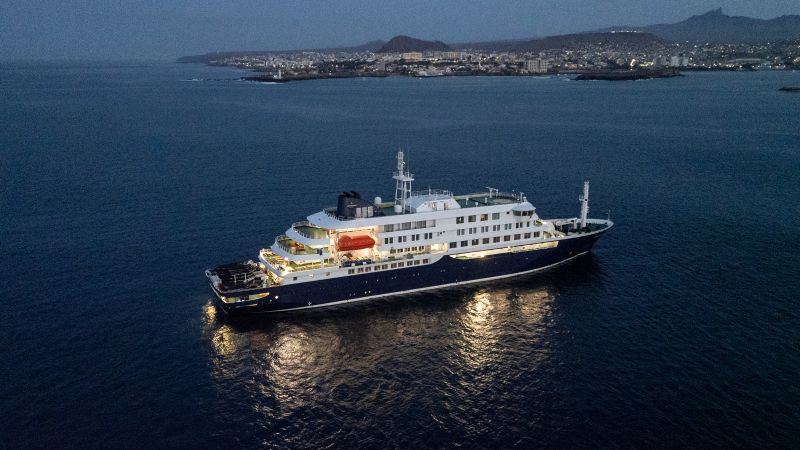
U.S. Allocates $750,000 to Rescue American on Hantavirus-Infected Cruise Ship from Remote South Pacific Island
US puts up 750K to evacuate – Under the leadership of President Trump, the U.S. government has spent $750,000 to arrange the evacuation of an American citizen from a remote South Pacific island. The individual, who may have contracted the hantavirus while traveling on the Dutch cruise ship MV Hondius in April, was stranded on Pitcairn Island after a complex journey involving multiple stops. This costly operation has placed additional pressure on the State Department’s emergency budget, raising concerns about the allocation of funds for unforeseen crises.
The woman’s ordeal began when she disembarked from the MV Hondius, a vessel where a deadly hantavirus outbreak was confirmed. Following her departure from the infected ship, she traveled to San Francisco before proceeding to Pitcairn Island, a British territory located approximately 1,350 miles (2,160 kilometers) from Tahiti. According to two U.S. officials and an internal government document obtained by The Associated Press, her route to the isolated island involved a trans-Pacific flight, highlighting the logistical challenges of reaching such a remote location.
Pitcairn Island, home to just 50 residents, lacks an airport and relies on infrequent maritime transport. The woman’s presence there added urgency to the situation, as British authorities initially requested American assistance for her evacuation. However, French Polynesian officials in Tahiti delayed the process, citing concerns about her potential exposure to the virus. The French authorities had not permitted her to transit through the territory, which serves as a key stopover point for international travelers, until further details were provided.
After weeks of coordination, the U.S. government successfully arranged for her to be transported via a private yacht. The vessel, known as the Titaina Explorer, is owned by a wealthy individual and was chartered specifically for this mission. The woman, who showed no symptoms of the hantavirus at the time, was moved to Easter Island, a more accessible location in the Pacific. Easter Island, a Chilean territory, offers direct flights to Santiago, providing a critical link to U.S. medical facilities for potential treatment.
The decision to allocate $750,000 for this evacuation underscores the administration’s commitment to rescuing citizens abroad. However, it also highlights the growing financial strain on the State Department’s emergency reserves. The K Fund, a critical budgetary tool for handling unforeseen crises, has seen its balance dip to the lowest level in seven years. This situation has forced officials to consider reallocating funds from other departments, including the budget for embassy security and diplomatic programming, to cover urgent needs.
“When an American is at risk abroad and unable to access commercial transportation, the Department of State seeks to provide appropriate assistance to get them home to the United States or to another safe location,”
stated a State Department representative in a statement released after the incident. The agency declined to comment on the specifics of the woman’s case, emphasizing its focus on broader emergency response strategies.
The hantavirus outbreak on the MV Hondius has left a trail of health concerns across its itinerary. After the woman’s evacuation, the ship continued its route to other destinations in the South Atlantic, with several passengers reported to have fallen ill and at least three deaths attributed to the virus. The outbreak, which has drawn international attention, raises questions about the ship’s sanitation protocols and the potential for similar incidents in other regions.
While the K Fund has traditionally supported rapid evacuations for diplomats and private citizens, its current state has sparked debate over its sustainability. An internal document revealed that the State Department is exploring the possibility of transferring up to $50 million from other accounts to replenish the fund. This would involve $35 million from the embassy security, construction, and maintenance budget, as well as an additional $15 million from funds allocated for broader diplomatic activities. Despite these plans, no formal decision has been reached on the transfers.
One of the officials involved in the case noted that the State Department has alternative measures in place to address financial shortfalls. The agency is considering requesting Congress to approve additional funding for the K Fund, ensuring it remains equipped to handle both ongoing and emerging contingency needs. The official insisted that the department is “well positioned” to support citizens affected by conflicts like the Iran war and outbreaks such as the recent Ebola crisis in Africa.
The evacuation of the woman from Pitcairn Island serves as a case study in the complexities of international rescue operations. The island’s history as a refuge for British mutineers from the HMS Bounty in 1789 adds a layer of cultural significance to her situation. Fletcher Christian and his followers, who famously rebelled against Captain William Bligh, are now ancestors of the island’s current population. This historical context has made Pitcairn a symbol of isolation and resilience, complicating efforts to coordinate modern evacuations.
French Polynesian authorities initially hesitated to allow the woman to disembark in Tahiti, citing the lack of transparency in her medical status. The delay in her evacuation underscored the challenges of navigating bureaucratic and health-related hurdles in remote regions. The U.S. government’s intervention, however, demonstrated its ability to take decisive action when necessary, even in the face of international complications.
As the evacuation process continues, officials are reflecting on the broader implications for the State Department’s emergency operations. The $750,000 spent on this single case has contributed to the rising costs of similar evacuations in the Middle East, where the Iran conflict has necessitated frequent diplomatic and humanitarian efforts. The agency is now balancing the need to respond to immediate crises with the long-term financial health of the K Fund, which has become a focal point of budgetary discussions.
Experts suggest that the K Fund’s depletion reflects a larger trend of increased global emergencies requiring swift U.S. intervention. From hantavirus outbreaks to Ebola epidemics and geopolitical conflicts, the State Department has been called upon to provide rapid support. The administration’s decision to fund the Pitcairn evacuation highlights both its responsiveness and the growing financial demands of maintaining a robust emergency response network.
The case also illustrates the importance of private sector partnerships in crisis management. By chartering a private yacht, the U.S. government bypassed traditional logistical challenges, ensuring the woman’s safe transfer despite the constraints of Pitcairn’s remote location. This approach, while effective, raises questions about the long-term viability of relying on such arrangements for large-scale evacuations.