
Inside RFK Jr.’s push to dismantle decades of U.S. vaccine policy
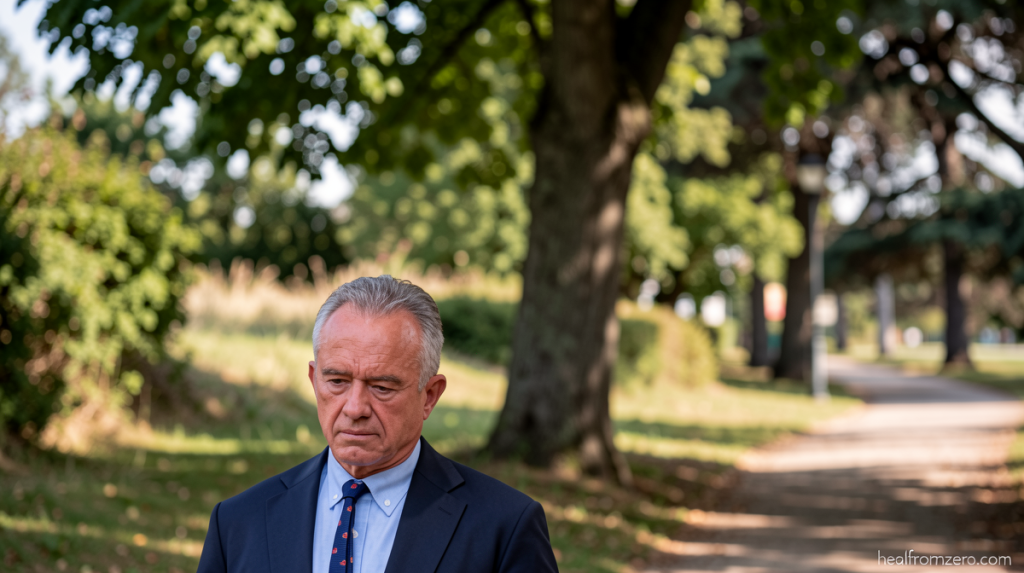
Robert F. Kennedy Jr.’s Ambitious Campaign to Reshape American Vaccine Policy
Inside RFK Jr s push to dismantle – Since assuming the role of health secretary in early 2025, Robert F. Kennedy Jr. has introduced a wave of previously unthinkable public health initiatives to the highest echelons of the Trump administration. According to extensive interviews conducted by Reuters with sixteen current and former government officials who possess direct knowledge of internal deliberations, Kennedy has demonstrated remarkable persistence in advancing his vaccine-related agenda. These officials, representing both the U.S. Department of Health and Human Services and the White House, provided their accounts on the condition that their identities remain confidential.
A Tenacious Activist at the Helm
The first-hand testimonies reveal a determined activist who has not only pushed through some of the most significant alterations to American vaccine policy in recent decades but has also sought to extend his influence far beyond what was previously understood. His approach has been characterized by a willingness to challenge established scientific consensus and restructure federal health programs according to his own medical theories.
Dr. Paul Offit, who serves as director of the Vaccine Education Center at the Children’s Hospital of Philadelphia and has advised the Centers for Disease Control and Prevention on immunization matters for many years, offered a straightforward assessment of Kennedy’s character and motivations.
“He’s an anti-vaccine activist. That’s who he is. That’s who he’s been for 20 years. To expect that as secretary of Health and Human Services he’d be anything other than that is wishful thinking,”
Offit stated.
Challenges and Setbacks
Kennedy’s efforts to undermine confidence in the safety of vaccinations for common childhood illnesses have complicated efforts to control disease outbreaks. According to Offit, the measles resurgence currently underway represents the most significant increase in cases in over three decades, and Kennedy’s public messaging has contributed to this trend.
“He scares people about vaccines, which only causes them not to get them,”
Offit explained.
“We’re screwed.”
The Department of Health and Human Services declined to make Kennedy available for an interview. However, spokeswoman Courtney Spencer provided responses to Reuters’ reporting, contesting several key details as incorrect or misleading. Notably, she disputed the claim that Kennedy planned to eliminate the entire childhood immunization schedule entirely, though she did not elaborate on which specific elements were inaccurate.
Despite encountering resistance from multiple quarters of the federal government, including within both the health department and the White House, Kennedy has managed to implement several important changes. One of his most ambitious proposals—removing vaccines for six out of seventeen diseases from the recommended childhood vaccination schedule—has been temporarily suspended by a federal judge following a lawsuit filed by the American Academy of Pediatrics alongside other medical organizations.
Major Policy Reforms Underway
During his tenure at the health department, which supervises major national health agencies such as the Food and Drug Administration, the National Institutes of Health, and the Centers for Disease Control and Prevention, Kennedy has overseen substantial reforms. These include reducing mRNA vaccine development efforts, withdrawing financial support for an international vaccine alliance, and implementing stricter access requirements for COVID-19 vaccinations.
Many health professionals have expressed concern that Kennedy’s use of his position to amplify vaccine safety concerns has created confusion among parents regarding which immunizations, if any, they should administer to their children.
The $5 Billion Autism Research Proposal
Earlier this year, Kennedy presented a costly proposal to Jay Bhattacharya, his appointee as director of the NIH. According to two officials familiar with the matter, Kennedy suggested that the research agency allocate $5 billion toward investigating the connection between vaccines and autism. This amount would have represented more than ten percent of the NIH’s annual budget, dedicating substantial resources to examining a hypothesis that scientists globally have already largely dismissed.
Kennedy eventually abandoned the plan, which would have likely required congressional approval, after Bhattacharya persuaded him that the agency had already committed sufficient resources to studying autism’s origins. This included a $50 million initiative that was launched in September.
The autism research proposal emerged shortly after Kennedy agreed to refrain from discussing vaccines publicly, a concession made in response to requests from several senior White House aides who worried that his medical theories could harm Republican political prospects. Nevertheless, behind closed doors, the health secretary has continued pursuing evidence supporting his theory that numerous vaccines have not undergone adequate testing and may trigger various serious side effects, according to eight current and former officials.
Neither the NIH nor Bhattacharya responded to inquiries regarding these developments. The HHS also declined to provide commentary on the $5 billion funding concept.
The NIH research request stands as one of several episodes documented by current and former officials in the health department and White House that illuminate Kennedy’s ongoing mission as health secretary—a mission characterized by both ambition and controversy as he seeks to fundamentally transform American public health policy.