Uber and Wayve team up to launch driverless cars in London this summer

Uber and Wayve Team Up for London’s First Driverless Car Initiative
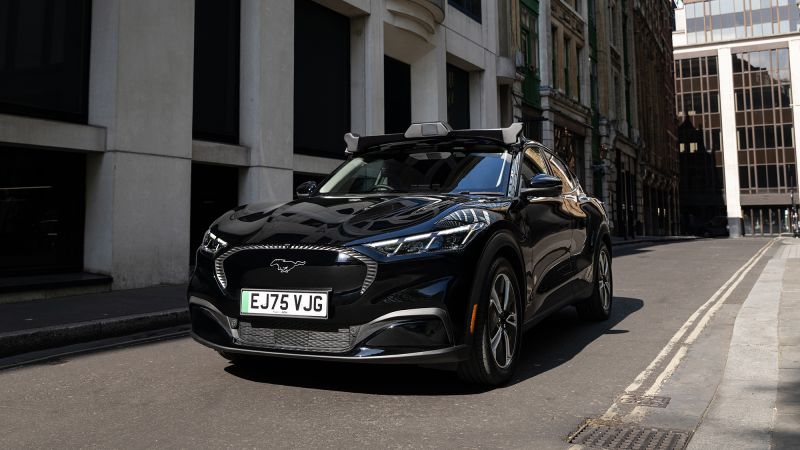
Uber and Wayve team up to launch – London is set to welcome driverless cars for public use this summer, marking a historic milestone for the UK. This development brings artificial intelligence-powered vehicles to one of the world’s most traffic-choked metropolises, signaling a new era in autonomous transportation. The partnership between Uber and Wayve, a British-based company, aims to introduce robotaxis to the city, which will serve as the first step in a broader global deployment spanning over 10 urban centers, including Tokyo. As the rollout progresses, the integration of self-driving technology into everyday commutes is expected to transform how people navigate the bustling streets of the capital.
The Road to London
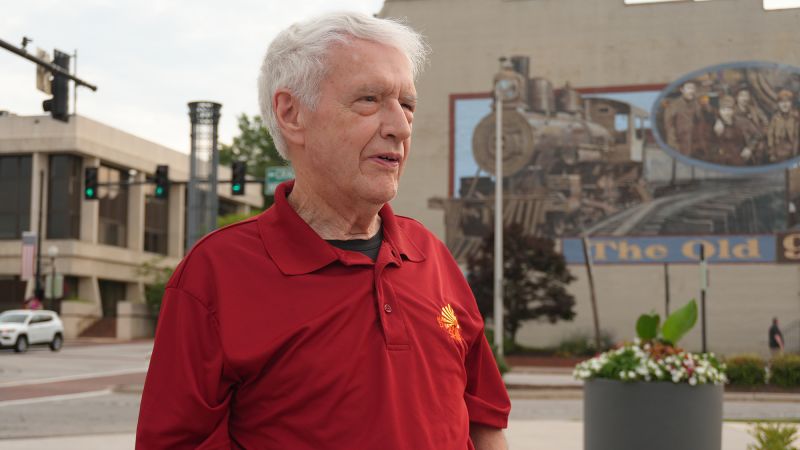
Wayve, founded in 2017, has been refining its autonomous vehicle technology for nearly a decade, with London as a key testing ground since 2018. The company’s journey from research to real-world application has involved overcoming the complexities of navigating the city’s intricate road networks, unpredictable pedestrian behavior, and dense traffic. “We’re really excited to launch this imminently and get public riders into our (vehicles),” Kaity Fischer, Wayve’s vice president of operations, shared with CNN. The initial phase of the service will involve a modest fleet, with “dozens, not hundreds” of cars, to ensure a gradual and controlled introduction.
The decision to focus on London reflects the city’s role as a pioneer in embracing cutting-edge transportation solutions. As self-driving vehicles expand globally, the UK’s approach to regulating them has become a focal point for other nations. Fischer highlighted the importance of a robust legal framework, noting that the UK government’s commitment to AI innovation has created an environment conducive to such advancements. “The UK government has also really doubled down on investing in AI,” she added, underscoring the country’s strategic position in the race for autonomous mobility.
Safety First Approach
To build public confidence, Wayve’s rollout will initially include supervised rides operated by licensed Uber drivers with specialized training. This hybrid model is designed to “prove safety” and “build trust,” according to Fischer. By maintaining human oversight during the early stages, the company plans to demonstrate its technology’s reliability before transitioning to full autonomy. “It allows us to build a safety case… so that when we remove the drivers from the vehicles, we have a strong track record,” she explained.
The phased approach also addresses concerns about the readiness of autonomous systems. Fischer emphasized that while there is no rigid schedule for eliminating human supervisors, safety remains the top priority. This strategy aligns with broader industry trends, where companies are balancing innovation with cautious implementation. Meanwhile, the recent CNN investigation into Alphabet’s Waymo robotaxis revealed incidents such as cars running red lights and colliding with oncoming traffic, raising questions about the technology’s maturity.
Technological Foundations and Challenges
Wayve’s technology relies on a concept known as “Embodied AI,” which combines artificial intelligence with physical systems to create adaptive, real-time decision-making capabilities. Unlike some competitors who retrofit autonomous features onto existing vehicles, Wayve integrates its hardware directly into cars during the manufacturing process. “Our technology equips vehicles with a ‘robot brain’ that can learn from and interact with real-world environments,” the company states on its website. This approach allows for seamless operation and reduced complexity in deployment.
Fischer acknowledged that the rapid progress in AI and cloud computing has been instrumental in accelerating the development of autonomous vehicles. “Back when Wayve was founded (in 2017), nobody thought automotive would put AI on a car,” she said, reflecting on the industry’s transformation. The evolution of generative AI systems like ChatGPT has also played a role, fostering public awareness and acceptance of AI-driven solutions. However, the challenge lies in translating this awareness into tangible trust, particularly after incidents that have drawn scrutiny in the U.S. and elsewhere.
Public Perception and Industry Impact
Despite the reported close calls with Waymo taxis, Fischer defended the safety of autonomous vehicles, citing their ability to operate without fatigue or distraction. “The stats speak for themselves,” she argued. Self-driving cars, she said, can process visual data with “much higher fidelity than humans,” enhancing their capacity to avoid accidents. This perspective contrasts with the growing number of incidents that have fueled debates about the reliability of AI in critical situations.
As the technology becomes more mainstream, cities like London are becoming testing grounds for its potential to reshape urban mobility. The partnership with Uber underscores the collaborative nature of the industry, where companies are pooling resources to address challenges such as infrastructure compatibility and regulatory hurdles. Fischer noted that the UK’s legal framework for automated passenger services has provided a clear pathway for deployment, enabling Wayve to scale its operations with confidence.
A Global Shift in Transportation
The launch in London is part of a larger global movement toward autonomous vehicles, with major cities across the U.S. and Europe actively adopting the technology. This rapid expansion has brought self-driving cars from the realm of science fiction to practical application, though questions about their safety and efficiency persist. Fischer’s comments highlight the tension between innovation and caution, as companies strive to balance progress with public reassurance.
With the summer rollout underway, London’s residents may soon experience the benefits of AI-driven transportation firsthand. The success of this initiative could set a precedent for other cities, demonstrating how autonomous vehicles can integrate into daily life while addressing safety concerns through rigorous testing and phased implementation. As Wayve prepares to launch its service, the company’s journey reflects the broader evolution of AI from a futuristic concept to a transformative force in modern cities.