Tariffs raised prices you paid. But most businesses won’t be passing tariffs refunds back to you

Tariff Refunds Flow to Corporations, Not Shoppers
Healfromzero.com – Tariffs raised prices you paid at checkout across 2025 and into 2026, and now the Supreme Court has declared the administration’s sweeping global tariff regime unlawful. The Treasury is returning billions to the importers who paid those duties, yet the households that absorbed higher shelf prices are watching the money land almost exclusively in corporate bank accounts. For most American consumers, a direct price rollback remains a distant and uncertain prospect.
The Scale of the Corporate Payout
The original scheme collected roughly $168 billion from approximately 330,000 importers. After the court’s decision, refunds began flowing in May, and by July 31 a court filing from US Customs and Border Protection confirmed that $100 billion had already been disbursed. Publicly disclosed recipients include Walmart at $2.9 billion, Apple at an estimated $2.2 billion, Ford at $1.3 billion, Target at $994 million, Home Depot at $730 million, Nike at $684 million, and Amazon at $640 million — figures representing only the visible slice of a distribution still in progress.
Why the Money Stays at the Register
Isolating the tariff component inside a modern retail price tag is, by most economists’ accounts, close to impossible. Labor costs, logistics, raw-material swings, demand elasticity, and competitive positioning all moved during the same window, making post-hoc attribution murky at best.
“There are many variables that go into your costs, and your pricing schemes. And demand being obviously the most important one (for pricing),” said Brett Ryan, senior US economist at Deutsche Bank. “Walmart has very advanced pricing algorithms that take a lot of these factors into consideration, and tariffs and tariff refunds are probably not even close to the top of the list.”
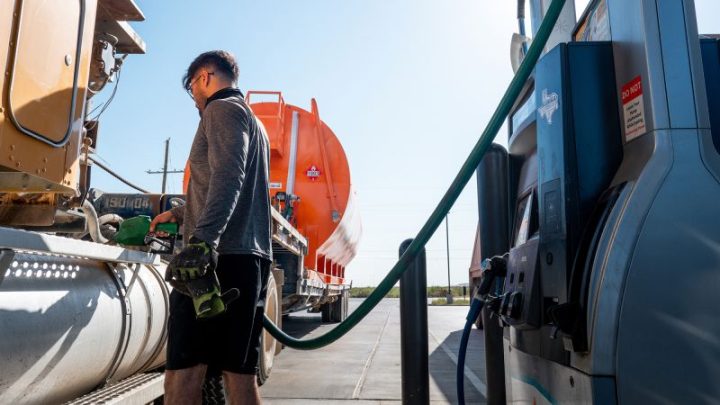
Even when retailers publicly connect their pricing decisions to the refund, the causal chain is thin. Walmart executives on their earnings call attributed planned price reductions partly to the magnitude of their $2.9 billion payout; Target’s leadership made a similar link. Yet Walmart simultaneously reported its slowest sales growth since the earliest months of the pandemic and acknowledged that consumer spending on non-fuel goods had been suppressed by gasoline prices exceeding $4 per gallon.
“Walmart sales are massive compared to the $3 billion in tariff refunds,” Ryan observed. “They know the customer has no clue if they’re actually passing on the cost or not. It becomes very murky what they’re actually doing with the tariff refund.”
The Narrow Exception: Freight Carriers
One sector has managed to trace the cost directly to individual customers. Shipping companies such as FedEx and UPS collected duty charges on behalf of clients making overseas shipments. Because those charges were itemized per shipment, the carriers held the corresponding rebates in escrow and built a customer-facing portal through which shippers can claim their proportional share. That level of transparency is the exception, not the rule, across the broader economy.
Amazon’s Limited Pass-Through
Among the large retailers that disclosed substantial refund amounts, Amazon stood alone in acknowledging that it had, in a “limited set of circumstances,” passed “specific import charges on to customers.” The company stated that in those narrow cases it would forward the customer’s share of the refund. No other major retailer made a comparable commitment.
What Households Actually Paid — and What They’ll Get Back
Kyle Peacock, principal of Peacock Tariff Consulting, estimates that the average American household paid approximately $1,700 more across 2025 and 2026 as a result of tariff-driven price increases. His projection for consumer recovery is sobering: only 15% to 20% of that excess cost, he believes, will return to shoppers — whether through direct refunds or through lower future prices.
Peacock points to Home Depot’s own language as illustrative. The company said it would deploy its $730 million refund “to offset unplanned and rising cost pressures throughout the year,” a formulation that explicitly includes higher energy costs. In effect, tariff money is being recycled to absorb unrelated inflationary pressures rather than returned to the consumers who originally bore the burden.
“Companies are saying they’re using those tariffs to avoid an increase in prices now due to energy costs or the uncertainty of other tariffs,” Peacock noted.
Frequently Asked Questions
Will I receive a direct refund for higher prices I paid during the tariff period? For most consumers, no. Refunds are being issued to importers of record — the companies that filed entries and paid duties at the border. Unless a retailer voluntarily passes the savings through, the money does not reach the end buyer.
Which companies have confirmed they will lower prices because of the refund? Amazon acknowledged a “limited set of circumstances” in which it passed specific import charges to customers and will forward the corresponding refund. Walmart and Target linked planned price reductions partly to their payouts, but both also cited broader cost pressures and soft demand, making the causal link ambiguous.
How much did the average household overpay, and how much will come back? Peacock Tariff Consulting estimates roughly $1,700 in excess spending across 2025–2026. Peacock projects that only 15% to 20% of that amount — about $255 to $340 — will ultimately reach consumers through any combination of direct credits and lower future prices.
Is there any sector where the refund is fully transparent to the end customer? Freight carriers such as FedEx and UPS itemized duty charges per shipment, held the rebates in escrow, and opened a customer-facing portal so shippers can claim their proportional share. That model has not been replicated in retail or manufacturing.