Fed Chairman Kevin Warsh faces pressure to show his hand

Daftar Isi
Warsh’s Jackson Hole Test: Markets Demand Answers the Fed Won’t Give
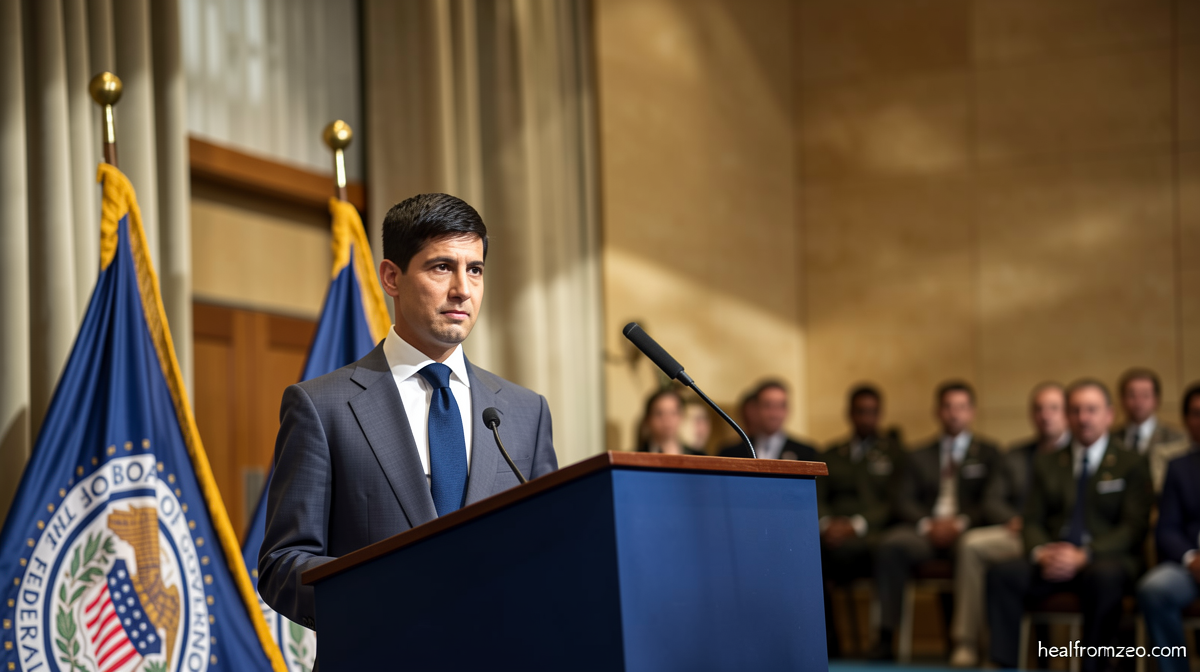
Healfromzero.com – Every August, the Federal Reserve’s top official steps onto a stage in the Rocky Mountains and tells the world where monetary policy is headed. That tradition, stretching back over twenty years, is about to end — and Wall Street is bracing for the fallout. Chairman Kevin Warsh, only three months into his tenure at the helm of the US central bank, will deliver the keynote address at the Kansas City Fed’s annual Jackson Hole symposium this Friday in Wyoming. But rather than offering the familiar roadmap of rate expectations, Warsh is widely expected to say very little about where borrowing costs will go next.
The decision marks a sharp departure from the playbook his predecessors followed. Since taking office, Warsh has deliberately withheld the incremental hints that traders once relied on to calibrate their positions. The result has been a visible uptick in long-term bond yields, particularly after his post-meeting press conference last month, in which he offered no commentary on the direction of rates. Traders interpreted the silence as a warning: the Fed may not move aggressively enough to rein in inflation that has crept back upward.
The Reaction Function Problem
At the heart of the market’s frustration lies a concept economists call the “reaction function” — essentially, a central bank’s explanation of what data points it monitors, how it interprets economic conditions, how it balances competing risks, and what specific developments would trigger a change in policy. The Brookings Institution laid out that framework in an analysis published last month, noting that without such transparency, markets are left to guess.
Warsh has repeatedly declined to articulate his reaction function when pressed by reporters. At a July gathering in Sintra, Portugal, he argued that the bond market does not need the Fed to spell out its decision rules.
“The bond market is able to actually understand quite well” without a reaction function, Warsh told the Sintra audience.
Many market participants disagree with that assessment. Ian Kresnak, senior investment strategist at Vanguard, pushed back directly:
“The bond market is really looking to the Fed for clues on their reaction function. What’s driving a lot of the volatility in the rates market is uncertainty around how the Fed is going to respond to inflation.”
The distinction matters. A reaction function describes the conditions under which policy would shift. Forward guidance, by contrast, projects a specific path for rates assuming the economy unfolds along a particular trajectory. Warsh has eschewed both, leaving investors to navigate a landscape with fewer signposts than at any point in recent memory.
What the Silence Costs
The consequences of that opacity are already visible in the debt markets. Government deficits continue to swell, and the flood of corporate bond issuance has added further supply pressure. Together, these forces have pushed yields higher over recent months, meaning the federal government faces ever-larger interest obligations on its roughly $40 trillion debt stock. Each additional basis point of yield translates into billions of dollars in annual servicing costs, compounding fiscal strain at a moment when Washington is already debating spending priorities.
Jan Groen, chief US economist at Societe Generale, captured the market’s anticipated reaction to Friday’s speech in blunt terms:
“I don’t expect any signals to come out of Kevin Warsh’s Jackson Hole speech. And if I’m right, I think the market is not going to like it.”
That expectation aligns with what Warsh has done since arriving at the Fed. His post-meeting remarks last month contained no rate-related language, and the immediate market response — a spike in long-duration yields — suggested traders were pricing in a Fed that might tolerate inflation running above target longer than they had hoped.
The Inflation Backdrop and Rate-Hike Odds
The pressure on Warsh is not merely rhetorical. Inflation has ticked upward, fueled by a confluence of factors: tariff-driven price increases, geopolitical disruption from ongoing wars, and the extraordinary capital expenditure cycle as corporations pour money into artificial-intelligence infrastructure. Some members of the Federal Open Market Committee are already advocating for the first rate increase since July 2023.
Market pricing, as tracked by CME FedWatch, currently assigns roughly a 34 percent probability that the FOMC will hike at its September 15–16 meeting. The odds climb meaningfully for subsequent sessions, reflecting the view that a tightening move is more likely later in the year than in the near term.
“It’s a close call whether or not they hike at all this year,” said Jim Caron, chief investment officer of portfolio solutions at Morgan Stanley Wealth Management.
Investors’ Plea for Transparency
A CNBC survey conducted this week of 31 economists, strategists, and investors found that 80 percent of respondents believed Warsh should lay out his economic reasoning in considerably more detail. The Jackson Hole symposium, they see, represents his most natural venue for doing so.
Analysts at financial firm Glenmede, in an August 24 note, framed the stakes plainly: the symposium “gives him room to lay out his personal views,” and the revelation of his reaction function “could reduce some of the uncertainty driving recent volatility in bond markets.”
Whether Warsh chooses to meet that demand — or doubles down on the philosophy that markets can self-calibrate without explicit policy signals — will define the tone of his first major public address as chairman. For a market already stretched thin by fiscal deficits, tariff shocks, and an inflation print that refuses to settle, the cost of continued ambiguity may prove harder to absorb than the cost of a hawkish surprise.
Related Reading
Frequently Asked Questions
What is Fed Chairman Kevin Warsh faces pressure?
Fed Chairman Kevin Warsh faces pressure is the main topic of this guide. The article explains the context, practical details, and next steps readers should understand.
Why does Fed Chairman Kevin Warsh faces pressure matter?
Fed Chairman Kevin Warsh faces pressure matters because readers are looking for a useful answer, not just a short summary. Good content should match search intent and help them decide what to do next.