
Kevin Warsh has little to say about interest rates. But he has plenty to say about AI
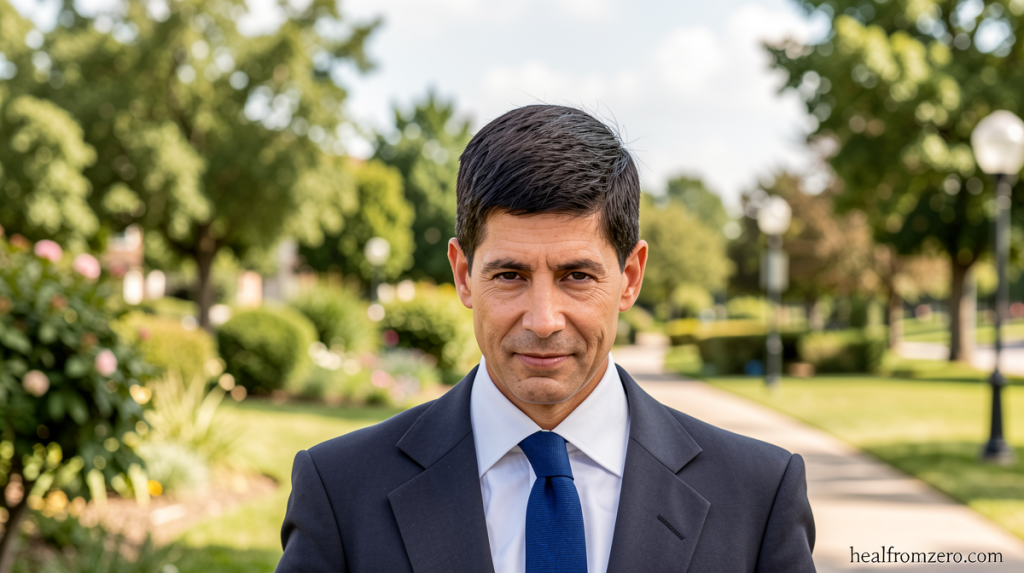
Kevin Warsh Has Little to Say on Rates, But AI Is His Priority
Healfromzero.com – Kevin Warsh has little to say about interest rates, but he has plenty to say about artificial intelligence. Since becoming Federal Reserve chairman nine weeks ago, Warsh has deliberately avoided traditional monetary policy commentary. This quiet approach marks a significant shift from the Fed’s customary “forward guidance” strategy, which helps markets anticipate future policy moves.
After the central bank kept its benchmark lending rate unchanged for a fifth consecutive meeting, Warsh described this communication shift as “a change for the better.” Rather than offering explicit signals about rate direction, he allows market forces to shape expectations while preserving policy flexibility.
AI as an Economic Game-Changer
Where Warsh has been notably vocal is his enthusiasm for artificial intelligence. He has consistently highlighted how major business investments—particularly in AI infrastructure—create favorable conditions for sustained economic growth. This view positions AI as more than technology; it represents a fundamental macroeconomic driver.
He is intently obfuscative. The only semi-clear opinion that Warsh has offered is that the supply side of the economy is likely to follow a path that improves productivity, presumably on AI-oriented investment, and that this will be disinflationary.
Thierry Wizman, global foreign exchange and rates strategist at Macquarie Group, captured this nuanced approach in his assessment of Warsh’s communication strategy. The Fed declined to provide additional commentary on the chairman’s evolving methodology.
Productivity Could Mean Lower Rates
Warsh’s advocacy for AI extends beyond public statements. He has directed one of his five presidential task forces to examine how artificial intelligence might generate disinflationary pressures through enhanced productivity. Derek Tang, a policy economist at Monetary Policy Analytics, explained that this task force concentrates heavily on AI’s potential to reduce price pressures while maintaining economic growth.
The mechanism is straightforward yet powerful. When productivity increases, businesses can produce greater quantities of goods and services without proportionally raising costs. This expanded capacity allows the economy to satisfy consumer demand without triggering inflationary spirals. In theory, such conditions create room for the Fed to reduce borrowing costs without risking price instability.
The productivity task force is focused very much on AI and how that could be disinflationary. It does seem that Warsh wants to keep that hope alive that productivity will be a convincing story to lower rates.
Tang’s observation highlights Warsh’s strategic patience. Rather than committing to specific rate cuts, he is building a narrative that could justify future reductions if AI-driven productivity gains materialize as expected.
Supply Shock and Market Dynamics
During congressional testimony last month, Warsh identified AI’s impact on business investment as “the most striking feature of the economy right now.” He described this phenomenon as a supply shock—rapidly expanding capacity for goods and services—occurring at an accelerated pace compared to projections made eighteen months or two years prior.
When pressed during the hearing about whether AI presents an opportunity for rate reductions, Warsh offered measured optimism. “I think this could be that opportunity. But I can’t say it for certain as of yet,” he stated, demonstrating his characteristic restraint.
Luke Tilley, chief economist at M&T Bank and Wilmington Trust, provided historical context for Warsh’s optimism. He noted that artificial intelligence can enhance productivity similarly to how the internet revolution transformed economic output, though the effects will likely unfold over a multi-decade timeline rather than appearing overnight.
Letting Markets Do the Heavy Lifting
Warsh appears comfortable allowing financial markets to contribute to monetary tightening, thereby reducing pressure on central bankers to raise borrowing costs directly. During last week’s post-meeting press conference, he highlighted the dramatic increase in long-term interest rates, describing it as the largest movement between Fed meetings in history.
This market-driven tightening occurred without any change to the Fed’s benchmark rate, suggesting that investors are pricing in future policy expectations independently. Warsh summarized this approach by emphasizing that market signals often provide clearer guidance than official statements.
Frequently Asked Questions
Why is Kevin Warsh quiet on interest rates?
Warsh has adopted a deliberate communication strategy that prioritizes market signals over explicit Fed guidance. This approach allows greater flexibility in policy decisions while letting investors form their own expectations about rate movements.
How does AI affect inflation according to Warsh?
Warsh believes AI-driven productivity improvements could create disinflationary pressures. By enabling businesses to produce more without raising costs proportionally, AI may help control price increases while supporting economic growth.
When might we see rate cuts under Warsh’s leadership?
Warsh has not committed to specific timing for rate reductions. He is building a narrative around AI productivity gains that could justify future cuts if these improvements materialize as expected over the coming years.
What is the Fed’s productivity task force focused on?
The task force examines how artificial intelligence might generate disinflationary pressures through enhanced productivity. It concentrates on AI’s potential to reduce price pressures while maintaining economic growth trajectories.