
Putin’s false claim of the capture of one Ukrainian town exposes the slow pace of Russia’s bloody advance
Putin s False Claim of Town Capture Shows Slow Russian Advance
Putin s false claim of the capture of Kostyantynivka exposes the grinding reality of Russia’s military campaign in Ukraine. The year-long struggle for this strategic Donbas settlement reveals how Moscow’s forces continue advancing despite mounting casualties and limited territorial gains. On July 3, Russia’s defense ministry released video footage showing troops allegedly securing the town, with soldiers waving Russian flags through central neighborhoods. Yet this proclamation crumbled under scrutiny when compared with recent visual evidence, Ukrainian military statements, and independent mapping analysis of actual frontline positions.
Questionable Claims and Strategic Messaging
This misleading announcement was not an isolated incident but part of a broader pattern of Russian declarations over recent months. The Kremlin appears determined to convince both domestic audiences and international observers—especially American officials—that operations are progressing rather than stalling. Ukrainian President Volodymyr Zelensky responded swiftly to the misinformation, inviting Vladimir Putin to visit the disputed territory himself if Moscow truly held it, and to use that moment to negotiate peace terms directly.
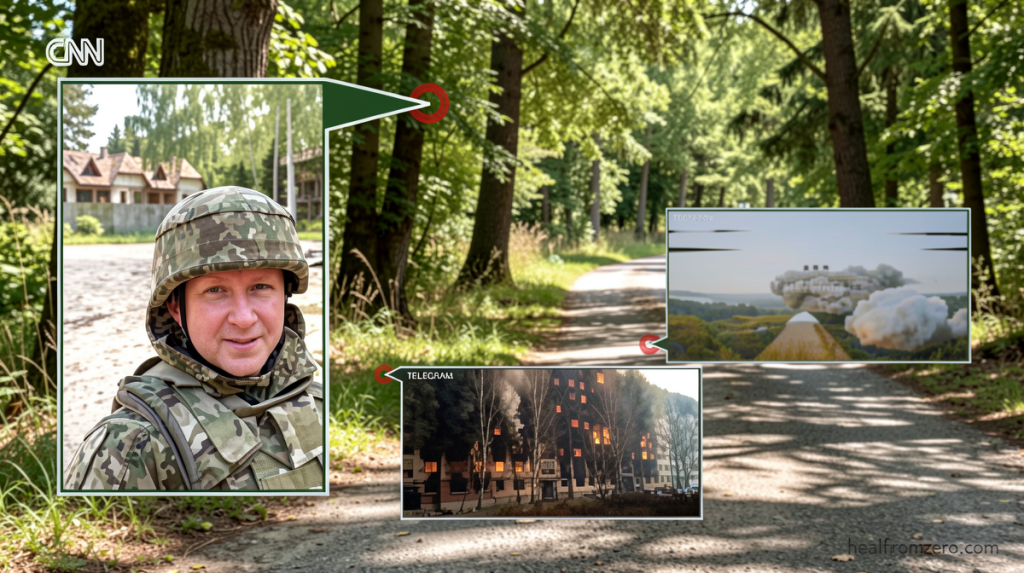
CNN journalists have documented conditions inside and around Kostyantynivka on two separate occasions during the past twelve months. Through careful geolocation verification of video materials and direct interviews with locals, reporters painted a picture of tremendous human suffering alongside gradual, hard-won Russian territorial advances that preceded the erroneous capture announcement.
Mapping the Slow Advance
Independent Ukrainian analysts at Deep State produced comprehensive mapping showing Russian units positioned just outside town boundaries, attempting to breach defensive lines. Roads leading into Kostyantynivka feature protective fishing net installations specifically designed to intercept hostile aerial drones. Despite ongoing drone threats, civilian vehicles continue accessing the central market area without major disruption. Local residents remain active, though some expressed hesitation about being filmed, potentially concerned about future Russian occupation and possible sanctions for cooperating with Western news organizations.
By early winter, cartographic data revealed the contested gray zone moving progressively closer to downtown districts. Intensified aerial bombardment targeted residential structures, with Ukrainian military videos capturing apartment buildings burning in southwestern neighborhoods. Russian drone footage documented destruction occurring mere streets from Ukrainian defensive positions. Nevertheless, defenders maintained confidence within central locations, as evidenced by a November video showing an officer casually positioned in Victory Square.
Escalating Costs and Expanding Threats
The final months of 2025 witnessed Russia’s most substantial territorial movements, according to Deep State documentation from the opening week of 2026. Contested territory now reached the town perimeter while two separate Russian columns approached primary access routes. Two critical developments shaped Moscow’s progress trajectory during this period.
First, drone operational ranges expanded continuously—both miniature first-person-view models targeting individual soldiers and vehicles, and larger-capacity machines striking structural targets. This technological evolution gradually pushed safe zones farther from Kostyantynivka, complicating Ukrainian defensive strategies considerably. Second, Western officials began aligning with Ukrainian assessments regarding Russian battlefield losses, estimating approximately 35,000 killed or wounded monthly. This remarkable figure resulted from coordinated Ukrainian drone campaigns aimed at maximizing enemy casualties alongside Moscow’s persistent wave assault methodology.
January video evidence confirmed Ukrainian forces remained firmly positioned near the contested railway station at month’s end. By February, white phosphorus munitions—considered unlawful under humanitarian law when deployed over residential zones—descended upon southwestern apartment complexes, indicating the heaviest fighting concentrated in peripheral areas. These developments underscore the staggering human expenditure accompanying Russia’s incremental territorial acquisitions, with total casualties now approaching two million according to recent assessments.
“The pattern of false claims suggests an effort to convince both domestic viewers and international counterparts that military operations continued advancing rather than stagnating.”
Putin s false claim ultimately highlights not just a single error in reporting, but the broader challenge facing Ukraine’s defense. Despite overwhelming Russian numerical superiority and relentless bombardment, Ukrainian forces continue holding strategic positions while exacting heavy tolls on advancing troops. The slow pace of territorial change, combined with mounting casualties on both sides, suggests that any resolution to this conflict will require more than battlefield victories—it will demand political will and international commitment to lasting peace.