
Man blown from 12th-floor apartment as deadly tornado rips through central China
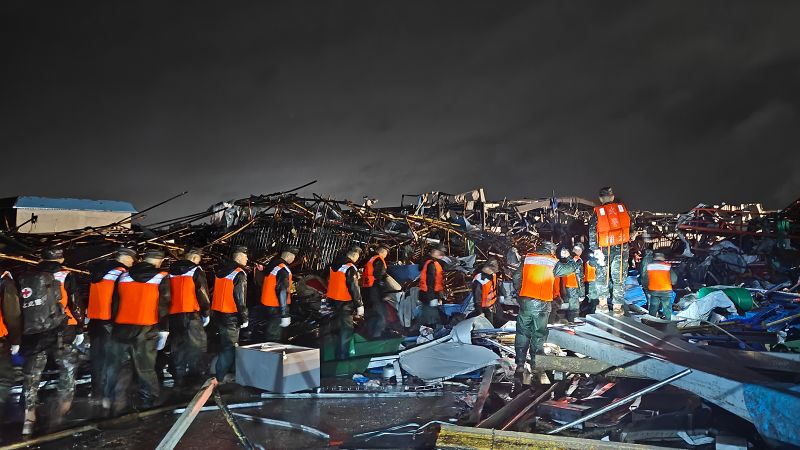
Deadly Tornado Strikes Central China, Displacing Man from 12th-Floor Apartment
Man blown from 12th floor apartment – On Monday evening, a violent tornado swept through Hubei province in central China, leaving a path of devastation and claiming at least 11 lives, according to Xinhua news agency. The storm’s intensity was underscored by its ability to lift a man from his 12th-floor residence, an extraordinary event that captured national attention. Reports indicate over 331 people were injured, with property damage reported across multiple regions, including collapsed homes, overturned vehicles, and farmland destruction. The tornado, which reached wind speeds of up to 260 kilometers per hour, was described as an unprecedented occurrence for the area, where such severe weather events are rare.
Unusual Tornado Displaces Resident in Huanggang
Local media detailed how the tornado’s power was so overwhelming that it dragged a 30-year-old man and his possessions, including a sofa and cabinets, from his high-rise apartment in Huanggang city. The man, now in intensive care, remains a focal point of rescue operations. This incident highlights the tornado’s ability to generate extreme force, as seen in the city’s other areas, where heavy trucks were reportedly lifted and transported up to 30 meters by the wind. The event has sparked renewed discussions about the region’s preparedness for sudden, severe weather phenomena.
“The tornado’s intensity was unprecedented, and its impact on both people and infrastructure was devastating,” stated a local official in Huanggang, reflecting on the chaos that unfolded.
Footage from the scene showed the tornado tearing through the area with alarming speed, prompting emergency responses. While the immediate effects of the storm are still being assessed, the disaster has already drawn comparisons to previous extreme weather events in the region. Xinhua noted that Hubei’s last tornado occurred in May 2021, emphasizing the rarity of such occurrences. The current storm, however, has been linked to the overlap of Typhoon Maysak with the early-summer rainy season, a phenomenon that has intensified weather conditions across several provinces.
Broader Regional Impacts and Rescue Efforts
Disaster response teams have been mobilized to address the aftermath of the tornado, with over 3000 personnel participating in rescue and recovery operations. Local authorities acknowledged the “immense losses from the disaster” and expressed concern over the scale of destruction. In addition to the human toll, more than 4855 homes were damaged in Hubei, a major industrial hub known for its automotive manufacturing sector. The economic implications of the damage are expected to be significant, particularly for communities reliant on infrastructure.
“The tornado struck with such force that it disrupted daily life and exposed vulnerabilities in our emergency systems,” said a government spokesperson, citing the need for improved disaster preparedness.
Meanwhile, the storm’s influence extended beyond Hubei. In Ezhou city, dramatic video captured the tornado as it ripped through neighborhoods, resulting in five fatalities. Social media platforms have since shared clips of the event, drawing widespread attention to the chaos and destruction. The storm has also intensified ongoing weather challenges in other parts of China. For instance, the southwest Guangxi region continues to grapple with severe flooding, a situation worsened by Typhoon Maysak, which has brought record-breaking rainfall since Sunday. Four people have died in Guangxi, and eight remain missing, with over 600 residents still awaiting evacuation.
Connecting Weather Patterns and Regional Disasters
Experts suggest that the convergence of Typhoon Maysak with the early-summer monsoon season has created a perfect storm of conditions in central and southern China. This overlap has led to an unusual increase in extreme weather events, including the recent tornado in Hubei and the ongoing floods in Guangxi. The phenomenon has also been linked to a deadly landslide in Gansu province, which occurred in the northwest earlier this week. Such interconnected disasters have raised questions about climate patterns and their impact on regional stability.
As the nation deals with the aftermath of these incidents, Chinese leader Xi Jinping has urged a comprehensive effort to aid those affected. His call for an “all-out rescue and relief campaign” underscores the government’s commitment to addressing the crisis. The incident in Huanggang, in particular, has become a symbol of the tornado’s destructive potential, with its unique ability to displace individuals from upper floors. This has sparked debates about building codes and safety measures in high-rise structures, especially in regions where tornadoes are uncommon.
Snake Escape Adds to Regional Chaos
Amid the widespread destruction, an unusual secondary crisis emerged in Hengzhou village. A flood at a local snake farm caused thousands of snakes to escape into surrounding areas, creating additional dangers for residents. Officials confirmed that the water inundation, triggered by heavy rainfall, led to the release of over 800 snakes, including venomous species like cobras. Social media videos showed snakes emerging from muddy water, with one villager reported to have been bitten and hospitalized.
“The floodwaters overwhelmed the facility, and we’re working to contain the situation before more snakes enter nearby homes,” said an official from the Hengzhou agricultural department.
Residents formed a volunteer team to retrieve the escaped snakes, demonstrating quick thinking in the face of unexpected challenges. While many of the snakes are non-venomous, such as water snakes and rat snakes, the presence of cobras has raised concerns about potential health risks. The incident highlights the far-reaching consequences of the severe weather, which has disrupted not only urban areas but also rural communities. Local media outlets like Hongxing have documented these events, providing firsthand accounts of the storm’s impact on everyday life.
Long-Term Implications and Weather Patterns
The tornado and associated flooding have reignited conversations about climate change and its role in increasing the frequency of extreme weather events. Scientists note that the early-summer rainy season, combined with typhoon activity, has created a unique atmospheric condition that exacerbates disaster risks. This has been particularly evident in Hubei, where the tornado’s occurrence is a rare but alarming development.
As the situation unfolds, officials are working to assess the full extent of the damage and implement long-term recovery strategies. The government’s swift response has been praised, though challenges remain in coordinating efforts across multiple regions. The incident in Huanggang, with its dramatic displacement of a man, serves as a vivid reminder of the tornado’s power and the need for improved infrastructure. Meanwhile, the ongoing flood crisis in Guangxi and the recent landslide in Gansu continue to strain resources, underscoring the interconnected nature of China’s weather-related challenges.
With the nation’s focus on recovery, the story of the man lifted from his apartment has become a powerful symbol of the storm’s intensity. It also highlights the resilience of communities facing such disasters. As officials work to restore normalcy, the broader implications of the weather patterns suggest that extreme events may become more frequent, requiring heightened vigilance and preparedness across the country.