
Ancient DNA reveals clues about mysterious ‘Golden Man’ and rise of the Scythian elites
Ancient DNA reveals clues about mysterious ‘Golden Man’ and rise of the Scythian elites
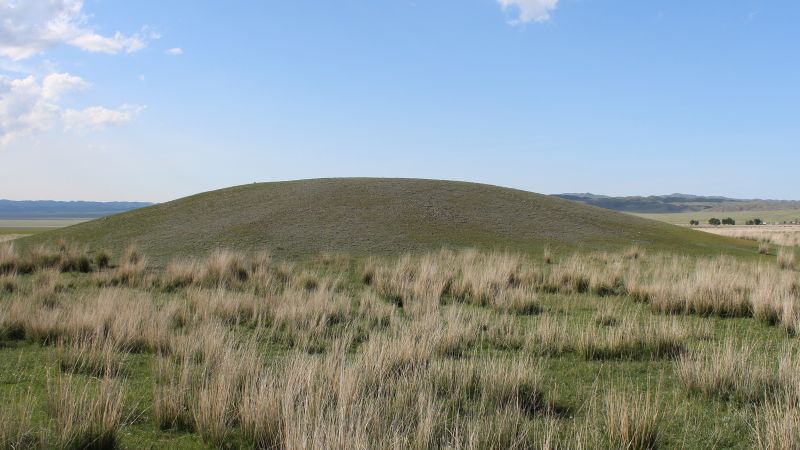
Ancient DNA reveals clues about mysterious – During the Iron Age, the Scythians, renowned for their equestrian prowess, traversed the vast Eurasian Steppe, leaving behind a legacy of warrior culture and intricate societal structures. Their power was concentrated in the hands of an elite class, whose status was immortalized in elaborate funerary rites. Among the most iconic of these figures is the “Golden Man,” whose tomb, a kurgan in Kazakhstan, was unearthed in 1969 and remains a focal point of archaeological fascination. This structure, dating back to approximately 400 BC to 300 BC, contained a wealth of artifacts, including iron weapons, bronze objects, a silver bowl, and over 4,000 gold ornaments. Now, groundbreaking genetic research has shed light on the origins of this social hierarchy, revealing that Scythian elites like the Golden Man inherited their elevated standing, forging a hereditary system that reshaped the region’s societal dynamics.
Genetic Evidence of Hereditary Elites
Researchers have long debated the social organization of the Scythians, but a recent study published in Science Advances offers new insights. By comparing DNA from dozens of individuals across multiple burial sites, scientists discovered that elite Scythians were often closely related, even when their groups were geographically distant. This finding challenges previous assumptions that Scythian power was derived solely from military skill or geographic dominance. Instead, it suggests that a hereditary lineage played a central role in consolidating authority, creating a distinct social stratification absent in earlier Bronze Age communities.
The study analyzed DNA from 85 individuals, with 38 belonging to elite burials and 47 to non-elite ones. Populations during the Iron Age exhibited greater genetic diversity than those in the Bronze Age, yet elites displayed shared genetic markers known as runs of homozygosity—segments of DNA that indicate common ancestry. These patterns revealed that high-status individuals formed a tightly knit genetic subgroup, distinct from the broader population. According to the researchers, this subgroup likely helped maintain continuity amid periods of intense genetic mixing, solidifying their influence over time.
“An elite system based on lineage is a very important finding, as wealth was passed down across generations,” said Alicia R. Ventresca-Miller, an associate professor of anthropology at the University of Michigan and associate curator of archaeological sciences at its Museum of Anthropological Archaeology. She noted that the study’s integration of genetic, archaeological, and textual evidence provides a robust framework for understanding how status became hereditary.
Clarifying the Golden Man’s Identity
The Golden Man’s tomb, with its opulent treasures, has long sparked curiosity about his identity. While the nickname suggests a male figure, earlier studies were unsure. The latest research used advanced DNA sequencing techniques to examine the individual’s genome, addressing gaps in data caused by degradation. By analyzing specific genetic markers, scientists concluded that the Golden Man was likely male, aligning with the notion that elite status was hereditary and often associated with male leadership.
Further analysis revealed that the Golden Man belonged to a southern subset of Scythians known as the Saka. This subgroup, which may have had distinct cultural or political roles, appears to have been more socially stratified than their northern counterparts. The findings also highlight the significance of the kurgan as a symbol of power, with its monumental scale and complex design. These structures, sometimes reaching 49 feet (15 meters) in height and spanning 345 feet (105 meters) in diameter, often featured corridors, catacombs, and side chambers that housed remains of animals or family members.
“Such practices would have helped preserve bodies that couldn’t be entombed immediately because their elaborate burials took time to prepare,” explained Ainash Childebayeva, senior author of the study and assistant professor in the Department of Anthropology at the University of Texas at Austin. She emphasized the cultural importance of these burial mounds, noting that their construction often required significant communal effort.
Elites and Their Kin: A Dynasty of Power
The study’s most striking discovery was the evidence of familial ties among Scythian elites. In one case, kurgans of an elite man and his grandchildren were found at separate cemeteries more than 60 miles (nearly 100 kilometers) apart. This relationship, combined with the richness of the burials, pointed to a system of dynastic rule, where status was not only inherited but also reinforced through intergenerational connections.
For example, a grandchild who received an elite burial was just one year old at the time. This detail, Childebayeva noted, underscores the hereditary nature of power. “If the status was hereditary, then it would make sense that a young child could be buried with the same honor as their ancestors,” she said. The presence of mummification or postmortem trepanation in some remains further illustrates the lengths to which Scythians went to preserve their elite dead, ensuring their legacy endured through generations.
The research also provides answers to lingering questions about the Scythians’ social evolution. While the Bronze Age saw more fluid groupings, the Iron Age marked a shift toward structured inequality. The genetic subgroup of elites, with its shared ancestry and homogeneity, suggests that power was increasingly concentrated within specific families. This pattern may have allowed elites to control resources, influence rituals, and shape the region’s cultural identity.
Broader Implications for Scythian History
The study’s implications extend beyond the Golden Man’s tomb. By linking genetic data with archaeological findings, researchers have uncovered a more nuanced picture of Scythian society. For instance, the discovery of a Bronze Age metropolis in Kazakhstan’s steppe hints at a complex network of settlements and interactions that may have supported the elite class. This suggests that the rise of Scythian elites was not isolated but part of a broader historical trend.
Moreover, the findings challenge the idea that Scythian elites were purely merit-based. Instead, they point to a system where status was intertwined with biological lineage, creating a lasting impact on the region’s social fabric. This hereditary model may have influenced how Scythians organized their communities, allocated resources, and maintained their hierarchical structures over centuries.
As the Scythians’ history unfolds, these genetic revelations add a critical layer to our understanding. The Golden Man’s tomb, once a mystery, now serves as a testament to the interplay between biology and society in shaping ancient power structures. By bridging the gap between past and present, the study offers a glimpse into how hereditary status, once established, could persist and evolve through time, influencing the trajectory of entire civilizations.