
Iran sends a defiant message to Trump with colossal funeral for slain Supreme Leader Ali Khamenei
Iran Sends a Defiant Message to Trump with Colossal Funeral for Slain Supreme Leader Ali Khamenei
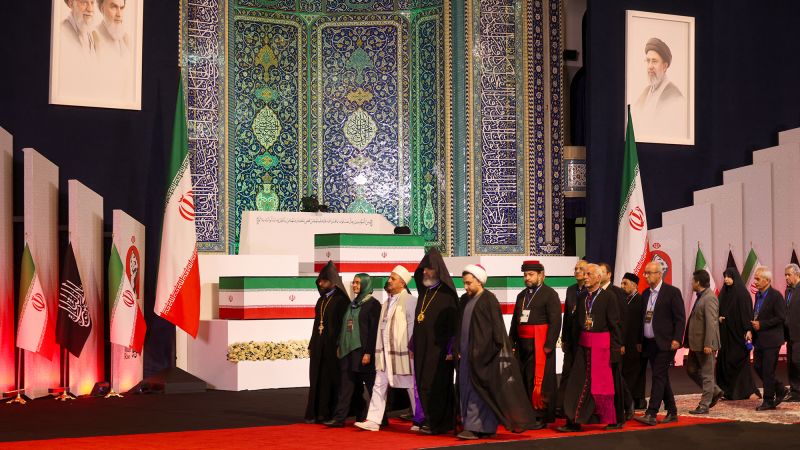
Iran sends a defiant message to Trump – More than four months following his assassination, Supreme Leader Ali Khamenei is being honored in a grand, multi-city funeral that spans five cities across two nations. The event, set to last over a week, is expected to draw millions of mourners, with the Iranian government orchestrating an unprecedented logistical operation to manage the influx of people. This ceremony, rich in religious symbolism, coincides with the 250th anniversary of the United States’ Independence Day, amplifying its significance as a statement of resistance against Western influence. Despite the country’s prolonged conflict with the U.S. and Israel, which has resulted in severe economic strain and military setbacks, Tehran is determined to present Khamenei’s death as a victory rather than a defeat.
A Spectacle of Resilience and Symbolism
The funeral procession is being staged during the Islamic month of Muharram, a time of profound mourning in Shiite Islam. This period commemorates the martyrdom of Imam Hussein, a revered religious figure whose death is seen as a symbol of sacrifice and justice. Khamenei’s body will lie in state on the 250th U.S. Independence Day, a deliberate choice that juxtaposes the celebration of American freedom with the solemnity of Iran’s ritual. Another critical date in the event aligns with a major Shiite observance, further reinforcing the connection between Khamenei’s legacy and the faith’s historical struggles.
Authorities have mobilized an extensive network of government workers, educators, laborers, and religious groups to ensure the event runs smoothly. Firefighters, soldiers, and even foreign dignitaries are expected to participate in the logistics. The sheer scale of the operation is a testament to the regime’s commitment to showcasing its endurance, even in the face of international criticism and internal dissent. For Iranians, the funeral serves as both a national ritual and a political statement, aiming to unify the populace under a shared narrative of perseverance.
The Leader’s Lasting Impact
Khamenei, who ruled for 37 years, was known for his unyielding stance against the West and his leadership during some of Iran’s most significant protests. His assassination on February 28, the opening day of the U.S.-Israeli war, sparked widespread outrage, but the funeral now transforms his death into a celebration of his symbolic power. As the regime’s chief spiritual and political figure, Khamenei’s passing has galvanized supporters, who view him as a martyr whose sacrifice validates their cause. His son, Mojtaba Khamenei, is set to make his first public appearance during the ceremony, marking a transition in leadership that underscores the event’s importance.
“The assassination has made Khamenei far more powerful symbolically in death than he was in life,” said Sina Toossi, a senior nonresident fellow at the Center of International Policy, in a statement published by state media. “Khamenei is now being framed as a martyred religious authority, akin to revered Shia saints whose worldview was vindicated by the manner of his death.” This sentiment reflects the regime’s strategy of transforming loss into a rallying point, leveraging Khamenei’s legacy to strengthen its ideological grip. The funeral is not merely a tribute but a strategic maneuver to assert Iran’s resolve in the face of global pressure.
Historical Precedents and New Beginnings
The event draws parallels to two of Iran’s most iconic funerals: those of its founder, Ayatollah Ruhollah Khomeini, in 1989, and Quds Force commander Qassem Soleimani in 2020. Both occasions were marked by massive crowds and chaotic scenes, with Khomeini’s body famously displayed in the same location where Khamenei’s is scheduled to rest. In 1989, mourners overwhelmed the site, tearing at the coffin’s shrouds and demanding the leader’s presence. Soleimani’s funeral, held in 2020, also saw similar fervor, with thousands gathering in Baghdad to pay homage to the fallen commander.
Unlike those past events, the current funeral is being carefully planned to minimize risks while maximizing its impact. The regime’s leaders, including Mohammad Bagher Ghalibaf, the powerful parliamentary speaker, have emphasized the importance of this ritual as a demonstration of national unity. In a message published by state media, Ghalibaf wrote, “We must rise and raise the cry for the nation’s blood to the world so that the world knows that the honorable and noble nation of Iran does not remain silent in the face of oppression… and will not let go of the blood of its Imam (Khamenei).” The quote underscores the regime’s belief that Khamenei’s death is a turning point, one that cements his status as a symbol of resistance and resilience.
A Message to the World
The funeral’s timing is no coincidence. By aligning it with the U.S. Independence Day, Iran is not only highlighting its defiance of American policies but also drawing a direct comparison between the nation’s founding ideals and its own struggles. The ceremony, which will take place in three Iranian cities and two holy sites in Iraq, is designed to project an image of strength and continuity. For the regime’s enemies, it is a reminder that Iran’s influence and determination remain unshaken, even after years of conflict and sanctions.
While the event has dominated headlines in Iran, it has overshadowed recent diplomatic efforts. Prior to the funeral, discussions about U.S.-Iran relations were a central focus of media coverage, but now, tribute songs, documentaries, and religious processions have taken center stage. This shift reflects the government’s intent to redirect public attention toward national pride and spiritual unity, rather than lingering on the tensions that have fueled the war. The funeral also serves as a platform to reaffirm Iran’s commitment to its religious and political identity, reinforcing the role of the Supreme Leader as a unifying figure.
The Weight of History
Khamenei’s death, while a blow to the regime, has also been a catalyst for deepening its ideological roots. His leadership was defined by a combination of rigid authority and strategic pragmatism, with a focus on maintaining the Islamic Republic’s core principles despite external challenges. The funeral, therefore, is as much about preserving his image as it is about honoring his memory. By intertwining his story with the martyrdom of Imam Hussein, the event taps into a centuries-old narrative of sacrifice, positioning Khamenei as a modern-day saint in the eyes of his followers.
The logistical effort required to stage such an elaborate ceremony is unprecedented in scale. Government employees, universities, and labor unions have been tasked with coordinating transportation, security, and the distribution of resources to accommodate the massive turnout. Religious mourning groups, which have been instrumental in organizing public demonstrations, are playing a key role in ensuring the funeral’s success. These groups, often linked to the regime’s hardline factions, are expected to lead the chants and rituals that will define the event’s emotional intensity.
As the funeral approaches, the atmosphere in Iran is charged with a mix of reverence and determination. For many, Khamenei’s death is not an end but a beginning—a chance to reinvigorate the nation’s spirit and reaffirm its place on the global stage. The procession, with its blend of religious devotion and political messaging, is a powerful assertion that Iran will not be silenced, even in the wake of its most significant loss. The event, therefore, is more than a commemoration; it is a declaration of continued strength and an invitation to the world to recognize Iran’s enduring resolve.
In a world where leaders are often celebrated or criticized based on their public image, Khamenei’s funeral is a masterclass in symbolism. It transforms a moment of tragedy into a triumph, using the power of ritual to reframe the narrative of his life and death. The spectacle, which includes military parades, religious processions, and a focus on the Imam’s spiritual legacy, is intended to leave a lasting impression on both domestic and international audiences. As the mourning period unfolds, it will be clear whether this event succeeds in solidifying Iran’s position as an unyielding force in the region and beyond.