
NASA makes moves to dodge costly delays on its path to build a $30 billion moon base
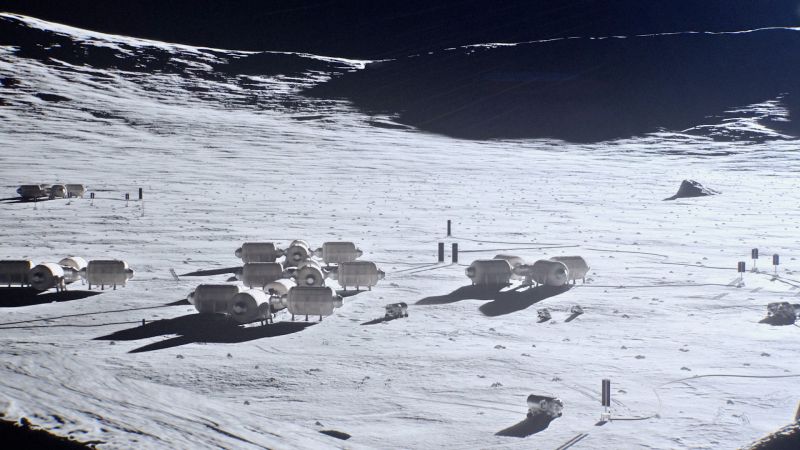
NASA Dodges Costly Delays in $30 Billion Moon Base Construction
NASA makes moves to dodge costly – NASA is taking steps to avoid costly delays in its ambitious $30 billion moon base initiative. Recently, the agency has announced partnerships with three private firms—Astrobotic, Firefly, and Intuitive Machines—to execute critical missions that will deliver scientific payloads and essential resources to the lunar surface. These efforts are part of a broader strategy to establish a sustainable human presence on the Moon, with robotic systems serving as the backbone for initial development. By leveraging private-sector innovation, NASA aims to accelerate progress and stay on track for its long-term lunar goals.
Strategic Partnerships and Timeline Adjustments
The newly awarded contracts mark a pivotal phase in NASA’s lunar infrastructure plan. Carlos García-Galán, NASA’s program executive for the moon base, emphasized that these partnerships are foundational to achieving the agency’s objectives. Phase 1 of the program, set to conclude by 2028, is expected to cost around $10 billion and focus on deploying robotic assets to prepare for future human missions. The collaboration with Astrobotic, Firefly, and Intuitive Machines ensures diverse technological approaches, enhancing the resilience and innovation of the lunar operations.
Each company has been entrusted with specific missions: Astrobotic will lead two of the four, while Firefly and Intuitive Machines handle one each. This distribution reflects NASA’s effort to balance risk and efficiency, as the success of these ventures could determine the pace of the moon base’s development. Additionally, the agency has decided to rename three existing missions to better align with its overall vision, underscoring the importance of adaptability and clear direction in its lunar strategy.
Overcoming Setbacks Through Flexibility
Despite progress, NASA faces challenges that could impact its timeline. Blue Origin, Jeff Bezos’ aerospace company, was initially set to deliver its Blue Moon lander to the lunar south pole later this year. However, a major setback in May—a rocket explosion at the launchpad—has delayed this critical component. García-Galán acknowledged the disruption but stressed that NASA is prepared to pivot. “We are not going to wait for delays,” he said, highlighting the agency’s commitment to maintaining momentum by exploring alternative launch vehicles for the Blue Moon.
NASA’s proactive approach extends beyond immediate fixes. By fostering collaboration with private partners, the agency seeks to mitigate risks and ensure continuity. The south pole mission, once a key target for resource utilization, now relies on backup plans. This adaptability is crucial as the moon base project moves forward, with NASA’s ability to navigate setbacks becoming a test of its strategic resilience.
“We are not going to sit on our hands and wait for the capabilities needed to achieve our goals,” declared NASA Administrator Jared Isaacman in a recent social media update. “We will work closely with our partners to overcome obstacles and deliver results.” This statement reflects NASA’s determination to maintain a consistent timeline, even as technical challenges arise. The agency’s reliance on private firms underscores its strategy to combine public and private resources for maximum efficiency.
Global Competition and Technological Leverage
NASA’s renewed focus on the Moon is driven by global competition, particularly China’s rapid advancements in lunar exploration. Over the past decade, China has successfully established research bases and conducted robotic landings, prompting the U.S. to intensify its efforts. By investing in robotic systems, NASA aims to secure its position in the race for lunar dominance, ensuring that the moon base project remains a cornerstone of international space exploration.
While Blue Origin’s setback introduces uncertainty, other companies are already moving forward. The moon base’s development is also aligned with NASA’s long-term vision for the 2030s, which includes not only habitat construction but also the establishment of power systems and communication networks. This comprehensive strategy positions NASA to compete effectively with China, while also laying the groundwork for future Mars missions and deep-space exploration.