Viktor Orbán re-elected as Fidesz party leader in Hungary despite election loss

Viktor Orbán Re-Elected as Fidesz Leader Amid Political Shifts in Hungary
Party Congress Marks New Chapter for Orbán’s Movement
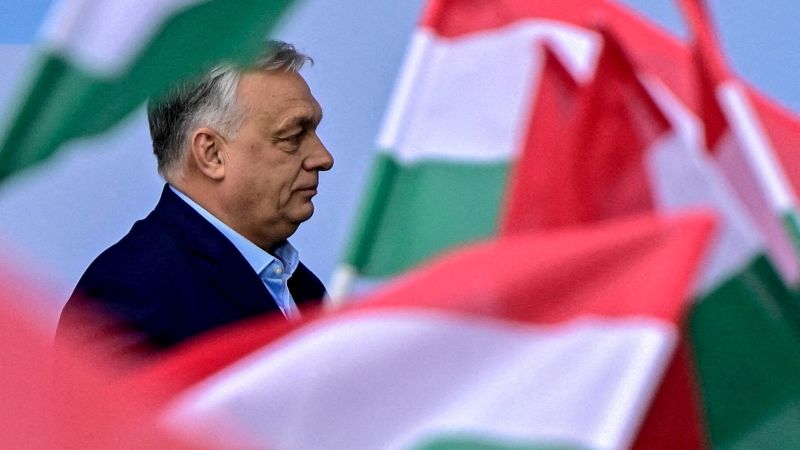
Viktor Orbán re elected as Fidesz – On Saturday, Hungary’s right-leaning Fidesz party reaffirmed its commitment to Viktor Orbán’s leadership at its annual congress, a decision that underscores his enduring influence despite the party’s recent loss of power in parliamentary elections. The event, held in the capital city, saw the former prime minister emerge victorious from a leadership vote, with 729 of 737 delegates casting their support. This outcome came as a surprise to some analysts, given the party’s defeat in the April 12 election to the center-right Tisza party, which secured a two-thirds majority in the National Assembly. The results signal a potential realignment in Hungary’s political landscape, with Fidesz now tasked with adapting its strategy to regain public trust.
Orbán, who has held the position of party leader since 2010, is widely regarded as the architect of Hungary’s “illiberal” democratic model—a framework he has championed for over a decade. His leadership has been instrumental in shaping the nation’s policies, from immigration control to judicial reforms, and has inspired nationalist movements across Europe and the United States. Yet, his re-election has sparked debate about the party’s future, especially as Fidesz’s support has dwindled following the April elections. According to recent opinion polls, the party’s approval ratings have plummeted, with only 17% of voters backing it compared to 53% for Tisza. This decline has forced Orbán to address internal and external pressures, including calls from some of his former allies for him to step back from the political arena.
Despite these challenges, Orbán has maintained a resolute stance, declaring his intent to continue leading the party. His speech at the congress, which preceded the vote, included a powerful statement: “I do not give up, I never, never, never, never, never give up.” This refrain, which has become a signature element of his political rhetoric, reflects his determination to rebuild Fidesz’s appeal. He emphasized that while the party had served as an effective governing force for 16 years, it now needs to transform its approach to compete as a credible opposition. “We must become a party that can not only oppose but also prepare for the next opportunity to govern,” he asserted, acknowledging the necessity of change without conceding defeat.
“I do not give up, I never, never, never, never, never give up,” Orbán told the congress in a speech before the vote, reiterating that he took full responsibility for the party’s election defeat.
Orbán’s political journey has been marked by a blend of resilience and strategic evolution. While his leadership has been criticized for centralizing power and reducing civil liberties, it has also been praised for its ability to navigate Hungary’s complex political environment. The party’s recent electoral loss to Tisza has raised questions about the sustainability of his vision, particularly as the new ruling party now holds the authority to reverse key constitutional reforms. This shift could reshape the balance of power in Hungary, with Tisza poised to implement policies that challenge Orbán’s legacy.
Political observers have noted that Fidesz’s defeat was not merely a result of policy disagreements but also a reflection of changing voter sentiments. The party’s traditional base, which has long supported Orbán’s nationalist agenda, appears to have splintered in the wake of the April election. A May survey by the Publicus Institute highlighted this trend, showing Tisza’s support surged to 55%, up from the 53% it recorded during the election. In contrast, Fidesz’s backing fell to 17%, a sharp drop from its previous 39%. These figures suggest that Orbán’s movement faces an uphill battle in reclaiming its former dominance.
Orbán’s re-election as party leader comes amid heightened scrutiny of his leadership style. Critics argue that his administration has prioritized ideological control over pragmatic governance, a strategy that has alienated moderate voters and contributed to the party’s loss. However, supporters view his return as a sign of unity and renewed purpose. The leader’s address to the congress emphasized the importance of maintaining Fidesz’s core principles while exploring new tactics to reconnect with the electorate. “We must evolve, but we must also remain true to our values,” he stated, a sentiment that resonates with both his loyalists and the broader nationalist movement.
Meanwhile, the newly elected Prime Minister, Peter Magyar, has signaled a shift in power dynamics by threatening legal action against the president if he refuses to resign. This move highlights the tension between the executive and legislative branches, with Tisza now in a position to challenge Orbán’s influence beyond the party level. Magyar’s assertion of authority underscores the political stakes of the current transition, as the ruling party aims to consolidate its gains while Fidesz seeks to regroup.
Despite the setbacks, Orbán remains a pivotal figure in Hungarian politics. His ability to mobilize support and maintain a strong organizational structure has enabled Fidesz to survive the electoral loss. The party’s leadership now faces the challenge of reinventing itself in a rapidly changing political climate. As Orbán prepares to guide Fidesz through this new phase, the focus will be on rebuilding its coalition and addressing the concerns that led to its defeat. The coming months will be critical in determining whether the party can restore its relevance or if the center-right’s rise marks the beginning of a lasting political transformation.