Flight diverted because of power bank charging device in hold luggage

Flight Diverted Due to Power Bank in Hold Luggage
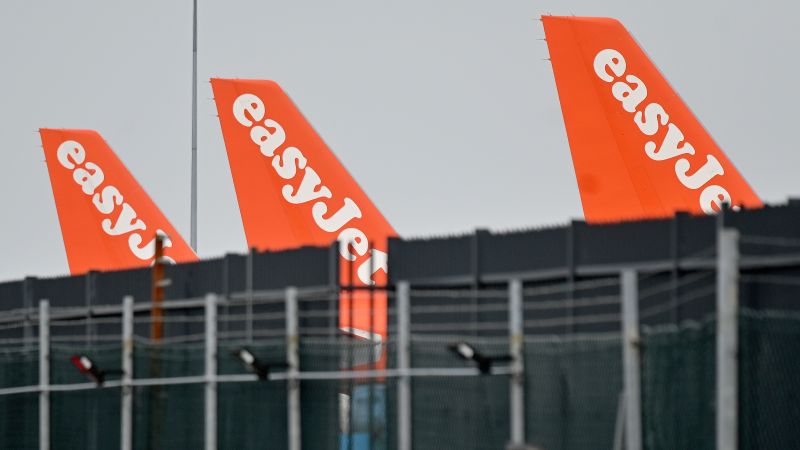
Flight diverted because of power bank – During a routine journey from Hurghada to London, an EasyJet aircraft was forced to alter its course to Rome after a passenger reported a power bank was charging another device in their hold luggage. The airline confirmed the incident to CNN, explaining that the decision to divert was made as a safety precaution. The flight, designated EZY2618, departed from Hurghada, a prominent Egyptian resort city on the Red Sea, on Tuesday. According to FlightAware tracking data, the plane was operating at an altitude of approximately 10,980 meters (around 36,000 feet) when the diversion occurred. The aircraft eventually landed at Rome Fiumicino Airport at 11:33 p.m., marking a significant disruption to the original itinerary.
EasyJet attributed the diversion to the power bank’s placement in the hold luggage, where it continued to charge without oversight. The airline’s statement emphasized that the incident was a result of a safety protocol triggered by the crew once they became aware of the situation. “The Captain then took the decision to divert as a precaution in line with safety regulations,” the airline noted. This underscores the growing emphasis on battery safety in air travel, particularly when lithium-ion devices are involved.
“The safety of its customers and crew is easyJet’s highest priority and easyJet operates its fleet of aircraft in strict compliance with all manufacturers’ guidelines,” the statement added. The airline also expressed regret over the inconvenience caused by the delay, offering passengers accommodations and meals during the overnight hold.
The Growing Trend of Power Bank Restrictions
As incidents involving lithium-ion batteries continue to rise, a number of airlines have implemented stricter rules regarding their use. The International Civil Aviation Organization (ICAO) introduced new guidelines in March, mandating that passengers carry no more than two power banks onboard and prohibit recharging them during flight. This move was a response to increasing concerns about battery malfunctions, which can pose serious risks in confined spaces like airplane cabins.
Before ICAO’s directive, individual carriers had already taken steps to mitigate potential dangers. For instance, Singapore Airlines enforced a complete ban on power banks during flights, requiring passengers to charge devices before takeoff. Similarly, Southwest Airlines informed CNN in May 2025 that power banks must be kept visible while in use. These measures reflect a broader effort to prevent thermal runaway, a chain reaction that can cause batteries to overheat and ignite.
South Korea’s Regulatory Response
In South Korea, the ban on power banks and e-cigarettes in overhead storage became a national policy following a fire on an Air Busan flight in January 2025. The incident injured three individuals and prompted the country’s transport ministry to declare the portable power bank a likely source of the blaze. A press release from the ministry stated, “The risk of fire due to lithium-ion batteries is a critical concern, and this regulation aims to prevent such hazards.”
The South Korean decision highlights the global push for stricter battery safety protocols. While the ICAO’s March guidelines provide a standardized framework, countries like South Korea have adopted more stringent measures to address localized risks. This approach ensures that even minor issues are treated with the urgency they demand, particularly in high-altitude environments where temperature fluctuations can accelerate battery degradation.
Understanding Lithium-Ion Battery Risks
Lithium-ion batteries are ubiquitous in modern electronics, powering everything from smartphones to laptops. However, their chemical composition makes them prone to combustion under certain conditions. Overcharging, overheating, or physical damage can trigger a thermal runaway, a self-sustaining reaction that generates extreme heat and potentially sparks a fire. This phenomenon is particularly dangerous in the cabin, where flammable materials and limited ventilation increase the risk of rapid spread.
According to the Federal Aviation Administration (FAA), there have been 563 incidents involving smoke, fire, or extreme heat linked to lithium-ion batteries on flights since March 2006. Of these, 230 were specifically attributed to battery packs. The data illustrates the persistent threat these devices pose, even when properly packaged. The FAA’s statistics also reveal that while most incidents are minor, some have led to significant disruptions, such as the EasyJet diversion.
Global Implications and Passenger Adjustments
The incident on EZY2618 serves as a reminder of how even a single power bank can affect an entire flight. Passengers on the diverted route were accommodated with hotel stays and meals, ensuring they were not left stranded. The flight resumed its journey to London Luton Airport the following morning, though delays inevitably impacted schedules and travel plans. Such events have prompted airlines to reevaluate their safety measures, reinforcing the importance of monitoring battery usage during flights.
While the ICAO’s regulations set a global standard, airlines like EasyJet are now more proactive in enforcing compliance. The captain’s decision to divert reflects a balance between caution and operational efficiency, prioritizing passenger safety without unnecessary interruptions. As air travel becomes increasingly reliant on electronic devices, the need for vigilance remains critical. The power bank’s role in this incident has also sparked discussions about how to better educate travelers on battery handling, particularly when devices are stored in the hold.
Experts suggest that the combination of lithium-ion batteries’ inherent risks and the convenience of portable power banks has created a perfect storm for aviation safety concerns. The FAA’s data, spanning nearly two decades, shows a consistent pattern of battery-related incidents, prompting ongoing research into safer charging technologies. Meanwhile, airlines are adapting by updating their policies and training crews to identify potential hazards swiftly.
As the industry grapples with these challenges, the EasyJet diversion stands as a case study in how minor oversights can lead to major consequences. The incident not only reinforces the importance of adherence to safety protocols but also highlights the need for continuous improvement in battery management. For passengers, the experience serves as a lesson in vigilance, ensuring they understand the rules and the rationale behind them. In the end, the goal remains the same: to keep air travel as safe as possible in an era of increasing technological dependence.