Pope Leo warns of AI fueling warfare in first major theological document

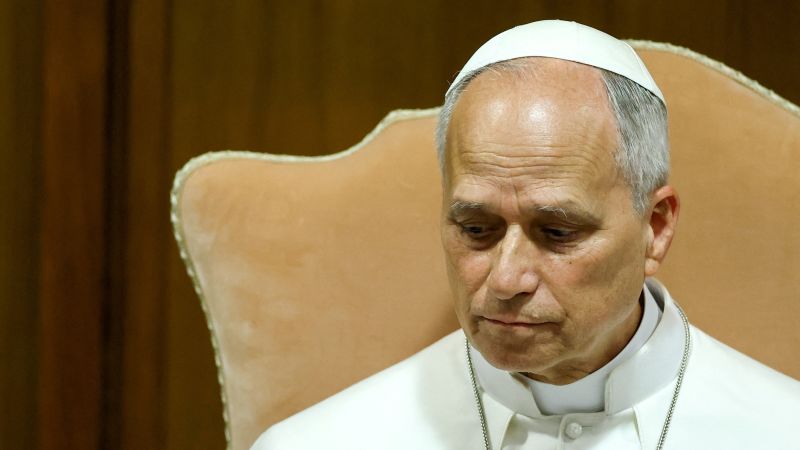
Pope Leo XIV Issues Groundbreaking Encyclical on Artificial Intelligence
Pope Leo warns of AI fueling – In a bold move that signals a new era in Catholic theological discourse, Pope Leo XIV has released his first major encyclical, titled “Magnifica Humanitas,” addressing the growing influence of artificial intelligence (AI) on global conflicts and human society. The document, which has sparked widespread discussion, emphasizes the need for AI to be governed by ethical principles and highlights the urgent challenge of ensuring its power is not monopolized by a select few. This marks a significant departure from past papal teachings, as Leo XIV positions AI as a central issue in the modern world, calling for a reevaluation of how humanity interacts with technology.
Reimagining War and Ethics in the Age of AI
The encyclical outlines several key proposals, with a particular focus on the use of AI in warfare. Pope Leo argues that while technology has the potential to enhance human life, it also risks exacerbating divisions and conflicts. He stresses that the deployment of AI in military contexts must adhere to “the most rigorous ethical constraints,” ensuring that its impact on civilians is minimized. This stance challenges the traditional “just war” theory, a foundational Christian doctrine that has long guided decisions on when and how war can be justified.
“The just war theory, once a cornerstone of Christian thought, now appears inadequate to address the complexities of modern conflict,” the pope writes. “Military force can only be employed for self-defense in the strictest sense, and any broader application must be scrutinized through the lens of human dignity and social justice.”
Leo XIV’s critique of the just war framework reflects a broader concern about the moral consequences of technological advancement. He contends that the increasing reliance on AI for strategic decision-making blurs the lines between warfare and systematic dehumanization. By redefining ethical boundaries, the encyclical aims to redirect the trajectory of technological development toward peace and cooperation rather than domination and destruction.
AI as a Catalyst for Global Crises
While the encyclical centers on AI, its implications extend far beyond the realm of technology. Pope Leo XIV frames the issue as a multifaceted challenge to humanity’s collective well-being, touching on themes such as economic inequality, environmental degradation, and the treatment of vulnerable populations. He asserts that the “litmus test” for social justice lies in how migrants and refugees are cared for, offering a clear apology for the Catholic Church’s historical role in legitimizing slavery and its delayed condemnation of systemic oppression.
“The Church must confront its past mistakes and acknowledge the ways in which it has contributed to the suffering of the displaced and the marginalized,” Leo XIV writes. “Our responsibility today is to ensure that technology serves the common good, not the interests of a privileged few.”
Additionally, the pope warns against the dangers of concentrating power in the hands of those who control AI. He describes this as a “Tower of Babel” scenario, where a single entity or group seeks to impose uniformity and dominance over global affairs. Drawing from the biblical narrative, he argues that the story of Babel serves as a cautionary tale about the risks of unchecked ambition and the need for diversity in leadership and perspective.
Collaboration with Tech Leaders and a New Papal Approach
Leo XIV’s encyclical also introduces a novel approach to papal engagement with the modern world. Unlike previous popes, who typically entrusted the role of presenting an encyclical to senior clergy or cardinals, he personally unveiled the document at the Vatican. This decision underscores his commitment to bridging the gap between faith and contemporary issues, particularly the ethical dilemmas posed by AI.
Notably, the pope collaborated with Chris Olah, a co-founder of Anthropic, an AI company embroiled in legal disputes with the Trump administration over its technology’s military applications. Olah, who has engaged with 15 religious leaders to discuss AI’s societal impact, praised the pope’s efforts to highlight the technology’s potential for both good and harm. “Artificial intelligence already touches many aspects of our lives, from daily decisions to global policies,” Olah told CNN. “The pope’s encyclical reminds us that its influence must be guided by moral and spiritual considerations, not just technical efficiency.”
Leo XIV’s document also calls for the establishment of “robust legal frameworks, independent oversight, and informed users” to ensure AI development aligns with human values. He emphasizes the importance of a political system that fulfills its duty to protect citizens from the perils of technological overreach. “The use of force, violence, and weapons has disastrous consequences for civilian populations,” the pope writes. “A world in perpetual conflict is an evil that must be named and resisted.”
Global Reach and Historical Significance
Pope Leo XIV’s encyclical, “Magnifica Humanitas,” is being viewed as a landmark text for his papacy and a pivotal moment in the Church’s engagement with emerging technologies. Similar to Pope Francis’s encyclical on climate change, which addressed the global community, this document extends its reach to “every person of goodwill,” regardless of religious affiliation. The pope’s message is clear: AI is not just a scientific or economic issue, but a moral and existential one that requires collective action.
Leo XIV identifies AI as a top priority for his papacy, recognizing its dual capacity to both elevate and endanger humanity. He describes the technology as a “tool for promoting life and resolving conflicts,” yet warns against its misuse. The encyclical’s publication coincides with his broader mission of peace-making, which has been a defining feature of his leadership. “Humanity possesses far more effective means for peace, such as dialogue, diplomacy, and forgiveness,” the pope argues. “We must harness these tools to counter the destructive tendencies of AI and other technologies.”
Addressing the Roots of Conflict and Division
Leo XIV’s encyclical also delves into the deeper roots of conflict, suggesting that AI’s rise mirrors historical patterns of human ambition. He references the biblical Tower of Babel, a story about the consequences of seeking power through uniformity, to underscore the risks of AI centralizing control. “When we create a single language and a single power, we risk building a world that stifles diversity and reduces humanity to mere instruments of war,” he explains.
“The Tower of Babel teaches us that unity without diversity leads to destruction. AI must be developed with the voices of all people, especially the poor and the vulnerable, at the forefront,” the pope adds.
Furthermore, the encyclical highlights the Church’s evolving role in global affairs. Traditionally, encyclicals were directed to bishops and clergy, but Leo XIV’s document is explicitly intended for a wider audience, including scientists, policymakers, and the general public. This inclusive approach reflects the pope’s belief that the challenges of AI are not confined to religious or ecclesiastical circles but demand a unified response from all sectors of society.
As the encyclical makes its way into the public discourse, it has been praised for its clarity and urgency. Critics, however, argue that its recommendations require concrete implementation. Despite this, the document is seen as a significant contribution to the ongoing dialogue about technology’s impact on human life. “This is a moment where faith and reason must work together,” Leo XIV concludes. “Only by embracing both can we navigate the complexities of AI and build a future that honors the grandeur of humanity.”
Pope Leo XIV’s encyclical, “Magnifica Humanitas,” is more than a theological reflection; it is a call to action. By addressing the ethical, social, and spiritual dimensions of AI, the pope positions himself as a leader who is not only aware of the technology’s potential but also determined to shape its course. As the world grapples with the implications of artificial intelligence, his message serves as both a warning and a beacon of hope, urging humanity to wield its power with wisdom and compassion.