Pope Leo XIV Fast Facts

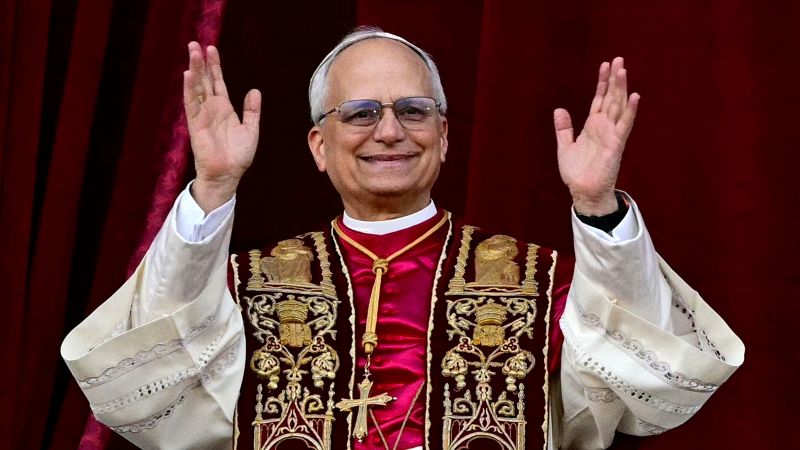
Pope Leo XIV Fast Facts
Early Life and Background
Pope Leo XIV Fast Facts – Pope Leo XIV, whose birth name is Robert Francis Prevost, hails from Chicago, Illinois. He was born on September 14, 1955, into a family with a strong foundation in education and service. His father, Louis Prevost, served as a school superintendent, while his mother, Mildred Martínez Prevost, was a librarian. This blend of intellectual and community-oriented values shaped his early development, influencing his path toward religious leadership.
Educational Journey
Prevost’s academic pursuits began at Villanova University, where he earned a Bachelor of Science in mathematics in 1977. His commitment to faith led him to further study at the Catholic Theological Union in Chicago, obtaining a Master of Divinity in 1982. This degree marked the beginning of his theological journey, which would eventually culminate in advanced studies in canon law. In 1984, he completed a Licentiate in canon law at the Pontifical College of St. Thomas Aquinas in Rome. By 1987, he had earned a Doctorate in canon law, solidifying his expertise in ecclesiastical law.
Order of Saint Augustine and Career Milestones
On September 1, 1977, Prevost joined the Order of Saint Augustine, a religious congregation known for its emphasis on communal living and spiritual harmony. As a novice, he became part of the Midwest Augustinians, specifically the Province of Our Mother of Good Counsel. His vows were solemnized on August 29, 1981, marking a pivotal step in his spiritual commitment.
Following his ordination as a priest on June 19, 1982, Prevost took his mission abroad, serving in the Augustinian mission in Peru from 1985. This experience deepened his understanding of global religious and cultural dynamics. By 1999, he had been elevated to the role of Provincial prior within the Augustinian Province of “Mother of Good Counsel” in Chicago. His leadership extended internationally in 2001, when he was appointed Prior general of the worldwide Order of Saint Augustine, a position he held for over a decade, including a second term confirmed in 2007.
Leadership and Papal Appointment
On November 3, 2014, Prevost was named apostolic administrator of the diocese of Chiclayo in Peru by Pope Francis. This role transitioned into a formal episcopal appointment on September 26, 2015, when he became the Bishop of Chiclayo. His dedication to pastoral care and theological reflection continued to grow, leading to his recognition as a key figure in the Church’s hierarchy.
Leo XIV’s papal journey began on January 30, 2023, when he was appointed president of the Pontifical Commission for Latin America and prefect of the Dicastery for Bishops. These roles placed him at the forefront of shaping ecclesiastical policies and fostering unity across the region. On April 12, 2026, he assumed his new duties and was promoted to the rank of archbishop, a testament to his influence and contributions within the Vatican.
Cardinal Appointment and Papal Election
On September 30, 2023, Pope Francis elevated Prevost to the rank of cardinal, a distinction that highlighted his significance in the College of Cardinals. As a cardinal, he was assigned the titular church of Saint Monica in Rome, a tradition that underscores the symbolic and spiritual roles of cardinals in the Church. His elevation to Cardinal Bishop occurred on February 6, 2025, making him the first to hold this title in the Order of Saint Augustine.
On May 8, 2025, Prevost was elected the 267th pope by a majority of 133 cardinals during the second day of voting. His papal name, Leo XIV, reflects the continuity of a long tradition in the Church, drawing from the historic papal numbering system. The election marked a historic moment as he became the first pontiff from the United States and the first to emerge from the Order of Saint Augustine, a congregation that values “living together in harmony, being of one mind and one heart on the way to God.”
Early Papal Activities and Vision
Leo XIV’s papacy began with a focus on addressing pressing global issues. During his inaugural Mass in St. Peter’s Square on May 18, 2025, he delivered a powerful message condemning the exploitation of the poor and advocating for unity within the Church. This speech resonated with both clergy and laity, emphasizing his commitment to social justice and ecclesiastical solidarity.
His first international trip as pope took place on November 27, 2025, with a six-day visit to Turkey and Lebanon. This journey allowed him to engage directly with diverse communities, reinforcing his vision of interfaith dialogue and global outreach. A year later, on April 13, 2026, Leo XIV embarked on an 11-day mission to Africa, with a notable stop in Algeria. This was his first visit to the country, underscoring the Church’s expanding presence in the region.
Theological Contributions and Papal Stance
One of Leo XIV’s most significant contributions came on May 25, 2026, with the release of his first major theological document. In this work, he emphasized the need for equitable control of artificial intelligence, warning that “the hands of a few” could lead to technological disparities. He called for a reevaluation of how AI is integrated into society, urging collaboration to ensure it serves humanity rather than exacerbating divisions.
Leo XIV’s personal interests include tennis, reading, and travel, which he has often linked to his spiritual growth. He frequently speaks about the value of exploring “new and diverse places,” a theme that aligns with his papal focus on inclusivity and global engagement. His fluency in multiple languages—English, Italian, Spanish, French, and Portuguese—has enabled him to connect with a wide array of congregants and diplomats, furthering his diplomatic and pastoral outreach.
Dual Citizenship and Cultural Identity
Prevost’s dual citizenship as an American and Peruvian national has played a unique role in his papal mission. This cultural duality allows him to bridge perspectives between the United States and Latin America, a region central to his work as president of the Pontifical Commission for Latin America. His ability to navigate both national and global contexts has positioned him as a unifying figure within the Church.
Leo XIV’s background as a librarian and school superintendent has also influenced his approach to education and pastoral care. He has consistently highlighted the importance of knowledge in guiding the faithful, often referencing the need for theological and moral clarity in an increasingly complex world. His tenure as a cardinal and his various leadership roles have prepared him to address contemporary challenges with both wisdom and compassion.
Legacy and Impact
As Pope Leo XIV, Prevost’s leadership has been characterized by a blend of tradition and innovation. His early efforts to promote unity, his advocacy for AI governance, and his focus on social justice have set the tone for his papacy. The Church continues to watch closely as he navigates the responsibilities of the papal office, drawing on his diverse experiences to shape its future direction. His journey from a Chicago native to a global pontiff remains a source of inspiration for many.
Leo XIV’s election as pope symbolizes a shift in the Church’s leadership, reflecting the growing influence of American clergy and the importance of international collaboration. His work as a cardinal, bishop, and papal leader demonstrates a lifelong dedication to serving the faithful and advancing the Church’s mission. With a commitment to both spiritual and temporal matters, he aims to foster a more inclusive and responsive Vatican for the modern world.