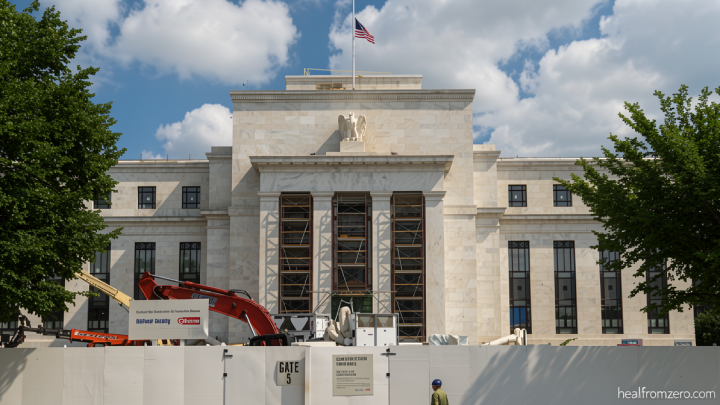
Wall Street sell-off deepens as investors question returns on ‘monster AI splurge’

Daftar Isi
AI Spending Anxiety Triggers Sharp Wall Street Retreat
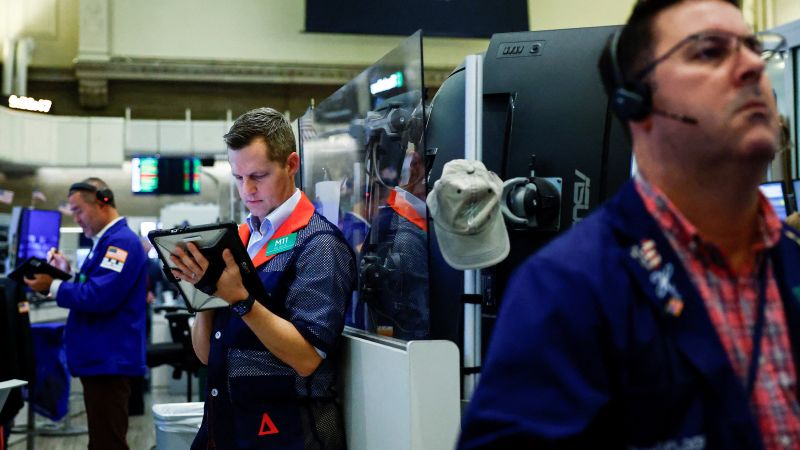
Healfromzero.com – Technology shares led a broad market decline on Friday as investors reassessed whether the enormous sums being committed to artificial intelligence will generate profits quickly enough to justify the cost. The sell-off closed out a difficult month for AI-linked stocks and marked a notable shift in investor sentiment after a long period in which almost any connection to AI was rewarded.
The Nasdaq Composite slid more than 3.8%, its weakest session since June. The S&P 500 lost 2.5%, also recording its biggest one-day decline since June, while the Dow Jones Industrial Average fell about 770 points, or roughly 1.5%, for its worst day since July.
Only weeks earlier, the Nasdaq and S&P 500 had reached new records. Since its high earlier this month, however, the Nasdaq has fallen nearly 9%. The S&P 500 is down 3.5% from its recent peak as concerns have accumulated around interest rates, disappointing corporate outlooks and the mounting expense of the AI buildout.
Chip Stocks Take the Heaviest Hit
Intel was among Friday’s biggest losers, plunging more than 30% after offering fourth-quarter guidance that fell short of expectations. The company pointed to softness in the personal-computer market and manufacturing constraints, renewing questions about its near-term recovery.
The reaction spread well beyond Intel. Nvidia shares dropped 5.6%, while a widely followed chipmaker index fell 9%. Semiconductor companies have been central to the AI investment surge because data centers require large volumes of specialized computing equipment. That connection has also made the sector particularly sensitive when investors begin questioning the pace and durability of AI-related demand.
After a powerful rally earlier in the year, expectations for chip companies have become increasingly demanding. Strong results alone may no longer be enough; investors are looking for evidence that companies can outperform forecasts while maintaining visibility into future demand.
Big Tech Faces Questions on Cash Flow
The pressure was not limited to chipmakers. Amazon declined 2% after its earnings release signaled another increase in spending on artificial intelligence. Alphabet fell an additional 1.5% on Friday after tumbling more than 12% the previous day, a drop that erased about $500 billion from the market value of the country’s fourth-largest company.
Alphabet’s results raised worries about both the pace of AI spending and a possible slowdown in its search advertising business. Investors are examining whether consumers’ growing use of AI chatbots could affect traditional search activity, which has long been a major source of Google’s revenue.
Alphabet, Microsoft, Meta and Amazon are together allocating hundreds of billions of dollars toward data centers and the computing infrastructure needed to support AI services. The investments may be essential to their long-term strategies, but the immediate financial burden is becoming harder for markets to overlook.
Google has now recorded two consecutive quarters of negative free cash flow for the first time. Meta disclosed negative free cash flow in a quarter for the first time since 2012. Amazon said its free cash flow over the trailing 12 months was negative $42.4 billion as it increased AI-related investment.
“Investors don’t just want capex, they want to see the returns already,” Neil Wilson, a strategist at Saxo Markets, said in a note. “For the wider AI trade, we are starting to see a more critical evaluation of the return on investment from this monster AI splurge.”
Free cash flow measures the cash a company retains after paying operating expenses and capital expenditures. For investors, it is a useful indicator of how much financial flexibility a company has for debt reduction, dividends, share repurchases or future investment. Negative free cash flow does not automatically mean a business is unhealthy, particularly during a period of large expansion, but it can intensify concern when revenue growth does not keep pace with spending.
Different Balance-Sheet Outcomes
Microsoft provided a contrast to several of its peers. The company reported $18.6 billion in positive free cash flow for the latest quarter, and its shares were down only 5% from their record high earlier this month. The differing market reactions suggest that investors are becoming more selective about the companies financing the AI race and the financial outcomes they are producing today.
Google and Meta have both entered bear-market territory, meaning their shares have declined more than 20% from recent highs. Alphabet is down more than 20% from its May 2025 peak, while Meta has fallen more than 20% from its August 2025 high.
Matt Maley, chief strategist at Miller Tabak + Co., said Alphabet’s results had pushed expectations for meaningful AI returns further into the future.
“It raises the question as to whether the payout will be as big as they have been promising,” Maley wrote in a note.
Financing and Interest Rates Add to Market Jitters
Investors are also paying closer attention to how companies are funding the next phase of AI expansion. The effort to secure capital through debt and equity markets is being viewed as a sign that the industry’s spending cycle is becoming more capital-intensive. Higher interest rates make debt-funded investment less attractive and can place extra pressure on the riskier parts of a fast-growing technology ecosystem.
That does not necessarily mean the broader AI theme has ended. Rather, the latest market moves indicate that investors want clearer proof of commercial value, stronger revenue growth and more disciplined spending plans. The market’s focus is shifting from the promise of AI to the measurable returns it can produce.
“The AI trade is down, but not out,” Paul Stanley, managing director at Arca, said in a Friday note. “This is not the first tech and AI correction, and it won’t be the last. We are still in the very early stages of AI development, and pullbacks are par for the course.”
Stanley also described the midterm elections as the next major market test, adding that a reduction in uncertainty after the vote could be supportive for stocks regardless of the result. For now, Friday’s decline underscored a more skeptical phase for Wall Street: AI investment remains a powerful long-term theme, but companies are being asked to demonstrate that the enormous outlays can ultimately translate into durable profit.
Related Reading
Frequently Asked Questions
What is Wall Street sell off deepens as investors?
Wall Street sell off deepens as investors is the main topic of this guide. The article explains the context, practical details, and next steps readers should understand.
Why does Wall Street sell off deepens as investors matter?
Wall Street sell off deepens as investors matters because readers are looking for a useful answer, not just a short summary. Good content should match search intent and help them decide what to do next.