A Texas woman is fighting to preserve land that was supposed to become a public park. Now it may be a data center instead

Daftar Isi
A Texas neighborhood’s long-awaited park promise faces a new threat
Healfromzero.com – In Taylor, Texas, a 58-year-old retiree is fighting to keep a decades-old vision for open public space from being replaced by a data center.
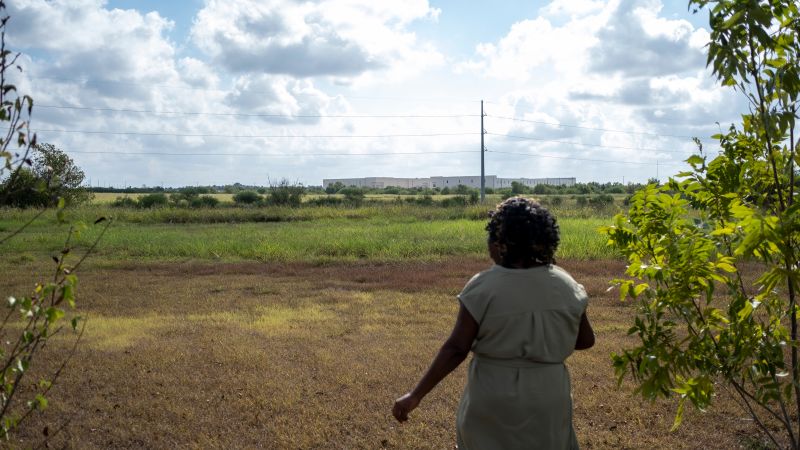
Pamela Griffin lives near an expansive tract of land about 25 miles outside Austin, property she believed had been set aside for a future neighborhood park. That expectation grew from a commitment made years ago by the family that owned the land. But ownership later changed, and a brief provision in a 1999 deed was not included in subsequent documents. The property is now being considered for a data center project rather than recreational use.
The disagreement has put Griffin at the center of a legal and community campaign during what she expected would be a quieter chapter of life. Instead of simply enjoying retirement, the former learning center director has been attending public meetings, organizing neighbors and speaking publicly about the land’s future.
“My daddy passed this land down to us and he told us to guard this land,” Griffin said. “He said this will always be a homestead.”
A deed dispute with broader consequences
At issue is language containing just 14 words in a 1999 deed. Griffin argues that the wording was meant to protect the land’s future as a park. Others have disputed whether that restriction remains enforceable after the property changed hands and the sentence was omitted from later records.
A Texas appeals court is weighing Griffin’s effort to halt the planned development. Texas Attorney General Ken Paxton has also opened an investigation into whether the original use language was lawfully altered or removed, and whether it continues to have legal force.
The case has become larger than a disagreement over one parcel. It raises questions about how property restrictions survive transfers, how communities can protect promises attached to land, and whose interests shape development in fast-growing parts of Central Texas.
Taylor, a community of roughly 18,000 residents, is confronting concerns familiar to towns encountering data center proposals for the first time. Residents have voiced worries about potential noise, water consumption and pressure on the electrical system. Data centers can bring investment and construction activity, but their substantial infrastructure needs often lead neighboring communities to demand clear information about environmental impacts and long-term local benefits.
Family roots on Taylor’s south side
Griffin’s attachment to the neighborhood is deeply personal. During the 1950s and early 1960s, her grandmother worked as a maid while also cutting and picking cotton in Taylor, a place with longstanding ties to cotton farming and cattle ranching.
After the Fair Housing Act made discrimination in housing sales, rentals and financing illegal on the basis of race, color, religion or national origin, Griffin’s grandmother bought property on Taylor’s south side. She purchased parcels for each of her eight children, seeking to give the family a lasting foothold in the community.
That hope endured. Griffin eventually returned to the house her father built and where he raised six children. The home is filled with family photographs, keepsakes and reminders of generations who treated the area not simply as real estate, but as a place to remain connected.
Griffin had moved away after high school, but came back to Taylor in 2019 after both of her parents died. Her return carried a sense of obligation: to care for the home, preserve the family’s history and protect the neighborhood she still considered home.
A childhood need for safe places to play
The proposed park has special meaning because Griffin remembers growing up with limited recreational options. In the 1970s, she said parents in the neighborhood discouraged children from playing at nearby Fannie Robinson Park after some children developed rashes or became ill.
Fannie Robinson Park had previously been used as a city dump. In 1955, it became Taylor’s first park for Black residents after a Black physician worked with city and school leaders to establish a recreational area for children of color.
For Griffin and her neighbors, a vacant lot behind her family home became an informal alternative. Children chased stray baseballs there, camped beneath the stars with cardboard boxes and bed sheets, and transformed ordinary afternoons into adventures.
The lot bordered 87 acres owned by descendants of Howard Bland Sr., a prominent Taylor businessman, community leader and state legislator in the late 19th century. Children regularly crossed onto the property to retrieve baseballs, Griffin said, and the Bland family came to recognize the community’s need for a genuine public park.
“The Blands understood the community in a way others did not and was willing to help when nobody else was not,” Griffin said.
For years, Griffin understood that the land would eventually serve that purpose. The possibility that it could instead house a data center has therefore reopened older questions about access, race, land ownership and the reliability of commitments made to communities with few public amenities.
A fight over the future of Taylor
Griffin’s campaign began after she found a flyer on her front door last year. What followed was a search through the land’s history and a challenge to the development plans now attached to it.
The legal outcome may determine whether the deed language can still restrict use of the property. But the struggle also reflects a broader local decision: whether land connected to generations of neighborhood memory will become the public green space residents expected, or part of the rapidly expanding infrastructure supporting digital services.
For Griffin, protecting the property is inseparable from protecting her family’s legacy. The land beside her home represents a promise she heard as a child, the work her relatives put into establishing roots in Taylor and a chance for future children to have the sort of safe place to play that her neighborhood once lacked.
Related Reading
Frequently Asked Questions
What is A Texas woman is fighting to preserve?
A Texas woman is fighting to preserve is the main topic of this guide. The article explains the context, practical details, and next steps readers should understand.
Why does A Texas woman is fighting to preserve matter?
A Texas woman is fighting to preserve matters because readers are looking for a useful answer, not just a short summary. Good content should match search intent and help them decide what to do next.