Flash flooding kills 3 overnight in New Mexico, police say, as serious flood threat ramps up for Southwest

Daftar Isi
Three Die in New Mexico Flash Flooding as Southwest Faces Escalating Rain Threat
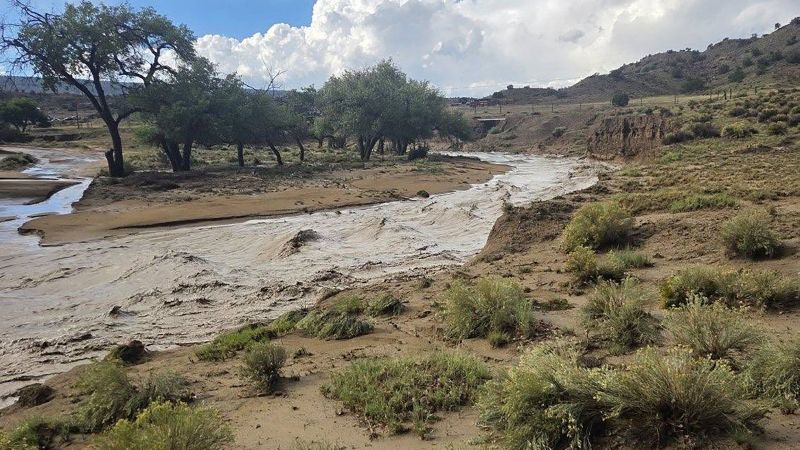
Healfromzero.com – Three people were killed after flash flooding swept through an area near Newcomb, New Mexico, early Wednesday, underscoring the danger posed by a new round of intense monsoon-season storms across the Southwest.
Navajo Police officers were called at about 12:30 a.m. local time after receiving a report that three people had been carried away by floodwaters near Newcomb, on the Navajo Nation. Two adults and one juvenile were found at the scene and were pronounced dead. Authorities did not release additional details, citing the family’s privacy.
The fatalities came after rain began falling in the Newcomb area Tuesday afternoon and continued on and off until shortly after midnight. Total rainfall was estimated at roughly one-half inch to 1 inch, but much of it arrived during a brief period Tuesday evening. In dry desert landscapes, even relatively modest totals can become life-threatening when rain falls quickly over hard ground.
Flash Flood Watches Cover Millions
A broad moisture surge is raising flood concerns across New Mexico, Arizona, Utah and Colorado through Thursday morning. Nearly 8 million people were under flash flood watches as storms developed across the region.
Parts of New Mexico and south-central Arizona, including Phoenix and Tucson, faced a Level 3 out of 4 risk for excessive rainfall and flooding. For Phoenix, it was the highest flooding threat designation issued since 2022.
Storm activity intensified Wednesday afternoon over Arizona and New Mexico, prompting multiple flash flood warnings beginning around 10:30 a.m. Mountain Time. The most widespread threat was expected to continue until about 11 p.m. MT, though isolated flooding could persist beyond that time where storms repeatedly move over the same locations.
The Phoenix metropolitan area received more than 3 inches of rain in only three hours around midday Wednesday, with additional storms still possible. Emergency crews were dispatched south of Phoenix after a vehicle carrying two people became trapped in floodwater.
Why Heavy Rain Becomes Dangerous So Quickly
The storm system is drawing exceptionally humid air northward from Baja California. That supply of tropical moisture can allow thunderstorms to produce a month or more of typical rainfall within a matter of hours.
Across much of the Southwest, soils are dry, compacted and less able to absorb sudden downpours. Water instead races across the surface, gathering speed as it moves through washes, drainage channels and low-lying roads. Flooding can occur well away from the storm that produced it, making conditions especially hazardous for drivers, hikers and residents near normally dry channels.
Steep terrain adds to the risk. Water accelerates through narrow canyons and drainage routes, where rising flows can arrive with little warning. A dry-looking wash can become a fast-moving torrent in minutes after rain falls farther uphill.
The Sacramento Mountains near Ruidoso, New Mexico, face added concern because wildfire-scarred land is less capable of taking in water. Burned terrain can send runoff downhill rapidly, carrying mud, rocks, ash and vegetation. These debris flows may be more destructive than floodwater alone and can threaten roads, homes and evacuation routes.
Outdoor Areas Require Extra Caution
Visitors in wilderness settings also face heightened danger during this pattern. Hikers at the Grand Canyon, Zion National Park in Utah and other backcountry destinations should remain alert for changing weather conditions. Slot canyons, narrow ravines and dry creek beds can fill abruptly when thunderstorms develop nearby or upstream.
Flash flood safety depends on recognizing that water depth and current strength can be deceptive. Flooded roads may conceal washed-out pavement or debris, while moving water can push vehicles off course. People in vulnerable locations should closely follow local emergency alerts and avoid entering floodwaters.
The immediate flood threat is expected to ease for Phoenix and Tucson by Thursday as drier air moves in. New Mexico, however, could continue to see a heightened risk into the weekend as lingering moisture supports additional rounds of thunderstorms.
Monsoon Season and a Moisture Boost
The dangerous weather is occurring during the Southwest monsoon, an annual seasonal pattern that generally runs from mid-June through September. Shifts in regional winds bring moisture into the southwestern United States, helping fuel summer thunderstorms.
This episode is being strengthened by a tropical disturbance that moved northward through the Gulf of California and reached northern Mexico. The disturbance is supplying storms with extra moisture and energy, increasing the potential for torrential rainfall.
Heavy rain events are also becoming more frequent as global temperatures rise. Warmer air can retain more water vapor, creating conditions that can support more intense downpours when storms form. In a region where dry ground often struggles to absorb sudden rain, that pattern can magnify the risks associated with flash flooding.
For communities across the Southwest, the coming days will require close attention to weather warnings, road closures and changing conditions. The loss of three lives near Newcomb is a stark reminder that flash floods can develop rapidly and become deadly even when rain is short-lived.
Related Reading
Frequently Asked Questions
What is Flash flooding kills 3 overnight in New?
Flash flooding kills 3 overnight in New is the main topic of this guide. The article explains the context, practical details, and next steps readers should understand.
Why does Flash flooding kills 3 overnight in New matter?
Flash flooding kills 3 overnight in New matters because readers are looking for a useful answer, not just a short summary. Good content should match search intent and help them decide what to do next.