Opposition set to halt Sweden’s slide to right

Daftar Isi
Sweden’s Election Points Toward a Narrow Center-Left Return
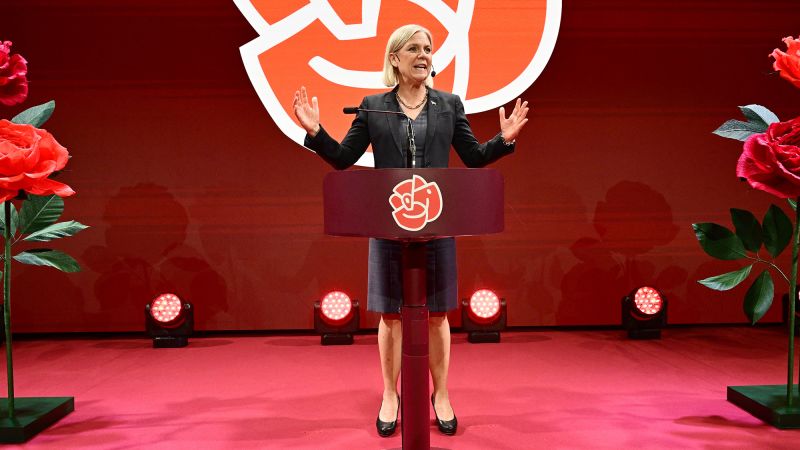
Healfromzero.com – Sweden appeared headed for a change in government after preliminary results from Sunday’s election gave the center-left opposition a slender advantage over the country’s governing right-wing alliance. With most ballots counted by Monday, parties led by Social Democratic leader Magdalena Andersson were projected to hold 176 seats in the 349-member parliament, compared with 173 for Prime Minister Ulf Kristersson’s bloc.
The three-seat margin remained far from definitive. The two sides were separated by only 0.4% of the vote on Monday morning, while 353 electoral districts still had to complete their count. Ballots cast abroad were not expected to be fully tallied until Wednesday, leaving party leaders reluctant to declare the contest settled.
Even so, a confirmed opposition victory would mark an important political shift after four years in which Sweden’s policies moved markedly rightward, especially on immigration and asylum. The country had long been viewed as one of Europe’s more welcoming destinations for people seeking refuge, but recent reforms have produced one of the continent’s stricter asylum systems.
If this result remains valid, Sweden will get a new government.
Andersson delivered that message to supporters after the early figures emerged on Sunday night. Kristersson, however, did not concede when he addressed supporters, mindful of the uncertainty created by the remaining votes. Sweden’s 2022 election offered a reminder of how quickly an early forecast can change: exit polls initially indicated a narrow center-left win before the right-wing parties ultimately prevailed.
A difficult path to a governing coalition
Should the center-left lead survive the final count, Andersson is expected to become prime minister. Yet the task of assembling a stable administration may prove more complicated than the election result itself. The Social Democrats would need to navigate serious divisions among potential partners over both the composition of government and major policy questions.
The Center Party has said it will not govern alongside the Left Party. The Left Party, meanwhile, argues that it must be included in any coalition arrangement. That disagreement could prolong negotiations and limit the range of options available to Andersson as she seeks support in parliament.
It could very well be a complicated process to form a government.
Andreas Norlen, the speaker of parliament, highlighted the prospect of a difficult negotiating period in comments to Swedish television. A narrow parliamentary edge gives the prospective government little room for internal disagreement, particularly if it depends on several parties with competing priorities.
The far-right Sweden Democrats were among the biggest projected losers in the initial count. The party was estimated to have lost 11 seats. It had hoped that a victory for the governing bloc would create an opportunity to enter government for the first time, rather than supporting a right-wing administration from outside the cabinet.
Immigration policy may change less than expected
The election has been closely watched as a test of whether Sweden would reverse the hardening of immigration policy seen under the current government. A center-left administration could take a less confrontational approach, but a return to the broad, open immigration policies associated with earlier decades appears unlikely.
Andersson has made clear that Sweden should maintain a firm stance on immigration. That position puts the Social Democrats at odds with the Left Party and the Greens, which have argued for looser rules. Any eventual government would therefore face pressure from within its own political camp over how far to alter the current framework.
Under the outgoing government, asylum applications fell to their lowest level in 40 years. The policy changes included ending permanent residency for refugees, tightening welfare requirements and increasing expulsions of people who do not have the legal right to remain in Sweden. These measures have reshaped a debate that now reaches well beyond the traditional right-left divide.
For voters, the immediate question is not simply whether immigration rules will be softened, but whether a new government can strike a balance between social cohesion, legal certainty and the concerns that have driven support for stricter controls. Andersson’s campaign message suggested caution rather than a dramatic reversal.
Foreign policy continuity is likely
Sweden’s foreign-policy direction is unlikely to be transformed by the election result. The center-left and the governing right have both supported a pro-Western orientation and continued backing for Ukraine. That broad agreement means a change in government would probably have limited effect on Sweden’s stance toward Russia’s war against Ukraine or its wider security relationships with Western partners.
The sharper disputes are likely to center on domestic priorities. Andersson has promised greater investment in welfare services, a fairer tax system and policies designed to strengthen social cohesion. Those aims could become difficult to reconcile with the positions of potential coalition partners.
The Greens and Left Party want wealthier people to make a larger contribution through taxation. The Center Party opposes a tax on billionaires, creating another significant obstacle to a unified economic program. Such disagreements could determine whether the next government is a formal multi-party coalition, a minority administration supported issue by issue, or a more limited arrangement focused on areas of agreement.
Sweden’s election result therefore offers the possibility of a center-left return without guaranteeing a sharp break from recent years. The preliminary numbers point to a new balance of power, but the final count and subsequent coalition talks will decide how much practical change follows. For now, the country faces a period of political uncertainty shaped by an exceptionally close vote and a parliament divided almost evenly between competing blocs.
Related Reading
Frequently Asked Questions
What is Opposition set to halt Sweden s slide?
Opposition set to halt Sweden s slide is the main topic of this guide. The article explains the context, practical details, and next steps readers should understand.
Why does Opposition set to halt Sweden s slide matter?
Opposition set to halt Sweden s slide matters because readers are looking for a useful answer, not just a short summary. Good content should match search intent and help them decide what to do next.