Vance says Iran conflict isn’t a ‘war,’ even as he refuses to say when it will end


Vance Says Iran Conflict Isn’t a War
Healfromzero.com – When pressed on whether the United States is at war with Iran, Vice President JD Vance says Iran conflict isn’t a sustained military campaign but rather a string of intermittent, low-intensity exchanges. Speaking at a White House briefing Thursday, Vance characterized the ongoing hostilities as sporadic, telling reporters that “active combat operations” concluded months ago and that, in his words, “there is no active shooting” at present. The framing lands amid elevated gasoline prices, a climbing Pentagon casualty tally, and growing unease among voters heading into November.
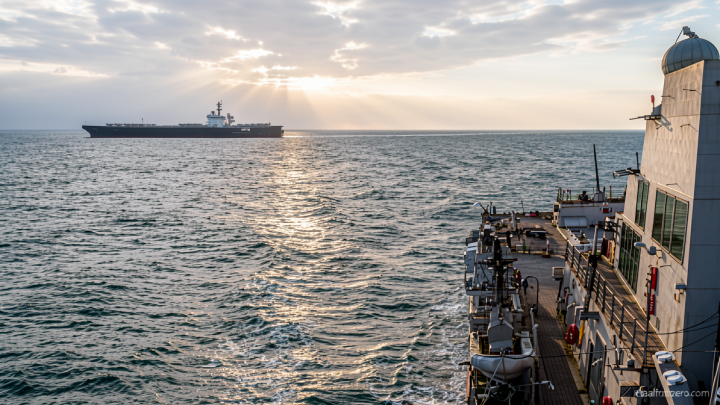
The characterization clashes with events unfolding in real time. Three consecutive days this week saw American and Iranian forces trade fire around the Strait of Hormuz, the narrow corridor through which roughly one-fifth of global petroleum flows. On Tuesday alone, the United States carried out a coordinated multi-domain operation striking close to sixty military installations clustered near the strait — air-defense batteries, radar arrays, naval vessels, mine-laying platforms, and communications nodes. Warships simultaneously escorted commercial tankers through the corridor. Pentagon officials likened the recurring pattern of strikes to “mowing the grass” or “whack-a-mole,” conceding that Tehran retains the ability to rebuild capabilities between attacks.
Origins, Escalation, and the Political Clock
The hostilities trace back to late February, when joint American-Israeli airstrikes ignited what quickly became a protracted confrontation. Updated Pentagon figures released Thursday place the toll at seventy-nine wounded and eighteen killed among U.S. service members. Energy-sector executives continue to voice deep reservations about routing vessels through the strait even under naval escort, and the resulting supply-chain anxiety has pushed pump prices above pre-conflict levels — a development injecting urgency into Republican calculations about holding congressional majorities in November.
President Trump stated this week that he feels no obligation to de-escalate before ballots are cast on November 3. Yet his own advisers and allied lawmakers concede privately that the further the fighting recedes from public attention in the run-up to the midterms, the more favorable the political environment becomes. Vance, who had publicly opposed entering the conflict when it began, spent much of last summer attempting to broker a diplomatic settlement. That ceasefire collapsed within two weeks, and both sides reverted to a rhythm of reciprocal strikes as Iran worked to preserve its grip on the strait.
The August Lull and Its Sudden End
For the better part of August, a fragile quiet held. That silence broke this week when American forces struck Iranian positions near the waterway that, according to the Pentagon, were preparing to launch mines into shipping lanes. Tehran answered by targeting U.S. military installations across the region. Vance confirmed Thursday that no diplomatic channel is currently open between Washington and Tehran.
“The president’s been very clear. We’re not talking to them, and we’re not going to talk to them unless they stop shooting at commercial shipping.”
Pressed on whether the conflict might conclude before election day, Vance offered no timeline. He compared the question to asking when Iran would cease firing at merchant vessels.
“When you ask when will this end, you’re asking me a question like when will the Iranians stop shooting at ships? I think the reality is I don’t know the answer to that question. You would have to ask the Iranians.”
Civilian Casualties and the Gas-Price Question
Vance also addressed reports that the latest American strikes killed four attendees at a wedding celebration in a village near the strait. He said the administration is investigating and declined to rule out civilian deaths, while simultaneously insisting the military “never targets civilian in combat.”
“We never will do that, we never have done that, and unfortunately, obviously, sometimes things happen, but in this particular case, I don’t think that we have any information one way or the other.”
On fuel costs, the vice president refused to commit to a date when prices might fall back to pre
Related Reading
Frequently Asked Questions
What is Vance says Iran conflict isn t?
Vance says Iran conflict isn t is the main topic of this guide. The article explains the context, practical details, and next steps readers should understand.
Why does Vance says Iran conflict isn t matter?
Vance says Iran conflict isn t matters because readers are looking for a useful answer, not just a short summary. Good content should match search intent and help them decide what to do next.