First challenge to prediction markets reaches Supreme Court

Daftar Isi
Supreme Court Set to Decide Whether Prediction Markets Are Gambling or Finance
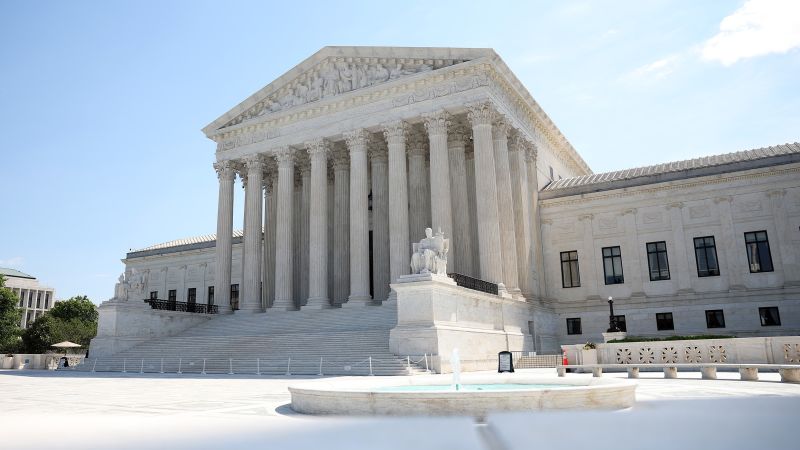
Healfromzero.com – The question of whether Americans can wager on tomorrow’s weather, next month’s election result, or tonight’s basketball score through platforms like Kalshi and Polymarket may soon be settled at the highest level of American jurisprudence. New Jersey filed a petition on Wednesday asking the Supreme Court to invalidate prediction-market operations within its borders, marking the first time this sprawling national dispute has arrived at the justices’ doorstep. If the Court grants certiorari — a decision it is expected to weigh later this fall — a ruling could land by early summer of next year, potentially reshaping an industry that now processes billions of dollars in weekly trading volume.
What Prediction Markets Actually Are
At their core, prediction platforms function as exchanges where participants buy and sell contracts tied to real-world outcomes. A user might purchase a share that pays out if a particular candidate wins a primary, or if a hurricane makes landfall in a given county, or if a specific team advances past a playoff round. The companies structure these instruments as financial derivatives rather than wagers, and they operate under the federal oversight of the Commodity Futures Trading Commission. That classification is precisely what makes the current legal fight so contentious.
A bipartisan bloc of 44 state governments contends the arrangement is a fig leaf. In their view, prediction companies are effectively running unlicensed sportsbooks and event-betting operations while evading state gaming statutes that mandate consumer-protection safeguards and generate billions in tax revenue for state treasuries. The states’ position is that Congress never intended to immunize the sports-betting industry from state-level regulation simply by routing it through a derivatives framework.
The Circuit Split That Pushed the Issue to Washington
The dispute crystallized into a formal circuit split over the past several months. In April, the Philadelphia-based Third Circuit Court of Appeals, sitting in a 2-1 panel, affirmed a lower federal district court’s injunction that had blocked New Jersey from enforcing its gaming laws against Kalshi. The Third Circuit reasoned that prediction sites trade “event contracts” — a category legally distinct from traditional sportsbook wagers — and therefore fall under exclusive federal jurisdiction.
Less than one week before New Jersey’s Supreme Court petition, the Ninth Circuit in San Francisco reached the opposite conclusion. In a unanimous 3-0 ruling handed down on Friday, the Ninth Circuit held that states retain the authority to regulate prediction markets as a form of sports betting. The panel’s language was pointed:
“Kalshi’s sports event contracts have the hallmarks of sports betting.”
That contradiction between two federal appellate courts is precisely the kind of split that makes the Supreme Court’s docket attractive, and it leaves operators and state regulators in a state of regulatory limbo until the justices intervene.
New Jersey’s Road to the High Court
The New Jersey dispute began last year when Attorney General Jennifer Davenport, a Democrat, moved to shut down Kalshi’s sports-betting operations in the Garden State. Kalshi responded with a lawsuit, and a federal district judge issued an injunction preventing the state from taking regulatory action. The Third Circuit’s April decision preserved that injunction, setting the stage for the current petition.
“We’re calling on the Supreme Court to resolve this issue and recognize that Congress did not silently make the sports-betting industry immune from state law,”
Davenport said in a statement issued Wednesday. The state’s argument is that allowing federal derivatives regulation to override state gaming codes would strip legislatures of their traditional police power over gambling and deprive state coffers of substantial tax income.
Three States Already Won Injunctions
While New Jersey’s case ascends the federal hierarchy, regulators in three other states have already secured court orders compelling Kalshi — the country’s largest prediction platform — to cease operations, at minimum its sports-related markets. Those states are Nevada, Michigan, and Washington. Each victory narrows the geographic footprint in which the company can legally operate its most popular product lines.
Washington’s Role and the CFTC’s Aggressive Posture
The administration’s position has been unambiguous: prediction markets should flourish. CFTC Chairman Mike Selig, a Trump appointee, has publicly asserted that his agency holds exclusive jurisdiction over the industry and has resisted what he characterizes as state overreach. The commission did not file an amicus brief in the New Jersey matter, but it did intervene in the Nevada case, arguing that state laws cannot reach prediction-site operations. Under Selig’s tenure, the CFTC has also filed suits against several states that attempted to ban prediction platforms outright.
In June, the agency proposed a set of federal rules designed to preserve most of the existing industry architecture, including the majority of sports-event markets. That proposal effectively rebuffed calls for tougher oversight coming from state officials, dozens of members of Congress, addiction researchers, and major sports organizations including the NCAA and the NBA.
Trump Family Ties Cast a Long Shadow
No discussion of the industry’s regulatory future is complete without acknowledging the president’s personal and financial entanglements. Trump Media & Technology Group announced last year that it would launch its own prediction platform called Truth Predict, though those plans have been scaled back in recent months. Donald Trump Jr. serves as both an investor and adviser to Polymarket and as an adviser to Kalshi. A spokesman for the elder son has stated that he does not lobby federal officials on behalf of either company.
Trump himself has spoken only sparingly about prediction markets. In April he remarked that
“the whole world, unfortunately, has become somewhat of a casino.”
Yet by May his tone had shifted, suggesting a more favorable view of the platforms’ role in American life. Whether the justices will factor those familial and financial connections into their deliberations — or whether they will simply apply existing statutory and constitutional principles — remains to be seen. What is certain is that the outcome will determine whether tens of millions of Americans continue to treat event contracts as a legitimate financial instrument or whether states reclaim the power to classify them as gambling and regulate them accordingly.
Related Reading
Frequently Asked Questions
What is First challenge to prediction markets reaches?
First challenge to prediction markets reaches is the main topic of this guide. The article explains the context, practical details, and next steps readers should understand.
Why does First challenge to prediction markets reaches matter?
First challenge to prediction markets reaches matters because readers are looking for a useful answer, not just a short summary. Good content should match search intent and help them decide what to do next.