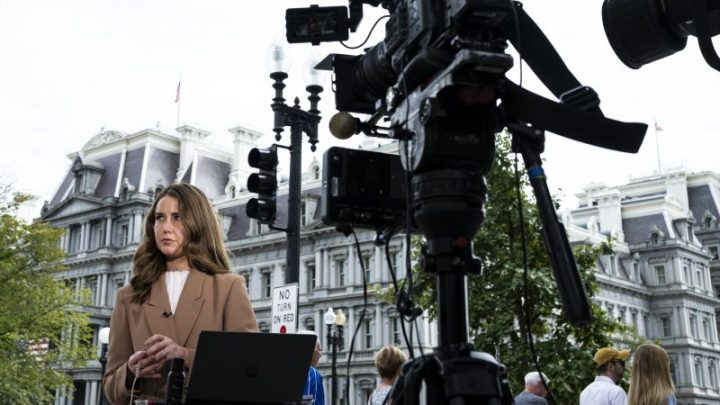
Election officials say they can’t comply with Trump’s proposed mail ballot rules

Daftar Isi
Weeks Before Ballots Ship, Election Officials Declare Postal Mandate Impossible to Implement
Healfromzero.com – With the November election now weeks away, state and local election administrators are telling federal courts and the public that they lack any realistic pathway to meet the Trump administration’s newly finalized postal requirements for mail-in voting. The obstacle is not merely political opposition or litigation strategy; officials argue the timeline itself makes compliance unachievable, regardless of whether states can marshal the millions of dollars the rules would demand.
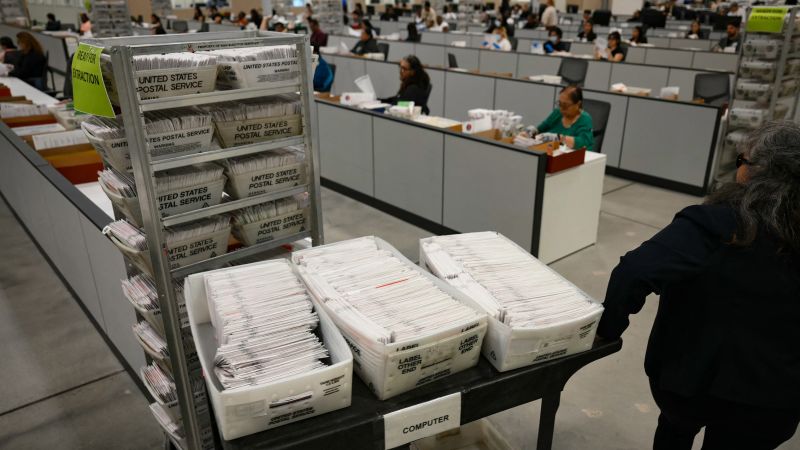
The administration has framed the revised postal regulations as a “modest” adjustment to how ballot envelopes are processed and tracked. Yet the practical mechanics tell a different story. Under the finalized plan, every mail ballot envelope would need redesigning to conform to new formatting standards. Vendors who produce these envelopes have informed election offices that there is insufficient time to print the millions of units required across dozens of states. Court filings further suggest that adequate paper stock may simply not exist in the quantities needed to meet the deadline.
A Portal That Has Never Been Used
Beyond physical materials, the Postal Service has built a digital system — the so-called U.S. Federal Ballot Mail Portal — through which states must upload lists of voters receiving ballots by mail. Local election administrators would need to be individually authorized and trained on this never-before-operational platform. Staffing estimates place the required training and onboarding at thousands of hours per jurisdiction, a burden that cannot be absorbed in the compressed window before ballots are mailed.
“We’re weeks away from ballots going out and USPS still can’t answer basic questions about how this is going to work. Clearly they don’t even know,” Amanda Gonzalez, the clerk of Jefferson County, Colorado, which will send out 433,000 mail ballots, told reporters. “These aren’t minor implementation details – they determine whether millions of eligible voters get their ballots.”
Gonzalez, who is also running for Colorado secretary of state as a Democrat, added that the mere existence of uncertainty constitutes a risk to the election itself.
“At this point, even when we prevail and it’s not implemented, the uncertainty being created by all of this is itself an election risk.”
Whistleblower Report Deepens Doubt
A whistleblower report from within the Postal Service, made public Tuesday, introduced yet another layer of concern. According to the filing, the agency allotted only a handful of days to test a system described as haphazardly constructed for ingesting the voter data the plan requires. The report further alleged that the agency intended to reject entire batches of ballots — potentially affecting tens of thousands of voters in some jurisdictions — if even a single envelope in a batch failed to match the information entered in the portal. For election administrators already stretched thin, the prospect of wholesale ballot rejection over a single formatting error raised alarms about mass disenfranchisement.
The Legal Maze
The mandates are currently suspended under a temporary federal court order, though the administration is appealing that ruling. The dispute has already reached the Supreme Court once; the justices issued a ruling that effectively permitted the administration to proceed with drafting a final version of the rules. Now that the finalized plan has been published, another trip to the Supreme Court is widely anticipated.
Tammy Patrick, who heads the programs office at the National Association of Election Officials, described the sequence of events from the administrators’ perspective.
“Most election officials – when they saw the Executive Order in March – they have had their head downs conducting their primaries, getting ready for the midterms.”
When the final USPS plan dropped last month, Patrick said many officials were genuinely startled by its contents.
White House Pushback
The administration has publicly dismissed the officials’ objections. White House spokeswoman Lauren Bis issued a statement arguing that states should have been prepared given the proposal was announced “months ago,” and that any confusion stemmed from what she characterized as partisan litigation.
“Any confusion was caused by radical Democrats’ litigation to stop these commonsense measures that protect the security of mail-in ballots and ensure only Americans are electing American leaders.”
A Postal Service spokesperson, responding to questions about the whistleblower allegations, said the agency is “carefully reviewing” the concerns. The spokesperson emphasized that the Ballot Mail Portal was developed over months and described the work as having been conducted “in a manner consistent with court orders” at all times.
What Officials Are Doing Now
Rather than amplifying worst-case scenarios about the regulations, election administrators have focused their public communications on a straightforward reassurance: the November election will proceed, and voters’ ability to cast ballots — whether by mail or in person — will be protected. The immediate confusion generated by the announcement cycle, not the hypothetical long-term consequences of the rules, has been the priority for voter-facing messaging.
The broader implication is structural. Mail voting now accounts for a substantial share of ballots in many states, and the Postal Service remains the primary carrier for those ballots. Any disruption to that pipeline, whether through non-delivery penalties, batch rejections, or portal failures, would land directly on voters who have already registered to vote by mail. For officials managing hundreds of thousands of ballots in a single county, the margin for error is effectively zero — and the clock, as Gonzalez put it, is already running.
Related Reading
Frequently Asked Questions
What is Election officials say they can t comply?
Election officials say they can t comply is the main topic of this guide. The article explains the context, practical details, and next steps readers should understand.
Why does Election officials say they can t comply matter?
Election officials say they can t comply matters because readers are looking for a useful answer, not just a short summary. Good content should match search intent and help them decide what to do next.