All ICE agents in the field expected to have body cameras by the end of September, Mullin says

Daftar Isi
Body Cameras Set to Reach Every ICE Field Agent by Month’s End
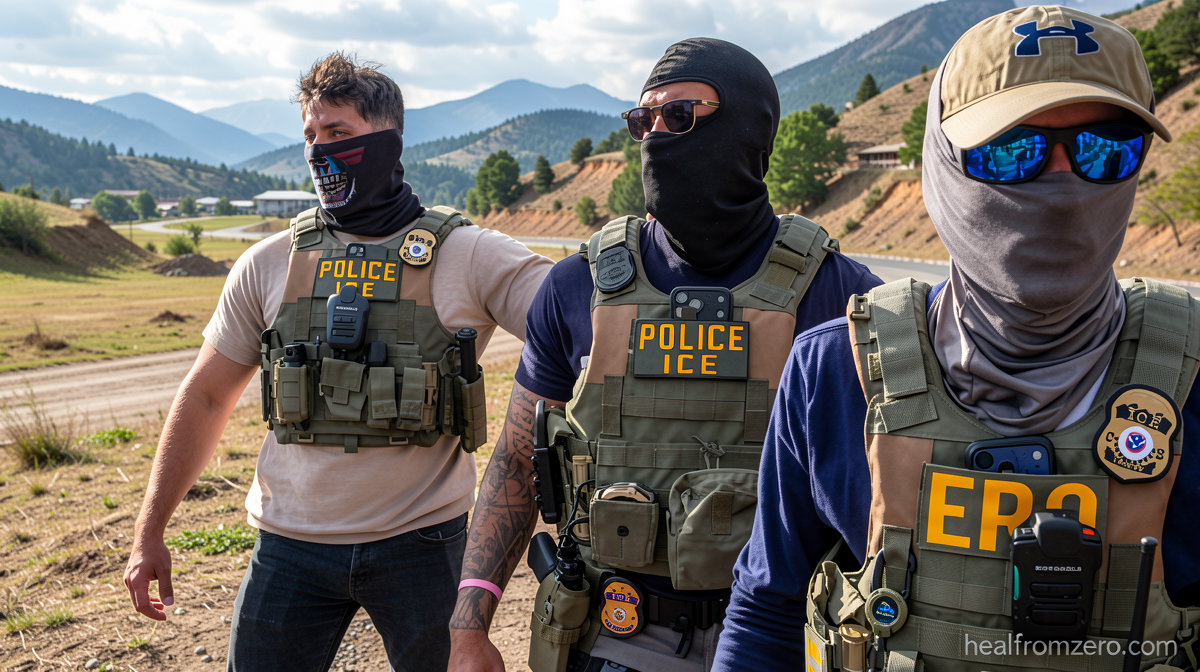
Healfromzero.com – The rollout of wearable recording devices across the entire Immigration and Customs Enforcement field force is now projected to be completed by the close of September, according to Homeland Security Secretary Markwayne Mullin. Speaking at a press briefing in New York on Tuesday, Mullin confirmed that the agency is in the final stages of equipping its officers with the technology, a development that follows months of public pressure and a string of high-profile clashes between federal immigration officers and civilians.
Mullin framed the timeline with characteristic directness when pressed on whether the distribution schedule remained intact.
“We’re getting close. By the end of September, I’m pretty sure we will be there.”
He went on to note that the agency is not limited to a single hardware configuration. In addition to the interim units already in circulation, DHS is exploring what he described as permanent camera installations that would be built into standard-issue gear rather than added as separate accessories.
“There’s also options we have. We have the permanent cameras that we’re trying to put on there.”
A Bipartisan Consensus Under Pressure
The push to put recording devices on every agent in the field has drawn rare cross-party support. Over the past year, a series of confrontations between ICE officers and members of the public — some ending in hospitalization, others in death — has made the question of visual accountability impossible to ignore. Polling and legislative commentary on both sides of the aisle have converged on the view that transparent, recorded interactions reduce the likelihood of disputes escalating and provide a shared factual record when they do.
White House border czar Tom Homan has been among the most vocal internal advocates for the program. Appearing on a Sunday television program, Homan framed the issue in terms of public trust rather than institutional self-protection.
“I’m a big proponent of cameras. I want the American people to see what the officer sees when he makes a decision.”
That framing — cameras as a tool for citizen oversight rather than merely a shield for officers — has become a recurring theme in administration communications about the rollout.
The Hardware Path: Motorola and Existing Mic Infrastructure
A practical wrinkle in the deployment timeline involves the microphones agents already carry. Mullin disclosed that Motorola, the communications-equipment manufacturer, is collaborating with DHS to determine whether the mic units currently worn by field personnel can be activated as cameras without requiring entirely new hardware.
“Some of the technology with some of the mics that all of these guys already wear, already have on them, have the ability for cameras too.”
Mullin confirmed he would sit down with Motorola’s chief executive during the current week to discuss accelerating the activation process.
“We’re talking about how we can activate those faster too.”
If the existing mic units prove viable as camera platforms, the agency could compress the remaining deployment window considerably, since agents would not need to be issued and fitted with separate recording devices. The question becomes one of software activation and brief procedural training rather than a full hardware procurement cycle.
From August to September: A Slipping Deadline
The September target represents a modest slip from an earlier internal benchmark. ICE had previously communicated to reporters that it expected every field officer to be camera-equipped by the end of August. In a written statement issued at that time, the agency confirmed it had already acquired the necessary devices and described the remaining step as individual-officer training, which it characterized as ongoing and expected to conclude “soon.”
The one-month extension, while modest, underscores the logistical complexity of outfitting a dispersed, multi-thousand-person field force across dozens of operational locations. Training each agent on recording protocols, data-handling procedures, and privacy safeguards cannot be compressed indefinitely without compromising the consistency of the program.
Why the Timing Matters
The broader significance of completing the rollout by month’s end extends beyond internal agency operations. Immigration enforcement actions — detentions, border crossings, workplace inspections, and street-level encounters — have become among the most politically charged interactions between federal agents and ordinary Americans. A universal camera mandate, once fully operational, would mean that virtually every such encounter is captured from the officer’s perspective, creating a record that can be reviewed by supervisors, shared with oversight bodies, or, in contested cases, introduced into administrative or judicial proceedings.
For communities that have experienced repeated incidents in which accounts of what occurred diverged sharply between agents and civilians, the cameras represent a structural change in the balance of evidentiary power. They do not eliminate disagreement over interpretation, but they do anchor the factual record to a shared visual source, reducing the space in which competing narratives can flourish unchecked.
Whether the September deadline holds will be watched closely by congressional oversight committees, civil-liberties organizations, and the communities most directly affected by ICE operations. The administration’s stated commitment, paired with the bipartisan political appetite for the measure, makes a completed rollout by the end of the month the most probable outcome — though the exact date of final activation remains, as Mullin acknowledged, subject to the pace of training and hardware integration.
Related Reading
Frequently Asked Questions
What is All ICE agents in the field?
All ICE agents in the field is the main topic of this guide. The article explains the context, practical details, and next steps readers should understand.
Why does All ICE agents in the field matter?
All ICE agents in the field matters because readers are looking for a useful answer, not just a short summary. Good content should match search intent and help them decide what to do next.