US military carries out new strikes on Iranian targets

Daftar Isi
American Forces Resume Bombing Campaign Against Iranian Military Sites
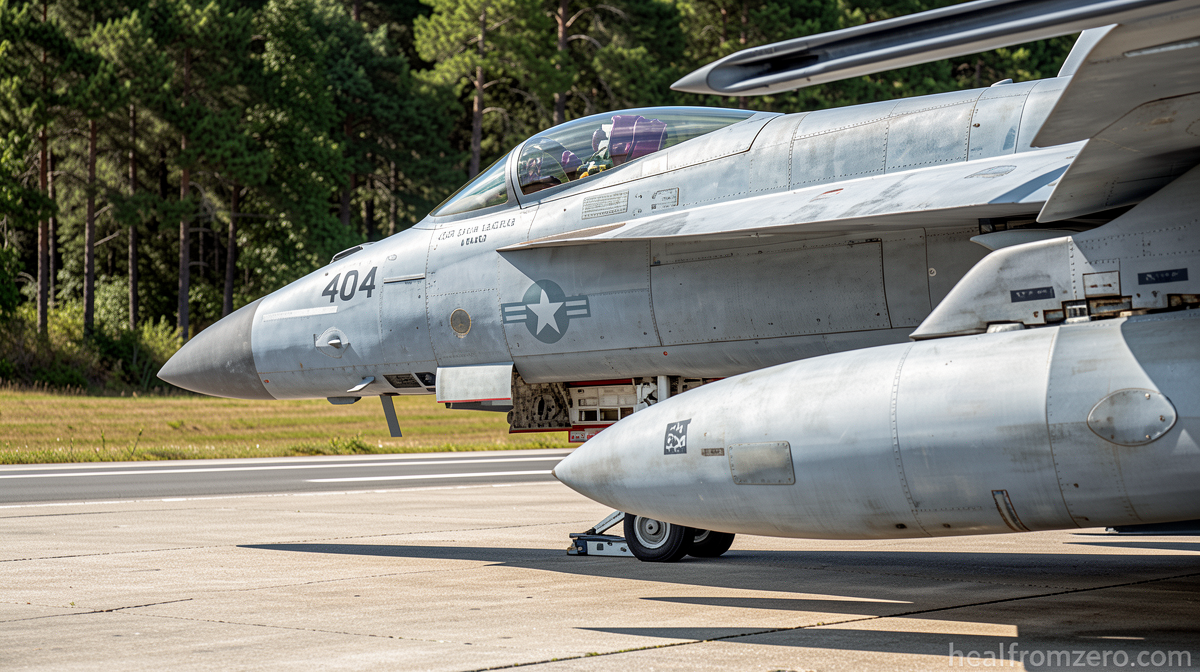
Healfromzero.com – The United States launched a fresh wave of airstrikes against installations belonging to Iran’s Islamic Revolutionary Guard Corps on Tuesday, reopening direct military confrontation between the two nations after more than a month of relative quiet. The bombardment was ordered in retaliation for what Washington described as renewed Iranian attempts to menace commercial vessels transiting the Strait of Hormuz and to threaten American service members stationed throughout the Persian Gulf region.
US Central Command confirmed the operation in a social-media posting, stating that forces began hitting IRGC targets at noon Eastern Time on Tuesday. The command framed the action as a direct response to recent IRGC moves aimed at disrupting maritime commerce through one of the world’s most critical energy chokepoints and at endangering deployed US personnel.
“Today at 12 p.m. ET, U.S. forces began striking Islamic Revolutionary Guard Corps (IRGC) targets in Iran. The strikes follow recent attempted attacks by the IRGC against commercial shipping in the Strait of Hormuz and against American service members deployed to the region.”
Escalation After a Month of Calm
The Tuesday bombardment came on the heels of an overnight exchange of fire stretching into Monday morning — the first sustained cross-border military engagement between Washington and Tehran in over thirty days. During that earlier clash, Iranian forces reportedly launched missiles aimed at American military positions in Jordan and the United Arab Emirates. Tehran framed those salvos as payback for a prior US strike that destroyed Iranian rocket-launcher emplacements on Larak Island, a small outpost in the northern reaches of the strait.
Washington, for its part, characterized the Iranian moves as an effort to deploy sea mines into the shipping lanes of the Strait of Hormuz — the narrow waterway through which roughly a fifth of global petroleum trade flows and which has served as the geographic and diplomatic epicenter of regional tensions throughout the conflict.
Trump Frames the Response as Contained
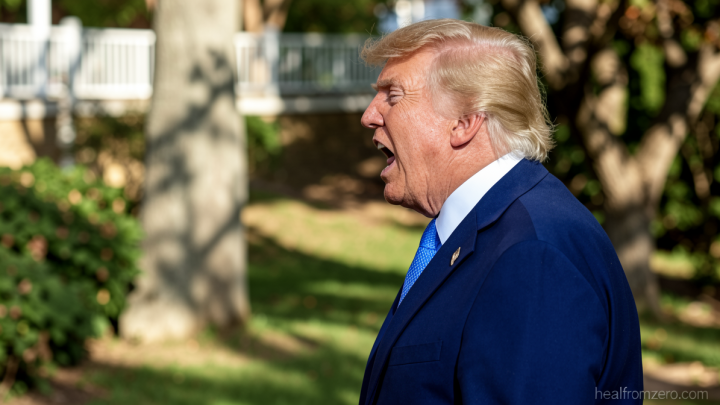
President Donald Trump addressed the flare-up from the Oval Office on Monday, insisting that American military action in Iran would remain narrowly scoped. He walked through what he characterized as decisive US achievements accumulated over the course of the six-month war that had already reshaped Iran’s conventional military capacity.
“It’s very limited. Their navy is gone. Their air force is gone. Their surveillance equipment is almost entirely gone. That doesn’t mean we won’t smack ’em. We’ll see what happens.”
Trump also asserted that the Strait of Hormuz remained in “extremely good shape,” with numerous vessels continuing to transit the waterway. Independent ship-tracking data, however, indicate that daily transit volumes remain well below pre-war baselines, suggesting that commercial operators continue to exercise considerable caution despite official reassurances.
Uncertainty Over Tehran’s Leadership
Pressed on who currently holds authority in Iran’s capital, Trump offered an unusually candid assessment of the post-war political landscape inside the Islamic Republic.
“In my opinion, they don’t know who the leader is. You have the radicals, but they’ve been wiped out from the standpoint of the military because the military is just a fraction of what it was. I don’t really think they know who their leader is.”
Those remarks underscore the degree to which the six-month campaign has degraded Iran’s institutional command structure, leaving questions about succession and decision-making authority unresolved in Tehran’s corridors of power.
Market Reactions and Strategic Shift
The earlier overnight exchange of strikes sent global crude-oil benchmarks surging nearly three percent and dragged major US equity indexes lower on Monday. Energy traders and shipping insurers, already on heightened alert following weeks of mine-laying threats, priced in renewed risk premiums within hours of the first missile launches.
Strategically, the Tuesday strikes represent a notable pivot. Days earlier, Trump had publicly declared the Strait of Hormuz cleared of mines, signaling Washington’s preference for sustained economic pressure — sanctions, financial isolation, and trade restrictions — over kinetic military operations. The resumption of bombing suggests that diplomatic and economic levers alone have not been sufficient to deter Iranian attempts to reassert influence over the waterway, prompting a return to airpower as the primary instrument of compulsion.
Why the Strait Matters
The Strait of Hormuz, at its narrowest point roughly 33 kilometers wide, channels an estimated 20 million barrels of oil per day from Gulf producers including Saudi Arabia, Iraq, Kuwait, Qatar, and the United Arab Emirates. Disruption of even a few days’ worth of transit can ripple through global fuel prices, shipping insurance rates, and inflation expectations across importing economies from East Asia to Western Europe. For that reason, every credible threat to the waterway’s navigability carries outsized geopolitical weight, and both Washington and Tehran treat control of the strait as a non-negotiable strategic interest.
As of Tuesday’s latest strikes, the situation remains fluid. Additional exchanges of fire cannot be ruled out, and both capitals have signaled that they expect further contact in the coming days. The story is developing and will be updated as new information becomes available.
Related Reading
Frequently Asked Questions
What is US military carries out new strikes?
US military carries out new strikes is the main topic of this guide. The article explains the context, practical details, and next steps readers should understand.
Why does US military carries out new strikes matter?
US military carries out new strikes matters because readers are looking for a useful answer, not just a short summary. Good content should match search intent and help them decide what to do next.