Cameron Young turns a lonely day into a blistering ride up the Tour Championship leaderboard

Daftar Isi
Playing Solo at East Lake, Cameron Young Fired a 62 and Reclaimed the Tour Championship Lead
Healfromzero.com – There is a particular kind of silence that settles over a golf course when one player stands alone on the first tee while the rest of the field waits in the clubhouse. No partner to pace yourself against, no caddie conversation to fill the gaps between shots, no second set of eyes confirming that the scorecard will be believed later. For Cameron Young, that silence on a Friday morning at East Lake Golf Club in Atlanta became the backdrop for one of the most dramatic solo performances of his career.
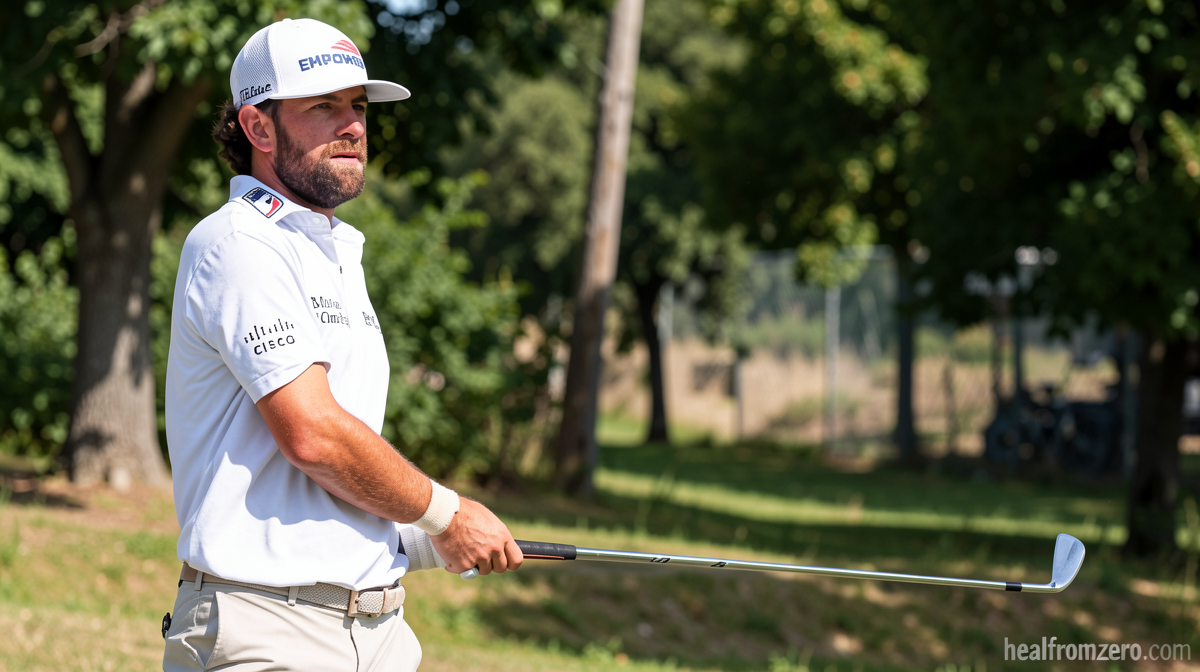
Young, the New York native who had already claimed two PGA Tour titles this season, walked out of the clubhouse at 8-under par and into a round that would vault him from 29th place to the clubhouse lead at the Tour Championship. His scorecard read 62, built on birdies at seven of the first eleven holes and capped by a sliding, sloping eagle putt from roughly 42 feet on the 18th that found the back of the cup. The only mark against him was a bogey on the par-four 12th, where a wayward approach shot found a bunker and cost him a stroke.
How a Single Came to Be
The circumstances were unusual. Young had finished Thursday at even par, which placed him in 29th place heading into the weekend. That position meant he would receive the earliest tee time on Friday. His scheduled playing partner, J.J. Spaun, had withdrawn after just six holes on Thursday due to shoulder pain, leaving Young without a companion for the entire second round. He would play every hole that day as a single.
For most professionals, the prospect of a solo round at a major event triggers a quiet anxiety: the scorecard, unobserved, might be questioned later. Young acknowledged the strangeness but quickly reframed it as something closer to a practice round, a format he knows intimately from his own training routine.
“It’s a bit strange. I’ve never done it before,” Young said. “Once you kind of get over the fact that they just announced one person on the first hole, it’s kind of more like a practice round. We play a lot of practice rounds just on my own. Yeah, I felt like, especially with it going well, it was really easy to keep going.”
The Rhythm of a Solo Round
Golfers describe the solo experience as a double-edged sensation. On one side sits the unbroken rhythm: no waiting for a partner’s shot, no adjusting your pace to someone else’s tempo. On the other side lurks the nagging doubt that no one will verify the final number. Young leaned into the former and, as his round progressed, the latter became irrelevant. Spectators began filtering onto the course in growing numbers, drawn by word of what was unfolding. By the time he reached the 18th green, a sizable gallery had assembled, and the roar that followed his eagle putt carried across the grounds of the exclusive Atlanta country club.
“It makes it easier because you’re not waiting on anybody. You kind of just like – you just keep going. You don’t do anything that isn’t at your own pace. You’re never waiting. You’re never rushing. In that sense, it’s pretty nice,” he said.
Breaking a Five-Week Slump
The 62 carried weight beyond a single leaderboard position. Young had entered the weekend carrying the frustration of four or five consecutive weeks in which his scoring had fallen well short of the blistering pace he had established earlier in the year. He had won at The Players Championship and the Cadillac Championship, posted six additional top-10 finishes including second at the British Open and third at the Masters, and then stalled. Three straight events had seen him finish far outside contention, and Thursday’s opening round had begun with bogeys on three of the first five holes.
The solo round, far from being a disadvantage, offered a mental reset. Young described the experience as a welcome change of rhythm, one that allowed him to focus exclusively on his own process without the social friction of a pairing.
“From a mental perspective, good golf fixes just about everything,” he said. “Playing by yourself, it’s strange for a second. Kind of when you see the pairing, it’s strange; and then once you get into it, like I said, you don’t have to wait. You don’t have to rush. You can kind of just do everything you’d like to do the whole day. So, it’s easy in that sense.”
The 59 That Wasn’t
For stretches of the round, Young appeared within reach of golf’s most coveted single-day score: a 59. He admitted the number had crossed his mind while walking the course.
“We all think about that. You have thoughts that enter your mind, and you have to think about them,” he acknowledged.
The 12th hole, where the approach found sand and the bogey followed, kept that fantasy alive just long enough to make the eventual 62 feel both triumphant and slightly incomplete. Still, 62 was more than sufficient to place him atop the leaderboard at the halfway mark.
What Comes Next
Young’s lead proved short-lived. As the second round continued and East Lake continued yielding birdies to other competitors, he was quickly joined at 8-under. The solitude of Friday morning would not repeat itself; the rest of the tournament would see him paired, watched, and contested. But for those few hours on a Friday at East Lake, the lone figure on the course had turned a lonely situation into a statement, burying an eagle putt in front of a swelling crowd and reminding everyone watching exactly where he belongs on the leaderboard.
Related Reading
Frequently Asked Questions
What is Cameron Young turns a lonely day into?
Cameron Young turns a lonely day into is the main topic of this guide. The article explains the context, practical details, and next steps readers should understand.
Why does Cameron Young turns a lonely day into matter?
Cameron Young turns a lonely day into matters because readers are looking for a useful answer, not just a short summary. Good content should match search intent and help them decide what to do next.