Harald V, the sailing king who epitomized a modern Norwegian royalty, dies

Daftar Isi
Norway’s Longest-Reigning Modern King Harald V Passes at 89
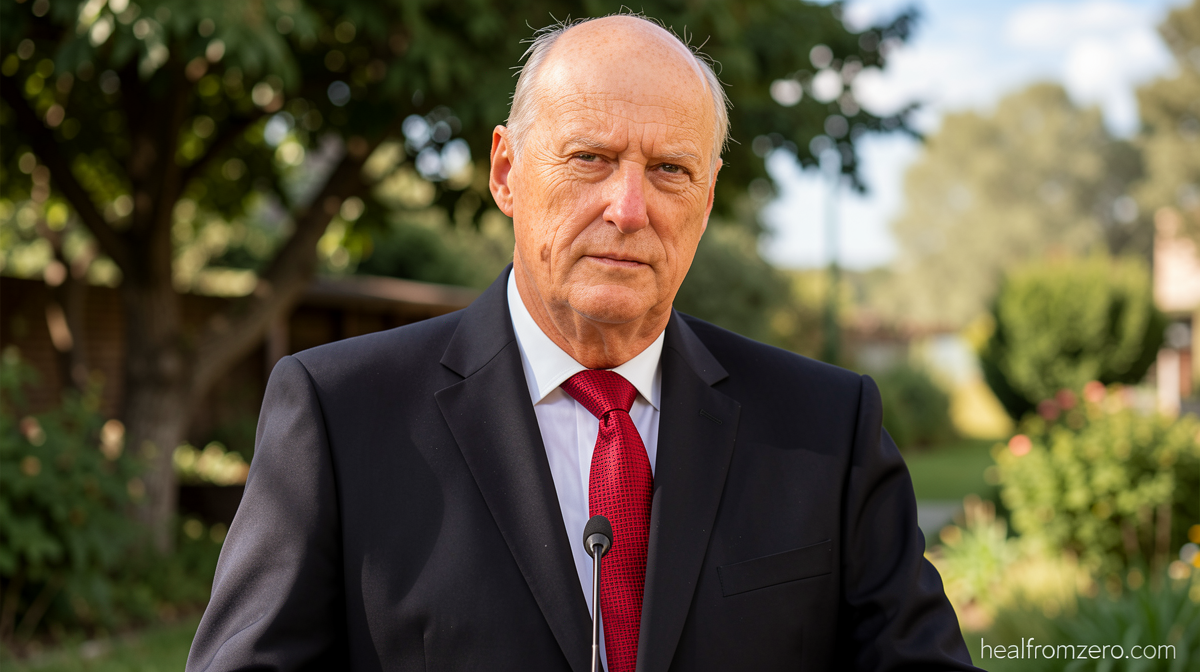
Healfromzero.com – Harald V, who spent three and a half decades embodying a reformed, accessible Norwegian monarchy, has died at the age of 89. The Royal House of Norway confirmed the death on Friday morning, noting he passed just after 6:35 a.m. local time. His son Haakon now assumes the crown, while his granddaughter Ingrid Alexandra steps forward as the next heir to the Norwegian throne.
Harald leaves behind Queen Sonja, his wife of 57 years, two children, and five grandchildren. His passing arrives during a period of considerable strain within the royal household, complicating what should be a straightforward transition of power.
A Succession Shadowed by Family Turmoil
The immediate aftermath of Harald’s death is clouded by difficulties already facing the new king’s household. Queen Consort Mette-Marit, Haakon’s wife, has endured recurring health challenges in recent years. Her position was further complicated this year when details of her earlier acquaintance with the late financier and convicted sex offender Jeffrey Epstein surfaced publicly, drawing intense international scrutiny to the Norwegian royal family. Shortly thereafter, her son from a prior relationship was found guilty of rape and domestic violence and received a four-year prison sentence.
These developments have placed unusual pressure on a monarchy that Harald spent decades cultivating as a symbol of national unity rather than dynastic privilege. The question now facing Norwegians is whether the institution can absorb this turbulence without fracturing the public trust that Harald worked so deliberately to build.
National Mourning and a Life in Service
Prime Minister Jonas Gahr Støre addressed the nation shortly after the announcement:
“A whole nation is in mourning,” Støre said, adding that the people of Norway are “left with a deep sense of gratitude for a long life in the service of Norway.”
The sentiment captures a broader reality: Harald’s reign, spanning from 1991 to 2026, coincided with Norway’s transformation into one of the world’s wealthiest and most socially progressive nations. His public role emphasized civic duty, environmental stewardship, and the quiet dignity of a constitutional monarch who never sought personal political influence.
Final Days and Medical Decline
The royal family disclosed in mid-August that Harald had been admitted to hospital to treat fluid accumulation in his body, a complication of a blood disorder. His condition worsened over the following days, and he subsequently developed a bacterial infection. The deterioration was rapid, and the announcement of his death came within days of the hospitalization becoming public knowledge.
A Childhood Forged by War
Harald was born on February 21, 1937, the youngest of three siblings and the only son — a distinction that mattered enormously under the Norwegian Constitution as it then stood, which permitted only male heirs to inherit the crown. He was barely three years old when German forces invaded Norway in April 1940. His family, alongside senior members of the Norwegian government, fled to neighboring Sweden. After several months in that Scandinavian refuge, the family departed again: Harald traveled to Washington, D.C., with his mother and elder sisters, while his grandfather King Haakon VII and his father Crown Prince Olav relocated to London until the German occupation ended.
On June 7, 1945, following Germany’s surrender to the Allied powers, the eight-year-old Harald returned to Norway with the rest of the royal family. Thousands lined the streets of Oslo to welcome them home, a scene that would define his lifelong association with the Norwegian populace.
Modernizing the Crown from Within
To anchor the monarchy firmly in ordinary Norwegian life, Harald attended a state school for his early education. His daily experience, apart from the guards posted outside the gates, was indistinguishable from that of any other child in the neighborhood. He completed secondary schooling at Oslo Cathedral School, fulfilled the mandatory one-year military service at the Norwegian Cavalry Officers’ Training School, and then enrolled at the University of Oxford to study social science, history, and economics.
Raised on the Royal Estate of Skaugum, situated on the inner Oslofjord just outside the capital, Harald developed an outdoor orientation from earliest childhood. Water was central to his identity. He inherited a deep passion for sailing from his father, King Olav V, and the Royal House of Norway estimates he participated in more than 1,000 regattas and sailing events over his lifetime. The institution notes that “Prince Harald was 10 years old when in 1946 he competed as a crew for the first time.”
Olympic Competitor and Flag Bearer
As Crown Prince, Harald represented Norway in Olympic sailing at three consecutive Games. He competed in Tokyo in 1964, where he also carried the Norwegian flag during the opening ceremony. He returned to the Olympic regatta in Mexico City in 1968 and again in Munich in 1972. Few European royals have combined competitive athletic participation with the ceremonial duties of their station to this degree.
The Commoner Bride and a Constitutional Shift
Harald courted Sonja Haraldsen for nine years before their union received royal sanction. King Olav V, after consultation with the Norwegian Parliament, ultimately granted permission for the marriage — reportedly only after his son threatened to renounce the throne. Olav had been reluctant to approve a union with a woman of no aristocratic lineage. The couple married before 800 guests in a lavish ceremony at Oslo Cathedral on August 29, 1968, and celebrations across the country continued for three days.
Their daughter Princess Märtha Louise was born in 1971, followed two years later by their son Haakon. Constitutional amendments adopted in 1990 removed the male-only succession restriction, ensuring that future Norwegian monarchs could be chosen regardless of sex — a change that would ultimately shape the line of succession Harald’s own death now activates.
Ascension and the Trondheim Consecration
Harald was 53 when he ascended the throne in 1991. In accordance with his and Sonja’s own wishes, the couple underwent a consecration ceremony incorporating traditions that reach back to the medieval period. The rite took place at Nidaros Cathedral in Trondheim, central Norway, on June 23, 1991. In the weeks and months that followed, the new king and queen conducted a ten-day tour of southern Norway and, in 1992, a twenty-two-day itinerary through the country’s four northernmost counties — a deliberate effort to make the crown visible in every corner of the realm.
What Remains
Harald V’s death closes a chapter in Scandinavian constitutional monarchy that began with his wartime childhood and ended with a nation’s quiet gratitude. The throne now passes to Haakon, whose own public role has been shaped by decades of service alongside his father. Ingrid Alexandra, his granddaughter, enters the line of succession at a moment when the institution she will one day represent faces its most public challenges in a generation. How Norway navigates those challenges will define the next era of its monarchy as surely as Harald’s thirty-five years defined the last.
Related Reading
Frequently Asked Questions
What is Harald V the sailing king who epitomized?
Harald V the sailing king who epitomized is the main topic of this guide. The article explains the context, practical details, and next steps readers should understand.
Why does Harald V the sailing king who epitomized matter?
Harald V the sailing king who epitomized matters because readers are looking for a useful answer, not just a short summary. Good content should match search intent and help them decide what to do next.