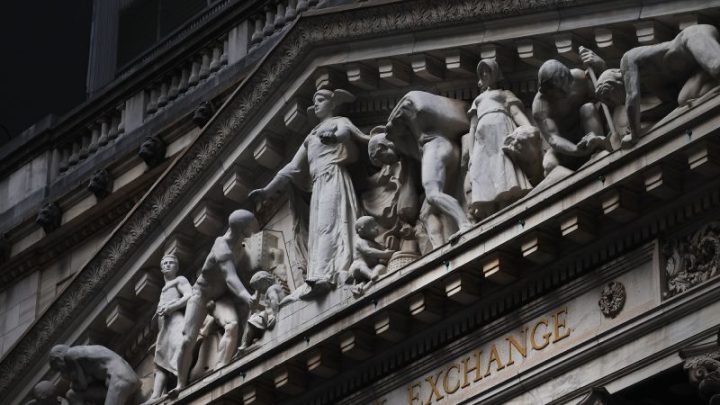
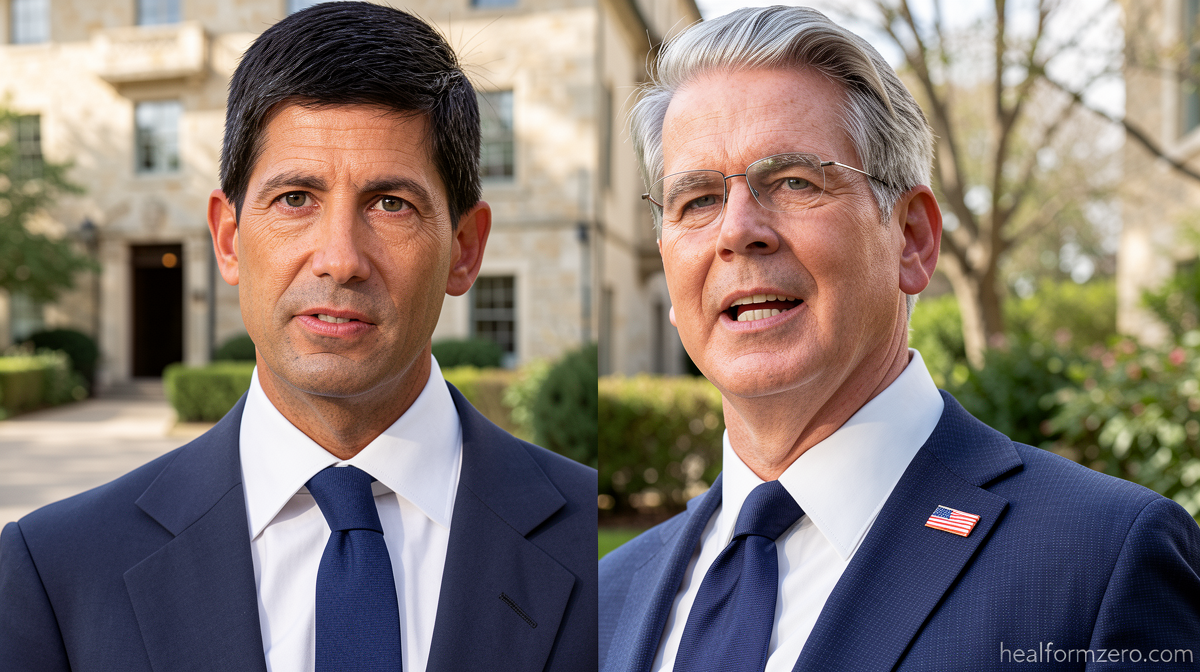
Kevin Warsh has a plan for the Fed. Scott Bessent is getting in the way

Daftar Isi
Warsh’s Transparency Experiment Collides With Bessent’s Bond-Market Intervention
Healfromzero.com – The two most powerful voices in American monetary and fiscal policy are pulling in opposite directions, and the bond market is caught in the crossfire. Federal Reserve Chair Kevin Warsh, installed by President Donald Trump, has deliberately withdrawn the forward guidance that Wall Street has relied on for nearly two decades. Treasury Secretary Scott Bessent, Trump’s chief economic architect, has simultaneously stepped into the market with a program designed to suppress yields. The result is a policy environment in which the very signal Warsh needs to read the economy is being distorted by his own administration’s fiscal counterpart.
Warsh’s Bet: Let the Data Speak
Warsh’s reasoning is straightforward in principle. For years, the Fed has telegraphed its intentions through press conferences, dot plots, and carefully calibrated language, allowing traders to front-run policy moves. Warsh has concluded that this practice poisons the market’s response to actual economic information. If investors stop decoding Fed rhetoric and instead react purely to incoming data, those reactions become a cleaner input for policymakers debating whether to tighten or ease monetary conditions.
The gamble is enormous. Markets have spent two decades calibrating their models around Fed communications. Stripping that layer away does not simply reveal a purer signal; it introduces volatility, confusion, and a period of recalibration during which price discovery becomes less reliable. Warsh has nonetheless pressed forward, and at the July Federal Open Market Committee meeting he framed the shift in sporting metaphor.
“Market participants are learning to play the ball, not the referee,” Warsh said.
Critics note the analogy breaks down quickly. The Fed is not a passive official on the sideline; it sets the federal funds rate directly and shapes longer-duration yields through balance-sheet operations. The “referee” is also a player, and pretending otherwise risks misreading what the market is actually pricing.
Bessent’s Counter-Move: Doubling Treasury Buybacks
Just as Warsh was attempting to clear the windshield, Bessent announced a surprise expansion of Treasury buyback operations, at least doubling the prior pace. The Treasury Department characterized the step as a liquidity measure, a routine tool to ensure orderly functioning in the debt market. Analysts, however, read the timing and scale differently. The 30-year Treasury note had recently climbed to its highest yield since 2007, the eve of the global financial crisis, and Bessent has long expressed discomfort with elevated borrowing costs for the federal government.
The immediate effect was visible: US Treasury rates fell following the announcement. That price movement, however, muddies the very signal Warsh is trying to extract. If the Treasury is actively buying to cap yields, the resulting price action no longer reflects organic market demand or genuine inflation expectations.
“It’s not a clean signal of what the market wants if Treasury is intervening,” said Eric Rosengren, former president of the Federal Reserve Bank of Boston.
Rosengren went further, dismissing the liquidity rationale outright.
“There is no chaos in the Treasury market. The liquidity argument doesn’t hold. It looks a lot more like window-dressing before the midterms.”
The Mentor’s Rebuke
Stanley Druckenmiller, the legendary macro investor who mentored Bessent early in his career, published an op-ed in The Wall Street Journal under the headline “Let the bond market speak,” in which he labeled the buyback expansion “artificial yield suppression.” The commentary drew its own controversy when it emerged that Druckenmiller had used artificial intelligence to draft the piece, a detail that detractors seized upon to question his credibility.
Historical Context: The Transparency Reversal
Warsh’s communication retreat marks a sharp break from the post-2008 norm. Under Alan Greenspan, who chaired the Fed through the late 1990s, the central bank offered minimal detail about its reasoning. Beginning in the mid-2000s and accelerating after the crisis, the Fed layered on press conferences, published rate projections from individual policymakers, and even permitted senior officials to appear on television programs such as “60 Minutes.” Each addition was meant to anchor expectations and reduce surprise.
Reversing that trajectory is, by most accounts, far harder than building it.
“Taking back transparency will be really difficult to pull off smoothly,” said Benson Durham, a former Fed official and founder of the independent research firm DASM LLC. “It’s hard to put the genie back in the bottle.”
The Cross-Purposes Problem
The deeper tension is not merely stylistic. Warsh has repeatedly flagged that inflation has remained above the Fed’s two-percent target for roughly five and a half years. Fed officials this summer debated whether short-term rates should be raised in response; at minimum, they agreed to hold the policy rate steady. Bessent, by contrast, appears determined to push long-term yields lower through direct market participation. Success on that front would reduce the cost of mortgages, corporate borrowing, and the government’s own debt service. Each of those channels, however, injects additional demand into the economy and can reignite the very price pressures the Fed is trying to contain.
“The Fed and Treasury are working at cross purposes, which is not productive,” Rosengren observed.
Tim Mahedy, a former San Francisco Fed official now serving as CEO of research firm Access/Macro, framed the institutional friction in more personal terms.
“If timing is everything in love, the bromance between Bessent and Warsh may be coming to an end.”
What Comes Next
For market participants, the practical consequence is a period of elevated uncertainty. Traders who once parsed every comma in a Fed statement now face a chair who offers fewer clues, while simultaneously watching the Treasury’s trading desk move in ways that distort the price signals they are supposed to rely on. The midterms approaching later this year add a political dimension: any program that visibly lowers borrowing costs ahead of an election carries an electoral incentive that is difficult to separate from genuine macroeconomic necessity.
Whether Warsh’s experiment survives the next few quarters depends on whether the market can recalibrate without a reliable compass, and whether the administration can resist the temptation to let fiscal policy override monetary discipline. Until both questions are answered, the bond market will remain the most contested arena in American economic policy.
Related Reading
Frequently Asked Questions
What is Kevin Warsh has a plan?
Kevin Warsh has a plan is the main topic of this guide. The article explains the context, practical details, and next steps readers should understand.
Why does Kevin Warsh has a plan matter?
Kevin Warsh has a plan matters because readers are looking for a useful answer, not just a short summary. Good content should match search intent and help them decide what to do next.