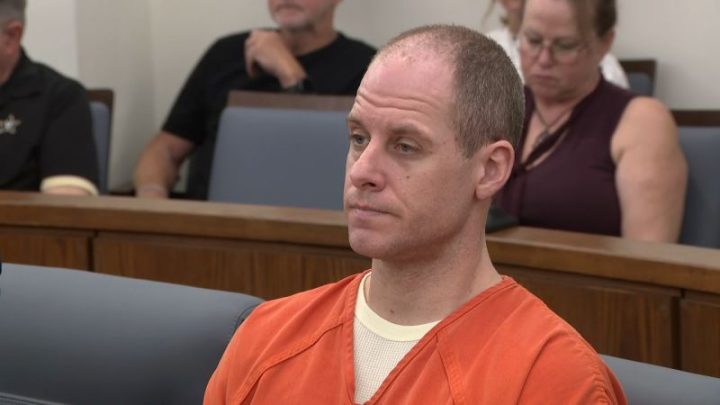
Lindsay Clancy admits to killing their children. So why is there an online groundswell blaming her ex-husband?


Lindsay Clancy Admits to Killing: The Online Trial
Healfromzero.com – When Lindsay Clancy admits to killing her three young children in a Boston-area home in 2023, the public expected grief, silence, and a courtroom process. What arrived instead was a tidal wave of internet speculation aimed squarely at Patrick Clancy, her ex-husband — a man whose whereabouts during the killings were corroborated by phone records, vehicle GPS data, and surveillance video. The gap between what investigators established and what millions of commenters now assert has made the trial less a legal proceeding and more a referendum on collective belief.
The Facts No One Disputes
Five-year-old Cora, three-year-old Dawson, and eight-month-old Callan died in their family home in a Boston suburb. Their mother survived an attempted suicide with permanent paralysis below the waist and has publicly acknowledged responsibility for the children’s deaths. Her attorneys do not contest that admission; their defense rests on postpartum psychosis and severe mental illness at the time of the act. In parallel, Lindsay has sued her healthcare providers in a medical-malpractice action alleging they failed to diagnose and treat her condition.
Because the case proceeds under a stipulation of facts, prosecutors are not obligated to replay every exhibit on camera. Those stretches of televised silence have become fertile ground for content creators who fill the void with alternative narratives. The most persistent claim — that Patrick, not Lindsay, is responsible — has no evidentiary anchor.
What the Record Actually Shows
Investigators concluded that Lindsay was the sole adult present in the home during the attack. Patrick was elsewhere. Ken Corey, former New York Police Department chief and current fellow at the Chicago Police Lab, described how detectives would have pulled his phone data and, where applicable, the vehicle’s onboard GPS to reconstruct his movements. The objective, he explained, was to demonstrate conclusively that he could not have committed the crime because he was not physically present.
Surveillance footage placed Patrick inside a CVS pharmacy during the relevant time window. Corey stressed that this was not an isolated clip but one link in a corroborated chain. Patrick was effectively cleared as a suspect before the trial reached a courtroom, yet he still took the stand as the prosecution’s first witness — and for a segment of the online audience, his testimony generated more questions than it answered.
“I do not believe that Lindsay Clancy committed these crimes. I fully believe that Patrick convinced her that she did.”
That TikTok comment is emblematic of a broader current. Another user wrote, “I didn’t doubt anything that happened until this man opened his mouth.” Neither statement references a single piece of exculpatory evidence; both rest on the feeling that the official account is incomplete.
Why Minds Reach for Another Culprit
Michael Wagner, director of the University of Wisconsin–Madison School of Journalism and Mass Communication, studies how online environments shape what people accept as true. His explanation for the Patrick Clancy phenomenon is psychological: when a mother kills her own children, the human brain resists the explanation because it is so devastating. It reaches for an alternative that feels more coherent, even when unsupported.
“Where a mother has killed children, you’re motivated to think – that can’t be.”
Wagner and other media scholars add that institutional distrust, combined with the algorithmic reward structure of social platforms, amplifies such narratives. Posts challenging the official account earn more clicks, shares, and comments than posts that simply restate the evidence. The result is a feedback loop in which the less-supported story gains the louder voice.
Frequently Asked Questions
Did Lindsay Clancy admit to killing her children? Yes. She has publicly acknowledged that she killed Cora, Dawson, and Callan. Her legal team’s argument concerns mental state at the time of the act, not whether she was present or responsible.
Was Patrick Clancy cleared before trial? Investigators placed him elsewhere during the killings using phone records, vehicle GPS data, and surveillance video. Corey described the standard as satisfied on both prongs: compelling evidence that he could not have committed the crime and compelling evidence that someone else did.
Why does the trial feel information-poor on television? The stipulation of facts means prosecutors need not replay every exhibit. Those gaps invite speculation, but they do not indicate missing evidence.
What is the psychological explanation for the online backlash? Wagner describes a cognitive resistance to accepting that a mother killed her own children. The brain seeks a more coherent alternative narrative, and platform algorithms reward the posts that offer one.