‘Pop the Balloon or Find Love’ creators say the viral dating show is really about Black love

Daftar Isi
A Viral Dating Format Becomes a Global Phenomenon — But Its Creators Insist the Story Is About Love, Not Rejection
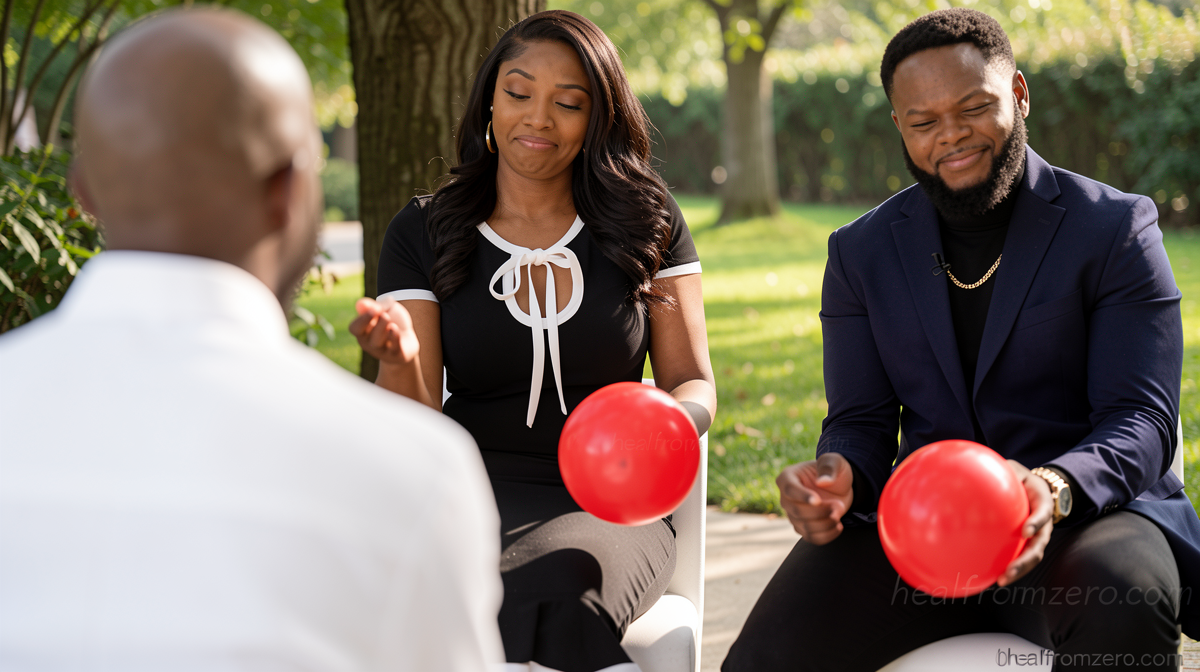
Healfromzero.com – Scroll through any social media feed in recent years and you will almost certainly encounter a clip of a young person popping a red balloon mid-conversation, ending a potential date over a pair of shoes or a half-formed sentence. The format belongs to “Pop the Balloon or Find Love,” a YouTube dating series that exploded into global consciousness almost overnight. Singles appear on camera holding inflated red balloons; a prospective match stands opposite. The moment interest evaporates — over appearance, values, lifestyle choices, or a poorly timed remark — the balloon bursts, signaling an immediate exit. Some rejections arrive before a single word is exchanged.
Those explosive, often awkward moments ignited fierce online debates about modern courtship norms and whether Black couples face an impossible bar of scrutiny. The clips became a cultural lightning rod. Yet the two people behind the camera insist the viral fragments represent only a sliver of what they actually built.
The Founders and Their Original Intent
Bolia “BM” Matundu, born in Kinshasa and raised in London, and Arlette Amuli, based in Arizona with Congolese heritage, launched the series on YouTube in December 2023. What began in a modest Arizona setup — borrowed cameras, a single host, and contestants sourced through personal networks — was never conceived as a showcase for rejection. The couple wanted to tell a different story, one they felt was increasingly absent from online content about Black relationships.
“We wanted to make a version that’s meaningful,” Matundu says. “Real people. Real intentions.”
By roughly the tenth episode, Matundu says he made a deliberate pivot. He told his wife they needed to center genuine love narratives rather than chase the algorithm’s appetite for conflict.
“When we reached about 10 episodes, I told my wife, ‘We have to really focus on love and storytelling, on people’s real love stories. That’s what will last longer than just viral moments,'”
The shift, both creators say, reshaped audience behavior. Early viewers tuned in for the balloon pops; later viewers began following multi-episode storylines and rooting for couples to find lasting connection. Amuli notes that episodes without a successful match now draw complaints from fans who want the romance to land.
From YouTube to Netflix: A Franchise Crosses Over
The format’s recognizability spawned countless imitators across the internet and attracted contestants from every continent. That momentum eventually carried the brand into a major streaming adaptation. In April 2025, Netflix released “Pop the Balloon LIVE,” an eight-episode live-action series hosted by comedian and actor Yvonne Orji and produced by Sharp Entertainment. Matundu and Amuli received executive-producer credits, though they describe their creative involvement in the Netflix iteration as minimal.
Some fans and critics felt the celebrity cameos, a louder production style, and structural changes diluted the intimacy and cultural specificity that made the original YouTube episodes resonate. The creators, meanwhile, kept producing the original format on YouTube while simultaneously expanding into new territories.
Going Global: Lingala, English, and the Question of Language
Building on the show’s international traction, the couple launched localized editions in the Democratic Republic of Congo — filmed in Lingala, a major Bantu language spoken across the region — and in the United Kingdom in English. Despite the geographic and cultural distance between those productions, Matundu reports that conversations about dating expectations and the longing for durable partnership remain strikingly consistent.
“I’ve done it in Congo, same results. I’ve done it in the UK, same results,” he says. “It doesn’t matter where you’re doing it.”
The decision to shoot the Congolese edition in Lingala rather than French was deliberate. Amuli explains the reasoning plainly:
“It’s not our national language,” Amuli says. “Lingala is our language… so people know this is a Congolese show.”
For Matundu, producing a Congolese version carried weight beyond franchise expansion. He wanted to challenge reductive images of Africa that persist in global media.
“I wanted to put our country on the map,” he says. “A lot of people have this image of Africa, and I’m like, no. Africa is beautiful. Africa is amazing.”
The Congolese edition quickly cultivated its own identity. Matundu laughs when describing the difference: contestants there, he says, are blunter, more direct, and less inclined to soften a rejection. Amuli concurs, noting that Congolese participants “will tell you just how it is. That’s how they are in real life.”
Criticism, Context, and What the Full Episodes Reveal
As the show’s footprint has widened, so has the pushback. A vocal segment of viewers argues that the most-shared clips — the abrupt pops, the superficial judgments, the confrontational exchanges — reinforce negative stereotypes about Black relationships by foregrounding rejection and conflict. Matundu counters that those conclusions typically stem from thirty-second excerpts circulating on social platforms, where a single dramatic moment can reach millions while the full episode, with its context, humor, and eventual tenderness, remains unseen by most of that audience.
Amuli adds that viral excerpts routinely omit what unfolds afterward: the conversations that repair a misunderstanding, the second chances, the quiet moments where two people realize they want to keep talking. The balloon pop, in her framing, is a punctuation mark, not the thesis.
The broader implication is worth noting. In an era when algorithmic amplification rewards the most jarring three seconds of any interaction, a format built around an instantaneous, visible rejection is structurally primed to generate outrage content. That the creators have spent two years steering the narrative back toward patience, specificity, and genuine affection — across multiple languages and continents — positions the series as a case study in how independent creators can reclaim a viral moment and redirect it toward something more durable than a trending clip.
Related Reading
Frequently Asked Questions
What is Pop the Balloon or Find Love?
Pop the Balloon or Find Love is the main topic of this guide. The article explains the context, practical details, and next steps readers should understand.
Why does Pop the Balloon or Find Love matter?
Pop the Balloon or Find Love matters because readers are looking for a useful answer, not just a short summary. Good content should match search intent and help them decide what to do next.