Scientists are cracking the code of interspecies communication. Is that a good thing?

Scientists are cracking the code of interspecies communication. Is that a good thing?
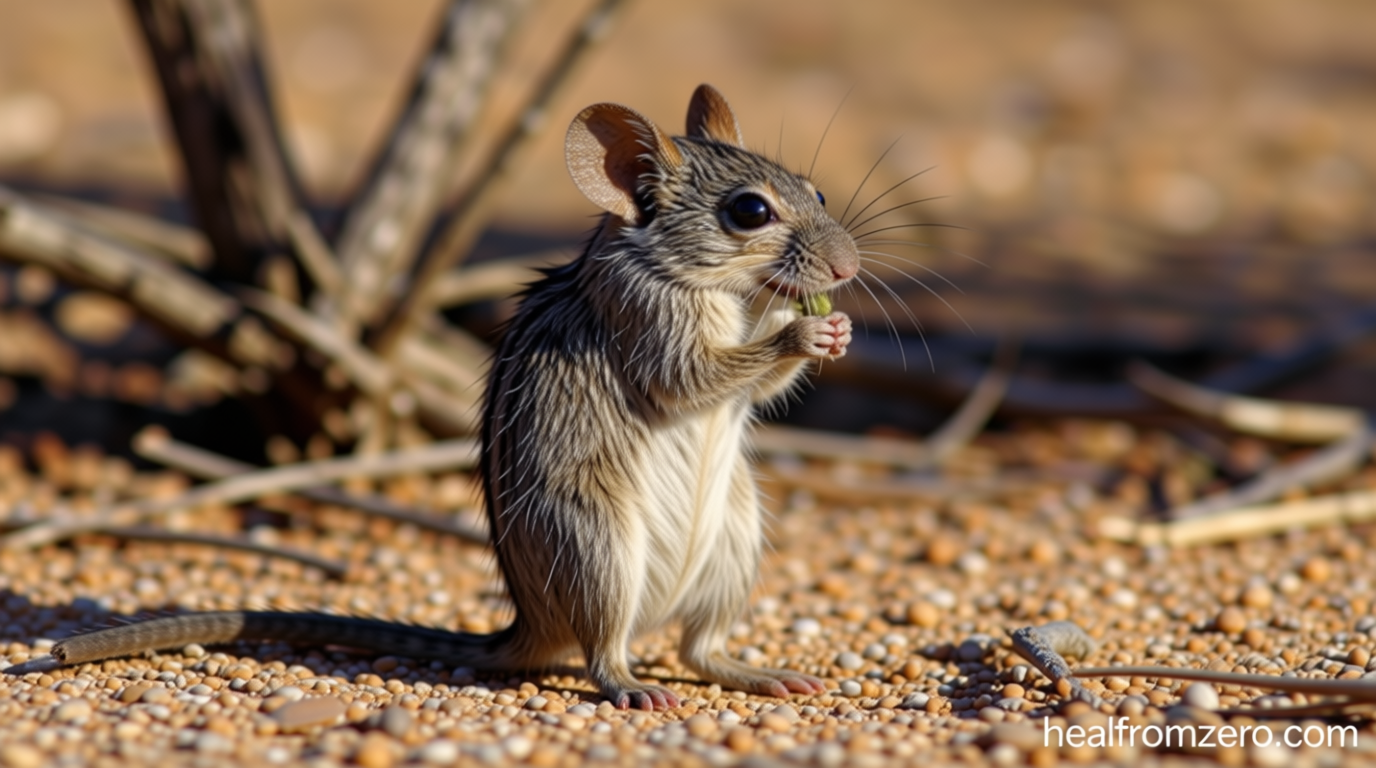
Scientists are cracking the code of interspecies – In the arid expanses of the Karoo region in South Africa, where the sun casts long shadows over rust-colored landscapes, a small African striped mouse enjoys the early morning light. Its calm demeanor is disrupted by a series of high-pitched squeaks, emanating from nearby audio devices. These sounds, beyond the range of human hearing, are designed to mimic those of a mouse from a neighboring nest. The mouse reacts instantly, standing on its hind legs as if to assess the source. But when the same nest’s vocalizations are played, the creature remains undisturbed, continuing its routine without a flicker of concern.
A Breakthrough in Silent Conversations
The study, led by Nicolas Mathevon, a professor at the University of Saint-Etienne in France, marks a significant milestone in understanding the complex vocalizations of wild mice. By capturing over 122,000 individual squeaks across 12 days using 23 microphones strategically placed around four nests, the team uncovered patterns that hint at a nuanced system of communication. This research not only highlights the sophistication of animal language but also raises intriguing questions about the boundaries of interspecies interaction.
“When it’s a vocalization from a neighboring individual, they pay a lot more attention. They really look at the speaker. They are disturbed,” said Mathevon, who spearheaded the investigation into the behaviors of African striped mice. “If it’s from a complete stranger, then we see an even stronger reaction, like the mouse fleeing into the bush because they are really surprised.”
Mathevon’s work challenges long-held assumptions about animal communication. “Not so long ago, people thought that animals were not communicating at all, or very simple things,” he noted. His research spans a variety of species, from birds to dolphins, and even includes an analysis of human infant cries. With hippos now on his list, the professor remains committed to unraveling the mysteries of non-human vocal systems.
The Power of Machine Learning in Decoding Nature’s Sounds
Advanced technologies are playing a pivotal role in this scientific endeavor. By leveraging machine learning algorithms and sophisticated recording gear, researchers have begun to map communication patterns previously thought unique to humans. The ability to decode these sounds has revealed that mice not only identify each other through vocal cues but also convey specific information about their surroundings. Mathevon’s team trained an artificial neural network—akin to the systems powering models like ChatGPT—to categorize the diverse squeaks, discovering that each nest has a distinct vocal signature. Further analysis suggests that individual mice may even possess unique identifiers within these calls.
These findings underscore the potential of computational tools to transform how we study animal behavior. “Machine learning is absolutely essential because you have too many calls, too many vocalizations, you cannot handle them,” Mathevon emphasized. The next phase of the research aims to interpret “dynamic information” encoded in the sounds, such as indicators of stress or mood, which shift over time. This could deepen our understanding of animal cognition and the emotional layers of their interactions.
Recognition and Ambition: The Dolittle Prize
The breakthrough in mouse communication has earned its place among the top contenders for this year’s Dolittle Prize, a prestigious award recognizing groundbreaking advances in animal language research. Sponsored by British billionaire Jeremy Coller, the prize offers $100,000 to the winning team, with an additional $10 million investment or $500,000 in cash for those demonstrating independent communication with researchers. “The vision is supposed to be fluent two-way communication, where humans can interact with wild animals in the way that they interact with each other,” explained Jonathan Birch, a prize judge and philosophy professor at the London School of Economics. “We recognize we are a way from that goal.”
This year’s winner will be announced on June 25, marking the culmination of months of effort. The inaugural Dolittle Prize in 2025 was awarded to a team that uncovered a language-like system in the whistles of wild dolphins in Sarasota, Florida. The current study on mice exemplifies the growing trend of exploring communication beyond human perception, suggesting that even the smallest creatures may possess a rich, intricate way of exchanging information.
Implications for the Future of Animal Studies
As researchers progress toward two-way communication with animals, the implications grow more profound. The ability to “talk back” to creatures in their natural habitats could revolutionize fields like conservation, where understanding animal needs and behaviors becomes critical. Yet, the path ahead is not without debate. While some experts view this as a transformative leap, others question whether such interactions might alter the animals’ natural instincts or create unintended dependencies.
Mathevon’s team is at the forefront of this movement, using cutting-edge methods to bridge the gap between species. Their work with African striped mice has already demonstrated that even inaudible to us, animals engage in complex dialogues. As the Dolittle Prize highlights, this field is gaining momentum, with each new discovery pushing the boundaries of what we consider “language.” The next steps involve refining these tools and exploring whether animals can recognize and respond to human-generated signals in meaningful ways.
With the Karoo study’s findings, the scientific community now has a clearer picture of how mice navigate their social and environmental landscapes. This research not only broadens our understanding of animal behavior but also invites reflection on the role of human intervention in shaping interspecies communication. As the Dolittle Prize continues to support such innovations, the future may hold a world where humans and animals converse in real-time, creating connections that transcend species barriers.