
Scientists accidentally discover sea cucumber with ‘tissue immortality’
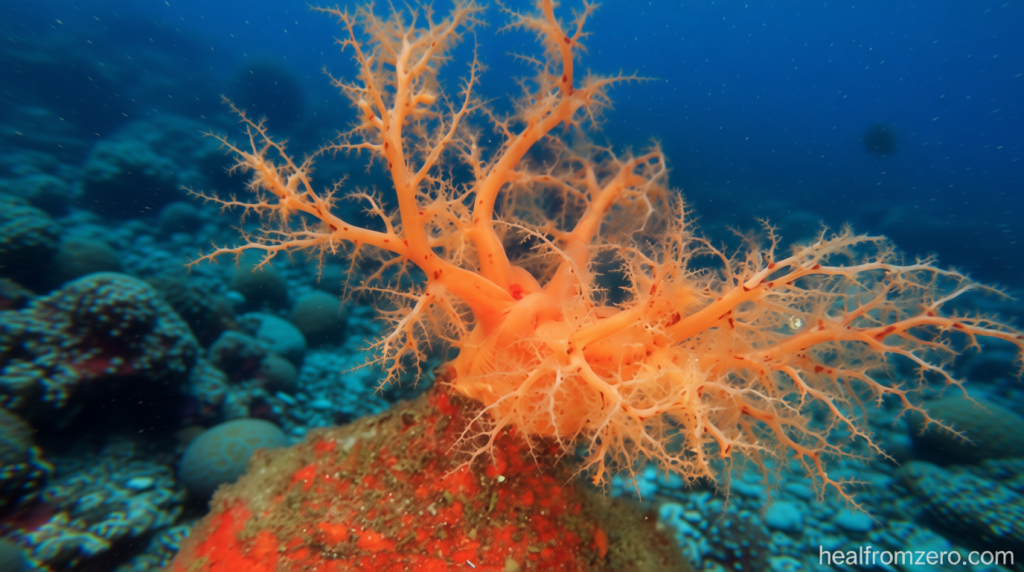
Scientists accidentally discover sea cucumber with ‘tissue immortality’
Scientists accidentally discover sea cucumber – When a team of marine biologists removed a sea cucumber from its tank, they expected to see the detached pieces simply wither and decompose. Instead, what they found defied expectations. The severed parts of *Psolus fabricii*, a species native to the North Atlantic, not only survived but began to grow, raising profound questions about the nature of life itself. This unexpected phenomenon has led researchers to reconsider the traditional boundaries between death and regeneration, and the study detailing their findings was recently published in the journal *Science Advances*.
The Discovery
The breakthrough came by chance. Sara Jobson, a doctoral student in ocean sciences at Memorial University in Newfoundland and Labrador, and her colleagues were conducting routine experiments when they noticed something unusual. During a lab session, they excised fragments from the sea cucumber’s body, including its tube feet and tentacles, and placed them in untreated seawater. To their surprise, these pieces did not decay as expected. Instead, they showed signs of continued activity, moving and responding to stimuli even after months of separation from the main organism.
“This is the first case of tissue immortality in natural conditions,” said Jobson, who led the study. “These sea cucumbers are known for their high-regenerative capacity, so when they lose a tentacle or a tube foot they’re able to regrow it very well, but nobody’s ever looked at what happens to the tissues that are torn off, because we just assumed that they would die.”
The findings challenge the assumption that severed body parts are destined for decline. While some species of sea cucumbers can regenerate entire individuals from their fragments under specific circumstances, the *Psolus fabricii* in this study did not follow that pattern. Instead, the tissues acted as independent entities, maintaining cellular functions and even absorbing nutrients without the presence of a mouth or gut. This ability to persist in the absence of an organism suggests a new form of biological resilience.
Unexpected Survival
Jobson explained that the discovery was accidental. “We work right on the coast, and we’re able to keep live animals in our lab,” she said. “When a sea creature is needed for research, it’s usually pulled from its tank, but some of the animals strongly attach themselves to their rock habitat or the aquarium itself.” In one instance, a researcher accidentally left behind a few tube feet when removing a sea cucumber, and over time, these fragments remained attached to the glass, gradually healing and even growing.
The tissues’ survival was remarkable. Jobson noted that they thrived in natural seawater, an environment teeming with bacteria and microorganisms, which is far from sterile. “They were still there after a couple of days, and then weeks, and then months, and they were still stuck on,” she said. “They were healing, and they even grew a little bit. They were surviving in their natural environment.” This resilience extends beyond mere survival; the fragments exhibited active cellular processes, including immune responses and nutrient absorption, even without a digestive system.
“We lovingly call these tissue explants ‘our zombies,’ because they seem to ride the line between dead and alive,” Jobson added. “They’re not regrowing into a whole new organism—as far as we can tell, they seem to be their own entity that’s maintaining cellular function, but not a reproducing individual. Why would these small tissue chunks maintain the ability to heal and survive without any reproductive purpose? What’s the evolutionary driver that allows that to happen?”
Unlike the voluntary regeneration seen in other animals, such as lizards that shed tails for survival, the sea cucumber’s tissues appear to operate autonomously. Jobson drew a parallel to this behavior: “It’s as if a lizard tail healed itself and then wiggled around in the woods, gaining its own nutrients and surviving for years.” This analogy highlights the complexity of the discovery, as the tissues not only endure but also demonstrate a level of self-sufficiency that challenges existing biological models.
Implications for Science
Veronica Hinman, director of the Whitney Laboratory for Marine Bioscience at the University of Florida, emphasized the broader significance of the study. “I think the bigger finding, though, is that this work tests assumptions about what it means to be ‘alive’ and how this depends on the whole organism, rather than on the local self-organizing properties of tissues themselves,” she said via email. Hinman, who was not part of the study, suggested that the research could reshape understanding of regeneration, wound healing, tissue maintenance, and aging.
The study’s findings open new avenues for exploring the mechanisms of tissue survival. While many animals can regenerate lost limbs or appendages, the *Psolus fabricii* tissues seem to transcend typical regenerative limits. They not only heal but also sustain themselves in the wild, which is a critical distinction. This ability to function independently may offer insights into how cells can maintain activity without the support of an entire organism, potentially leading to breakthroughs in medical fields such as organ repair or anti-aging therapies.
A Philosophical Breakthrough
The discovery has sparked philosophical debates about the definition of life. Traditionally, life has been associated with the presence of a whole organism, capable of reproduction and self-sustaining growth. However, the *Psolus fabricii* tissues appear to challenge this view. They maintain metabolic processes, respond to external stimuli, and even absorb nutrients, yet they do not reproduce or form a new individual. This raises the question: does life depend on the presence of an entire organism, or can isolated tissues also exhibit life-like characteristics?
Jobson’s team observed that the severed fragments showed no signs of degradation or necrosis, even after three years of separation. “As far as we can tell, there weren’t any signs of death, degradation or necrosis,” she said. “It seemed to be able to go on forever. We just had to cut ourselves off at some point and put the study out there.” The tissues’ sustained activity suggests a mechanism that could be harnessed for scientific advancement, offering a unique model for studying cellular autonomy.
This accidental discovery underscores the importance of curiosity-driven research. By keeping the sea cucumbers in their natural habitat, the scientists were able to observe the tissues in real-world conditions, which provided richer data than controlled lab environments. The study’s findings may also inspire further exploration into how different species adapt to injury, potentially uncovering new biological strategies for survival and regeneration. As Hinman noted, the implications of this research extend beyond the sea cucumber itself, offering a framework for rethinking the fundamental principles of life and cellular function.
In the broader context of marine biology, *Psolus fabricii* represents a fascinating case of evolutionary innovation. Its ability to sustain severed tissues could be linked to adaptations for survival in harsh environments, where detachment from the main body might be a necessary defense mechanism. The research team’s observations suggest that these tissues are not merely passive remnants but active participants in their own survival, capable of enduring for extended periods without external intervention.
As scientists continue to investigate this phenomenon, they may uncover deeper secrets about tissue resilience and the potential for independent cellular activity. The accidental nature of the discovery reminds researchers that some of the most groundbreaking insights emerge not from deliberate experiments but from the unexpected. With further study, the sea cucumber’s unique biological traits could pave the way for revolutionary advancements in regenerative medicine, offering hope for new treatments and a better understanding of life’s boundaries.