Protesters set Ebola treatment center on fire in DRC, demanding return of body

Protesters Set DRC Ebola Treatment Center on Fire Amid Community Outcry
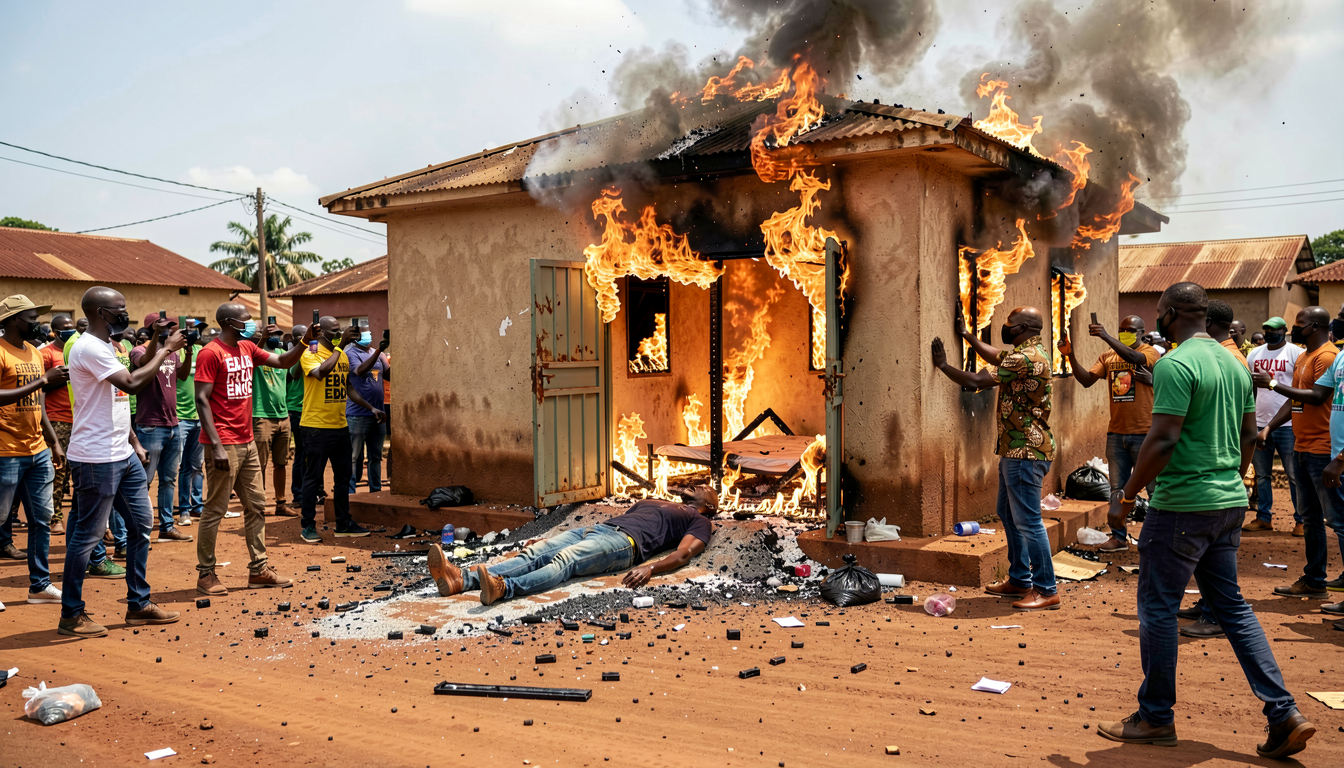
Protesters set Ebola treatment center on fire – On Thursday, a fire erupted at a health facility in the Democratic Republic of Congo (DRC) that was treating patients infected with Ebola. The blaze, which destroyed two hospital tents, was reported by Luc Mambele, a local politician and vice president of the Congolese political party A2RC. The incident occurred as tensions escalated over the handling of a young man’s body, whose death from the disease sparked a confrontation between his relatives and health authorities.
Mambele described the confrontation as a moment of heightened frustration. The family members, he explained, attempted to reclaim the body “by force” from the Rwampara Hospital. When the officials refused to hand it over, the protesters retaliated by hurling projectiles at the facility, igniting the fire. The event left six patients—receiving treatment in the medical tents managed by the Alliance for International Medical Action (ALIMA)—displaced and now being cared for in the hospital’s main building.
The Spread of the Bundibugyo Strain
The DRC is grappling with a severe outbreak of the Bundibugyo strain of Ebola, a variant known for its high mortality rate and lack of specific treatment or vaccine. Health officials have confirmed at least 160 deaths linked to the disease, while an additional 13 new cases were reported on Thursday. Suspected cases in Ituri province have risen to 78, according to the national government. Tests conducted by the World Health Organization (WHO) have confirmed the strain’s role in the outbreak, which has been described as a “global health emergency” by authorities.
Despite the urgency of the situation, the community’s response has been marked by confusion and distrust. Mambele, who spoke to CNN, emphasized that misinformation is a significant factor in the unrest. He noted that many residents in Ituri province believe the disease is “a lie” and even claim it was created by “White men” as a tool to harm local populations. This skepticism has led to incidents like the recent hospital fire, where protesters viewed the facility as an enemy rather than a lifeline.
Healthcare Workers and the Battle Against Misinformation
ALIMA, the medical humanitarian organization operating at the site, issued a statement condemning the spread of “incorrect or unconfirmed information” on social media. Such rumors, they warned, can exacerbate fear and alienate communities from essential health services. The organization also highlighted the challenges of maintaining order during the crisis, as protesters clashed with police and health workers.
Video footage shared with CNN showed the intensity of the attack. The scene was described by Mambele as a chaotic one, with police firing warning shots to disperse the crowd. The footage captured the medical tents engulfed in flames, their scorched frames remaining as remnants of the destruction. “They locked us down,” Mambele said in a blockquote, “as officers shot warning rounds to clear the area.”
“They locked us down as officers shot warning rounds to clear the area.” — Luc Mambele
Meanwhile, the DRC’s government has taken steps to contain the outbreak. Patrick Muyaya, a spokesperson for the country, criticized the protesters’ actions, stating that locals had “exactly what they shouldn’t do” in their response to the situation. The incident has underscored the dangers of misinformation in the region, with Mambele arguing that fear of the disease has led to public unrest.
International Response and Cross-Border Concerns
The World Health Organization (WHO) has officially classified the DRC outbreak as a “public health emergency of international concern,” though the global risk remains low. The organization noted that while only 64 cases have been officially confirmed, 671 are suspected, with health officials actively monitoring over 1,260 contacts. The first suspected case emerged on April 24, when a healthcare worker in Bunia began showing symptoms and later succumbed to the illness.
On May 5, the WHO was alerted to an “unidentified illness” with high fatality rates in the province. Following an investigation by a “rapid response team” on May 13, the virus was identified as the Bundibugyo strain on May 15. This discovery has prompted global attention, with the DRC now facing heightened scrutiny of its healthcare infrastructure and public communication strategies.
International repercussions have also begun to surface. An American worker in the DRC has tested positive for the virus and is currently being treated in Berlin, Germany’s Health Ministry confirmed on Wednesday. The strain has also reached neighboring Uganda, where two laboratory-verified cases were confirmed in Kampala, the capital. One of the patients died, while the other, a female, returned two negative tests and is now “currently out of danger,” according to Ugandan officials.
In response to the cross-border threat, health ministries in both the DRC and Uganda have suspended public transport, flights, and ferries between the two countries. Enhanced border security patrols have been deployed to monitor movement and prevent the virus from spreading further. These measures aim to contain the outbreak while ensuring that the public remains informed about the situation.
Community Trust and the Road Ahead
Mambele’s comments reflect a broader concern about the community’s relationship with health facilities. He criticized the lack of transparency and public awareness, stating that many in the most remote areas are unaware of the virus’s true nature. “The population is not sufficiently informed,” he said in a blockquote, “and to some, Ebola is a White man’s invention; it doesn’t exist.”
“The population is not sufficiently informed and to some, Ebola is a White man’s invention; it doesn’t exist.” — Luc Mambele
As the outbreak continues, health officials are working to restore confidence in the system. ALIMA and other organizations are collaborating to provide accurate information and combat the spread of rumors. The government has also pledged to improve communication with local communities, recognizing that trust is essential to effective disease control.
While the immediate focus remains on managing the crisis within the DRC, the incident at Rwampara Hospital serves as a stark reminder of the challenges posed by misinformation. The fire not only disrupted medical care but also highlighted the need for better public engagement and education. As the Bundibugyo strain persists, the battle to contain the outbreak and protect the community continues, with the global health community closely watching the developments in Ituri province.