
‘Only fools are not afraid’: Ukrainians adapt to life under constant Russian drone attacks
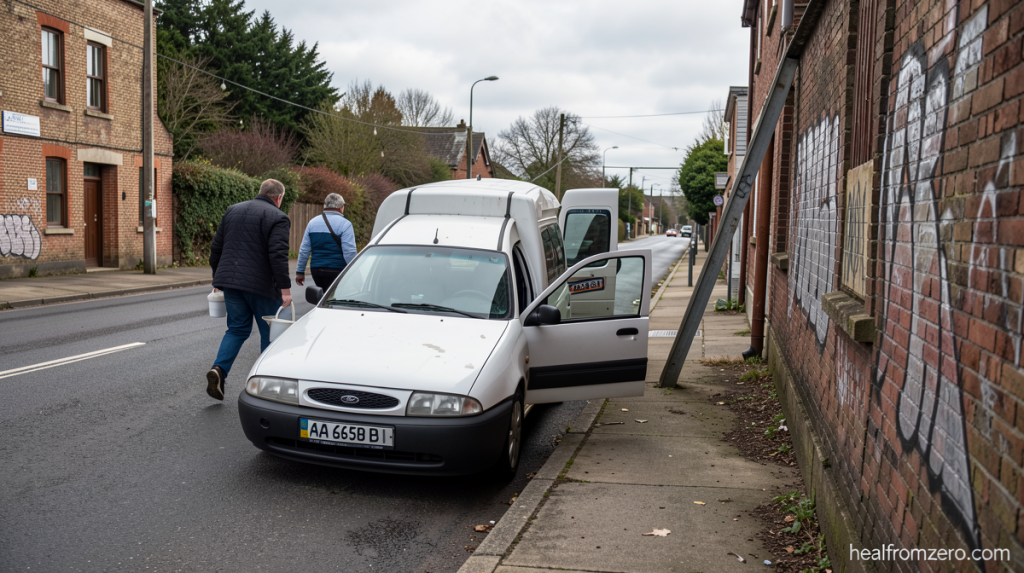
Living Under the Hum: Nikopol Residents Navigate Daily Drone Threats
Only fools are not afraid – While the occupied Zaporizhzhia Nuclear Power Plant often dominates news coverage, the nearby city of Nikopol faces its own relentless struggle. Situated in southern Ukraine, this community has endured nearly daily assaults since Russia launched its full-scale invasion. The proximity of Russian military installations—just two miles across the Dnipro River—creates an environment where civilians must constantly watch for short-range drones descending from the sky.
A Growing Menace
Oleksandr Varytsev, a local poet who operates a charity providing warm meals to elderly and disabled residents, describes the psychological toll of living under siege.
We’ve actually grown somewhat accustomed to the danger, though the feeling of fear never really goes away.
He notes that if the constant threat frightens him, one can only imagine the anxiety experienced by older visitors to their volunteer center.
The danger is not theoretical. Authorities released devastating footage in June capturing a small Russian drone striking an elderly woman seated in a wheelchair. The attack claimed three lives, including the 87-year-old victim and her son. Earlier that year, in April, four additional residents perished when a drone struck a city bus. These incidents represent just two examples of Russian FPV (first-person view) drones deliberately targeting civilians rather than military installations—a pattern also evident in frontline cities such as Kherson and Kramatorsk.
Despite Moscow’s repeated assertions that it is focusing on Ukrainian Armed Forces positions in Nikopol, the evidence suggests otherwise. Varytsev reports that drone sightings have surged dramatically over recent months, climbing from two or three per day to approximately three every hour around the clock.
Adapting to a New Reality
The persistent aerial threat has fundamentally altered how residents conduct their daily lives. Many avoid standing in open areas like bus stops. Educational institutions, including schools and kindergartens, have shut their doors. Essential civilian services such as the Ukrainian national post office and municipal buses face routine suspensions.
People are afraid to walk in the street, but they’re adapting to the new reality,
Varytsev explained.
We keep our heads up all the time, we no longer look down at our feet.
Before the invasion, Nikopol was home to roughly 100,000 people and celebrated for its strawberry harvest destined for Ukrainian markets. Today, local estimates suggest half the population has departed.
The city is emptying before our eyes. The situation is very dangerous, and there are more and more attacks every day,
said Oleksii Kirillov, a freight transportation veteran with over twenty years of experience in the region.
Kirillov noted that his priorities have shifted from running his business to helping residents evacuate. Over four years of war, he has developed the ability to distinguish between fast-moving combat drones and slower reconnaissance aircraft. While fear has softened somewhat, it has never disappeared entirely.
Only fools are not afraid.
Technology and Innovation
Nikopol is increasingly draped in overhead fishing nets designed to intercept incoming FPV drones—a defensive measure now common across nearly all frontline Ukrainian cities. Residents are working to extend this protective netting from roads onto sidewalks to improve pedestrian safety.
Additional innovations have emerged, including a city-wide mobile application that alerts residents to approaching drones. Some emergency responders and businesses have acquired handheld detection devices known as “Chuykas,” manufactured by Ukrainian firm BlueBird Tech. These simple units emit beeps when threats approach on analog radio frequencies, though they cannot identify drones operating on pre-set paths, fiber-optic cables, or digital signals.
It’s better than nothing, but it’s not a silver bullet,
observed Carmine Clemente, a radar systems professor at Scotland’s University of Strathclyde.
It can give you probably a couple of minutes, at least, to get off the bus and try to get sufficiently far away to hide.
Kateryna Bondar, a senior fellow at the Washington-based Center for Strategic and International Studies, noted that these devices are being marketed to civilians as aggressively as to the military. Bus operators, drivers, emergency volunteers, medics, and military personnel throughout frontline zones have adopted the technology.
Every civilian can become a target because unfortunately Russians use
the drones indiscriminately against both military and non-military populations.