New discovery may have been Stonehenge prototype

New discovery may have been Stonehenge prototype
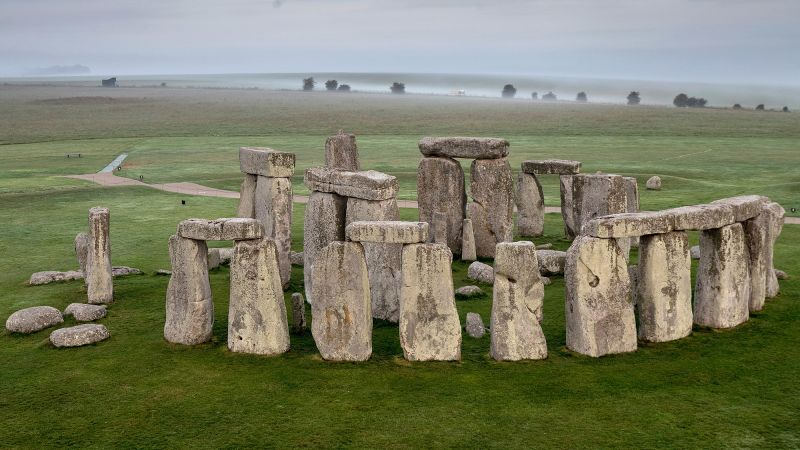
New discovery may have been Stonehenge – Archaeologists have uncovered a 5,000-year-old structure in southwest England, potentially serving as a precursor to the iconic Stonehenge monument. The find, located in Bulford, Wiltshire, is just 5 kilometers from the famous site and has sparked renewed interest in the origins of Neolithic astronomy. This ancient structure, composed of two wooden poles arranged 120 meters apart, may have been designed to track the solstices, aligning with the same celestial patterns observed at Stonehenge. The discovery was announced by Wessex Archaeology, a British firm specializing in archaeological research, which highlighted its significance in understanding early human interaction with the cosmos.
Timing and Construction
The Bulford site dates back to approximately the same time as the earliest earthworks at Stonehenge, which were constructed around 5,000 years ago. However, the towering stone formations that now define the monument were erected about 500 years later. Using advanced radiocarbon dating methods, researchers led by archaeologist Phil Harding confirmed that the wooden poles were planted in pits during this period. This timeline suggests that the structure could have functioned as a functional prototype, offering insights into the design principles that later shaped Stonehenge.
Harding’s team emphasized that the alignment of the poles with the solstices indicates a sophisticated grasp of astronomical observation by prehistoric communities. “The sun was a central element in the lives of these ancient communities, and they could track its midsummer rising with remarkable precision,” Harding stated in a press release. The discovery challenges previous assumptions about the timeline of Stonehenge’s development, as it predates the famous stones by centuries. “This is likely one of the most significant finds of my career,” he added, “because it reveals how early this connection to the sun was established.”
Reconstructing the Ancient Sky
Skyscape archaeologist Fabio Silva played a key role in analyzing the site’s celestial alignment. By reconstructing the ancient sky, landscape, and horizon, Silva demonstrated that the two poles would have formed a precise marker for the solstices. “This discovery helps us see Stonehenge not as a standalone creation, but as part of a broader cultural dialogue between people, the land, and the heavens,” he said. The findings suggest that the area surrounding Stonehenge was part of a larger network of monuments, each contributing to a shared understanding of time and space.
The Bulford site also yielded a range of artifacts, including pottery shards, animal bones, charcoal remnants, and worked flints. These items indicate that the location was a hub for communal activities, possibly linked to seasonal celebrations. Among the most intriguing finds was an “extremely rare disc-shaped knife,” which researchers believe may have been intentionally placed to symbolize the sun disc. This artifact adds a layer of cultural symbolism to the site, hinting at the spiritual or ritualistic importance of the solstice events.
Implications for Neolithic Society
The alignment of the wooden structure with the solstices underscores the Neolithic people’s deep connection to natural cycles. By using the sun’s movement to mark time, they may have developed early systems of tracking seasons, which would have been crucial for agricultural planning and ritual practices. “This site provides a tangible link to how these communities integrated their environment into their daily lives,” said Silva, who worked alongside Harding. “It’s a testament to their ingenuity and the value they placed on celestial phenomena.”
Experts are now reevaluating the role of such structures in Neolithic society. The Bulford find suggests that the process of building monuments like Stonehenge was gradual, evolving from simpler designs to more complex formations. This challenges the idea that Stonehenge was an isolated achievement, instead positioning it as a culmination of earlier traditions. “The possible alignment at Bulford is part of a significant middle Neolithic settlement,” noted Susan Greaney, a lecturer in archaeology at the University of Exeter. “It highlights how integral the eastern part of the Stonehenge landscape was to both daily life and ceremonial practices.”
Greaney, who was not involved in the research, called the discovery “intriguing” and emphasized the need for further study. “The details of this find are still being unpacked, but its implications for our understanding of Neolithic society are profound,” she said. The eastern side of the Stonehenge area, where Bulford is situated, appears to have been a focal point for both habitation and monument-building, with structures on the opposite side of the River Avon. This duality suggests a dynamic relationship between the land and its inhabitants, where the physical environment shaped spiritual and cultural practices.
Technological and Cultural Advances
The use of radiocarbon dating to establish the site’s age reflects modern technological advancements that have transformed archaeological research. By analyzing organic materials like charcoal, scientists can pinpoint the exact period when a site was in use, offering a clearer picture of its historical context. The Bulford structure’s design, though simple, demonstrates an understanding of geometry and astronomy that rivals later monuments. “This shows that the Neolithic people were not just passive observers of the sky, but active participants in creating tools to measure it,” said Harding.
Furthermore, the presence of artifacts like the disc-shaped knife suggests that the site may have served dual purposes. While its primary function appears to have been astronomical, it also likely hosted social gatherings or rituals. The knife, with its disc-like form, could have been a symbolic representation of the sun, reinforcing the idea that the monument was a place of spiritual significance. This duality—between practical and symbolic functions—adds depth to our understanding of Neolithic life, where material culture and cosmology were closely intertwined.
Historians and archaeologists are now exploring how such early structures influenced the development of Stonehenge. The Bulford site may have acted as a blueprint, with its design principles later adapted for larger and more permanent monuments. “The alignment we’ve observed at Bulford is a key clue to how Stonehenge’s builders approached their work,” Greaney explained. “It’s possible that they refined these ideas over time, leading to the creation of the massive stone formations we see today.”
The discovery also raises questions about the role of the River Avon in Neolithic planning. The fact that structures were built on both sides of the river implies a strategic use of geography to enhance their alignment with the solstices. This could have been a way to create a more expansive and symbolic connection to the sky, using natural features as part of the design. “The river’s presence may have played a role in the site’s orientation,” added Silva. “It’s a reminder that the land itself was a canvas for human creativity.”
As research continues, the Bulford site promises to shed light on the broader context of Stonehenge’s development. By studying this ancient structure, scholars can piece together a more accurate timeline of Neolithic innovation and the cultural motivations behind monumental architecture. The findings not only challenge existing narratives but also highlight the importance of regional settlements in shaping the history of prehistoric Britain. “This discovery is a bridge between the past and present,” said Harding. “It allows us to connect with the minds of those who built these structures and understand their significance in a new way.”