Inside the epicenter of the Ebola outbreak in DRC as the virus spreads

Inside the Epicenter of the Ebola Outbreak in DRC as the Virus Spreads
Inside the epicenter of the Ebola – The Democratic Republic of Congo (DRC) continues to grapple with the escalating Ebola crisis, with the disease spreading rapidly across regions that have long struggled with instability. In the heart of this outbreak, Hélène Akilimali, a cocoa seller in eastern DRC, is taking every possible measure to protect herself from infection. Despite her vigilance, she acknowledges the challenges of her role, as daily interactions with customers often leave her at the mercy of their behaviors. “Ebola is a real disease,” she emphasizes, urging people to stop convincing themselves otherwise. “Misinformation and myths about the virus are killing us.” Akilimali, speaking to a CNN correspondent on the ground, admits that while she consistently wears a face mask, she cannot control whether others do the same. “You’re not going to chase them away,” she says, highlighting the difficulty of enforcing safety protocols in a community where skepticism persists.
A Community on the Frontlines
Residents of Ituri and North Kivu provinces, the areas most severely impacted by the outbreak, are caught between fear and denial. “We used to think it was a joke,” recalls Élie Ilunga, a Bunia resident and local resident. “But now we see it’s real.” Ilunga, who recently installed a washbasin at home to safeguard his family, is actively encouraging others to recognize the virus’s threat. He points to the stark contrast between early disbelief and the current reality of loss. “Those who doubt are perhaps those who haven’t experienced this death yet or whose families haven’t been affected,” he adds, illustrating how personal experience is shaping attitudes toward the epidemic.
The World Health Organization (WHO) has reported at least 177 deaths linked to the outbreak, with nearly 750 suspected cases confirmed. While the virus likely originated in a remote rural region, it has since reached urban centers like Bunia and Goma, complicating containment efforts. Neighboring Uganda has also recorded its own cases, with five confirmed infections and two fatalities. WHO officials have upgraded the risk level to “very high” within DRC and “high” on a regional scale, though they maintain that global spread remains unlikely. The organization warns that case numbers will likely continue to rise, given the extended time the virus has been circulating before detection.
The Spread Beyond Rural Areas
Health workers in Bunia and surrounding areas face mounting pressure as the virus moves into densely populated regions. Traditional practices, such as close contact during funerals, have emerged as a key factor in transmission. A community mobilizer in Bunia told CNN that a local custom involving mourners touching the deceased may have accelerated the spread of infections. “The bodies of Ebola victims are highly infectious,” they explained, underscoring the risks posed by cultural rituals. This has led local authorities to impose restrictions on public gatherings and ban wakes, aiming to curb the virus’s spread.
On Thursday, tensions escalated in Ituri when relatives of an Ebola victim attempted to remove the body from Rwampara Hospital by force. A local politician reported the incident to CNN, noting that the confrontation sparked a fire that destroyed two hospital tents. “The community is frustrated,” they said, as the virus’s presence deepens the divide between fear and resistance. Meanwhile, the WHO has called for rebuilding trust in affected areas, stating, “Building trust in the affected communities is critical to a successful response, and is one of our highest priorities.” This effort includes ensuring essential services like healthcare are maintained and enhanced.
Factors Complicating the Crisis
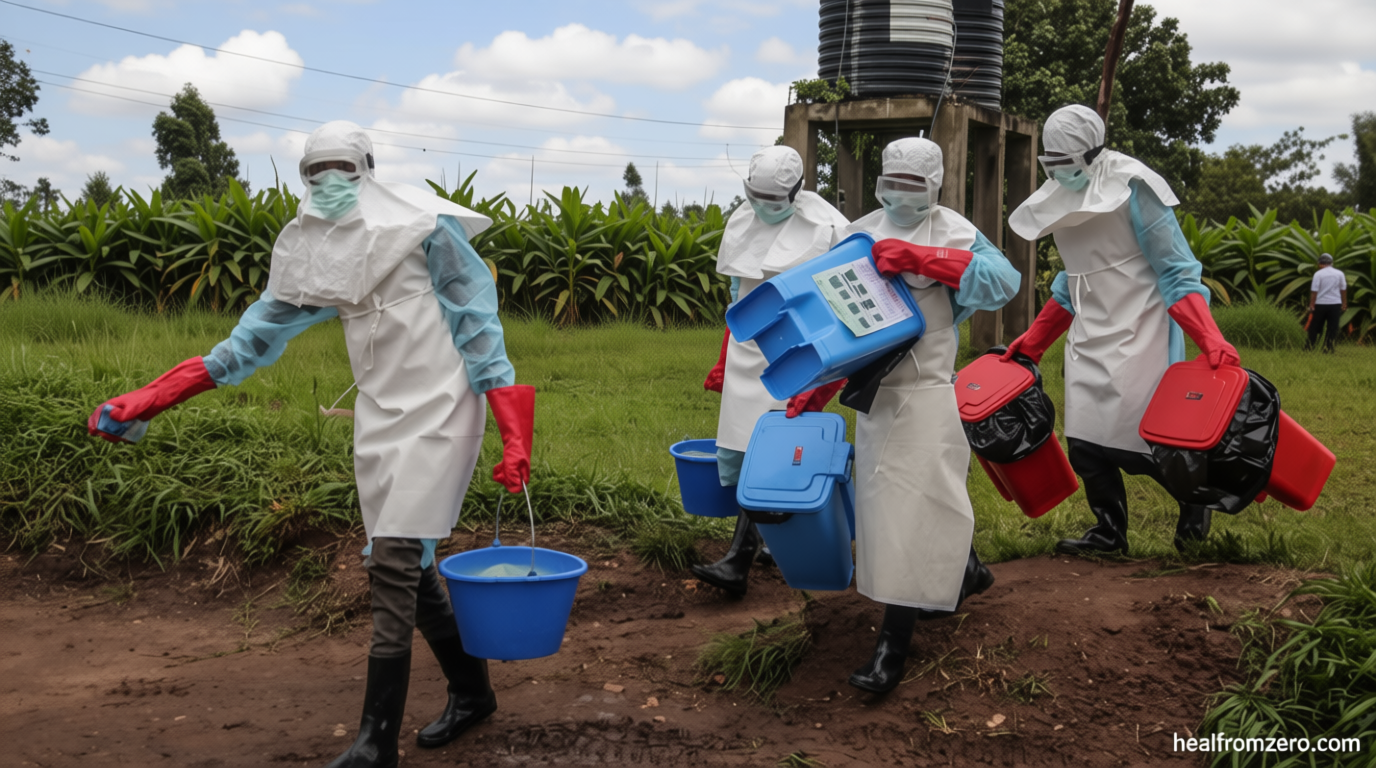
Amid the growing urgency, multiple challenges persist in eastern DRC. The region remains in a conflict zone, where two million people have been displaced, creating conditions ripe for the virus to thrive. Historically, healthcare infrastructure in the DRC has been underfunded, further straining the response to this outbreak. The strain of the virus currently circulating has no approved vaccine or treatment, leaving affected populations vulnerable. “We are in a game of catch-up,” said Greg Ramm, DRC country director for Save the Children, after a recent visit to Ituri. “There are not enough health resources.” Ramm’s team has been collaborating with local authorities to distribute essential supplies, including disinfectant and chlorine, to clinics. Yet, funding levels have dropped significantly in recent years, hampering efforts to address the epidemic effectively.
Contributing to the crisis is the dismantling of the U.S. Agency for International Development (USAID) and reductions in U.S. funding prior to the outbreak. Aid workers have raised concerns about how these changes have slowed the response. However, a State Department official dismissed these claims, asserting that the Trump administration’s policies have not impeded progress. This debate highlights the broader struggle between international support and local implementation, as the virus continues to test both the resilience of communities and the effectiveness of global health initiatives.
Resilience and Resistance
Despite the challenges, individuals like Akilimali and Ilunga are playing a vital role in the fight against Ebola. Their experiences reflect the dual nature of the crisis: a medical emergency exacerbated by social and political factors. Akilimali’s insistence on wearing a mask contrasts sharply with the behavior of her customers, who may not share her caution. “People need to stop deluding themselves,” she said, underscoring the importance of awareness in preventing further transmission. Similarly, Ilunga’s actions at home demonstrate how personal responsibility can complement public health measures.
The outbreak has also sparked debates about the role of traditional practices in disease spread. While some community leaders are adapting their customs to align with health guidelines, others remain skeptical. “We have to balance respect for our culture with the need to protect our people,” said a local health worker, who described the struggle to convince families of the risks associated with close contact during funerals. This cultural context adds complexity to the response, as health officials navigate between scientific recommendations and community traditions.
A Global Perspective
As the virus spreads across borders, the international community remains watchful. The WHO’s risk assessment underscores the regional severity of the outbreak while maintaining optimism about global containment. “The epidemic risk remains low on a worldwide level,” they noted, emphasizing the importance of localized efforts. However, the interconnected nature of modern society means that even small outbreaks can have far-reaching implications. “We have to think beyond the immediate area,” said Dr. Tedros Adhanom Ghebreyesus, WHO Director-General, during a press briefing. “This is a reminder that diseases can quickly become global threats if not addressed promptly.”
The situation in DRC serves as a case study in the intersection of health, culture, and politics. While the virus has caused devastation, the community’s response is a testament to their adaptability. From Hélène Akilimali’s mask-wearing to Élie Ilunga’s home-based precautions, individuals are taking matters into their own hands. Yet, the broader picture reveals a system in crisis: one where delayed responses, misinformation, and underfunded healthcare infrastructure have allowed the outbreak to take hold. “We are not just fighting a virus,” Ramm said. “We’re fighting a system that hasn’t kept up with the speed of this epidemic.”
The fight against Ebola in DRC is far from over. As the virus continues to spread, the urgency for coordinated action grows. “The key is to get basic infection prevention measures into health centers,” Ramm reiterated, calling for immediate support to bolster local efforts. With communities facing both internal and external pressures, the path to containment remains uncertain. But in the face of adversity, the resilience of those on the frontlines offers hope that the outbreak can be managed, even as the challenges mount. “This is not just a health issue,” said a local official. “It’s a question of survival for many families.”