
China loves historic sites. Tourists don’t mind if they’re not the originals
China’s New Wave of Fake History Captivates Modern Travelers
Healfromzero.com – Nationwide, a fascinating phenomenon is reshaping how Chinese people experience their past. While the country takes immense pride in its storied heritage, centuries of destruction—including devastating fires, relentless wars, widespread looting, and sweeping revolutions—have erased much of the physical evidence. The solution? Fanggu, or “historical imitation,” has emerged as a cultural solution. Entire villages designed to look ancient have been constructed from the ground up across the nation.
Every element receives careful attention. Glistening palace facades rise alongside majestic boulevards. Vines are transplanted in massive quantities, while roof tiles are mechanically crumbled to appear weathered. The outcome creates something both magnificent and occasionally peculiar—a blending of dynastic history, architectural styles, and geographical features that wouldn’t necessarily exist together in reality.
The Emotional Economy of Tourism
Modern Chinese consumers are demonstrating a growing willingness to spend money on experiences that provide emotional satisfaction. Yang Jinsong, who directs the International Institute at the China Tourism Academy, explained this shift to People’s Daily in June: “Increasingly willing to pay for emotional value, seeking deeper engagement and cultural meaning through immersive experiences.”
For domestic travelers navigating economic stagnation, these recreated historical spaces offer an appealing retreat. The financial barrier to entry remains remarkably low. Visitors typically spend around $15 to select from hundreds of traditional Hanfu costumes. An additional $10 unlocks the complete experience, including professional makeup application, accessories, photography sessions, and post-production editing services.
These carefully curated photoshoots emphasize a pale-faced, red-lipped aesthetic that has generated viral attention on Xiaohongshu, also known as RedNote. Foreign tourists are increasingly participating as well. The Chinamaxxing movement—a social media-driven trend promoting Chinese cultural practices and visual aesthetics—has inspired numerous young international visitors to schedule trips specifically to China.
Gubei: A Northern Water Village That Never Was
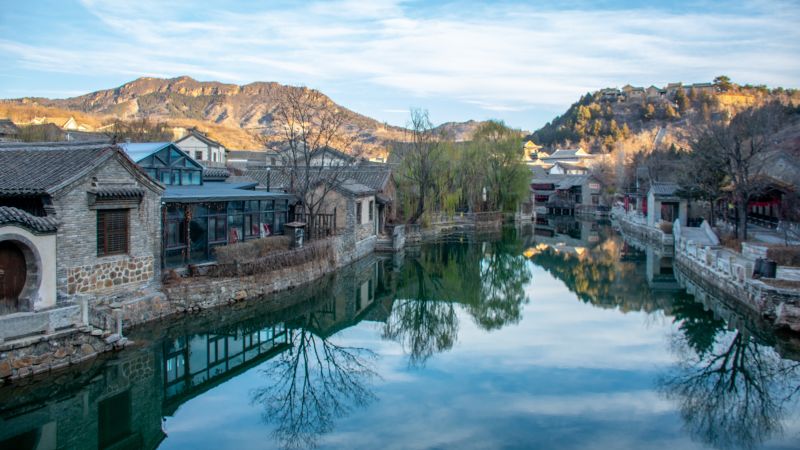
Forget Venice entirely. Gubei features its own network of canals, cobblestone pathways, teahouses illuminated by lanterns, and homes topped with gray tiles. Positioned at the base of the Simatai section of the Great Wall, this destination provides an ideal recovery spot following strenuous mountain hikes. Visitors can enjoy boat rides beneath century-old willow trees lining the waterways or wander through central squares where weathered plaques emerge from climbing vines.
Guides frequently ask whether Qing Dynasty river life isn’t romantic. Gubei markets itself as a quintessential Jiangnan water village. The problem? Jiangnan water villages never existed in northern China. Jiangnan literally translates to “south of the Yangtze River,” placing the region approximately 800 miles to the south.
Gubei represents modern construction rather than ancient preservation. A state-backed enterprise completed the project in 2014, investing $600 million to merge two of China’s most treasured attractions: the northern Great Wall and southern water towns. What once required a two-hour flight from Beijing now demands only a two-hour drive.
Recent years have seen Gubei capture both the affection and spending of tired Beijing residents and internationally curious tourists. Platforms like Klook now package the Great Wall and water town into single-day excursions, advertising “a getaway from the hustle and bustle of the city with a trip to an ancient village.” By July 2026, the destination had accumulated more than 10,000 bookings and 2,200 customer reviews on Klook, maintaining an impressive average rating of 4.9 out of 5.
Overnight stays remain available through state-managed properties ranging from modest guest houses to luxury resorts, with premium accommodations reaching $500 per night. After climbing the Great Wall, relaxing in a lantern-lit villa offers an appealing way to decompress.
Transparency and Authenticity Concerns
Most visitors accept Gubei’s lack of genuine antiquity without complaint. However, some travelers desire greater honesty about what they’re experiencing. Minyada “Minnie” Chotichaicharin, a Thai exchange student, explored Gubei during April. Her two-hour itinerary included traditional crafts, archery demonstrations, hot spring visits, and a classic boat excursion. Upon returning home, she discovered Gubei’s relatively recent origins and felt somewhat deceived.
“I wouldn’t mind that it’s rebuilt,” she acknowledged, “but it’s hard to not feel tricked.”
Xi’an’s Neon Revival
Meanwhile, Xi’an continues its transformation. Around 750 A.D., this city stood as the world’s largest and most cosmopolitan urban center. As a crucial Silk Road gateway, it welcomed merchants from across Asia, Europe, and the Middle East. Today, Xi’an maintains its Chinese character while embracing modernity. Tourists photograph statues of celebrated Tang Dynasty poets along pedestrian streets, while upscale bakeries display dragons sculpted entirely from baguettes.
Having served as China’s capital for over a thousand years, Xi’an now hosts Datang Everbright City—a “city that never sleeps” experience. Red pagodas illuminate the night while Chinese electronic dance music pulses through the streets. Datang Everbright City represents a dynamic revival of the Tang Dynasty’s Golden Age. Conveniently positioned near the locations of ancient Chinese curfews, this 2,100-meter pedestrian thoroughfare attracts approximately 75 million visitors annually. While historical enthusiasts find appeal in the setting, the majority arrive energized by the neon-drenched nightlife that defines this modern interpretation of ancient grandeur.
Related Reading
Frequently Asked Questions
What is China loves historic sites Tourists don t?
China loves historic sites Tourists don t is the main topic of this guide. The article explains the context, practical details, and next steps readers should understand.
Why does China loves historic sites Tourists don t matter?
China loves historic sites Tourists don t matters because readers are looking for a useful answer, not just a short summary. Good content should match search intent and help them decide what to do next.