Marilyn Monroe through the female gaze

Marilyn Monroe through the female gaze
Editor’s Note
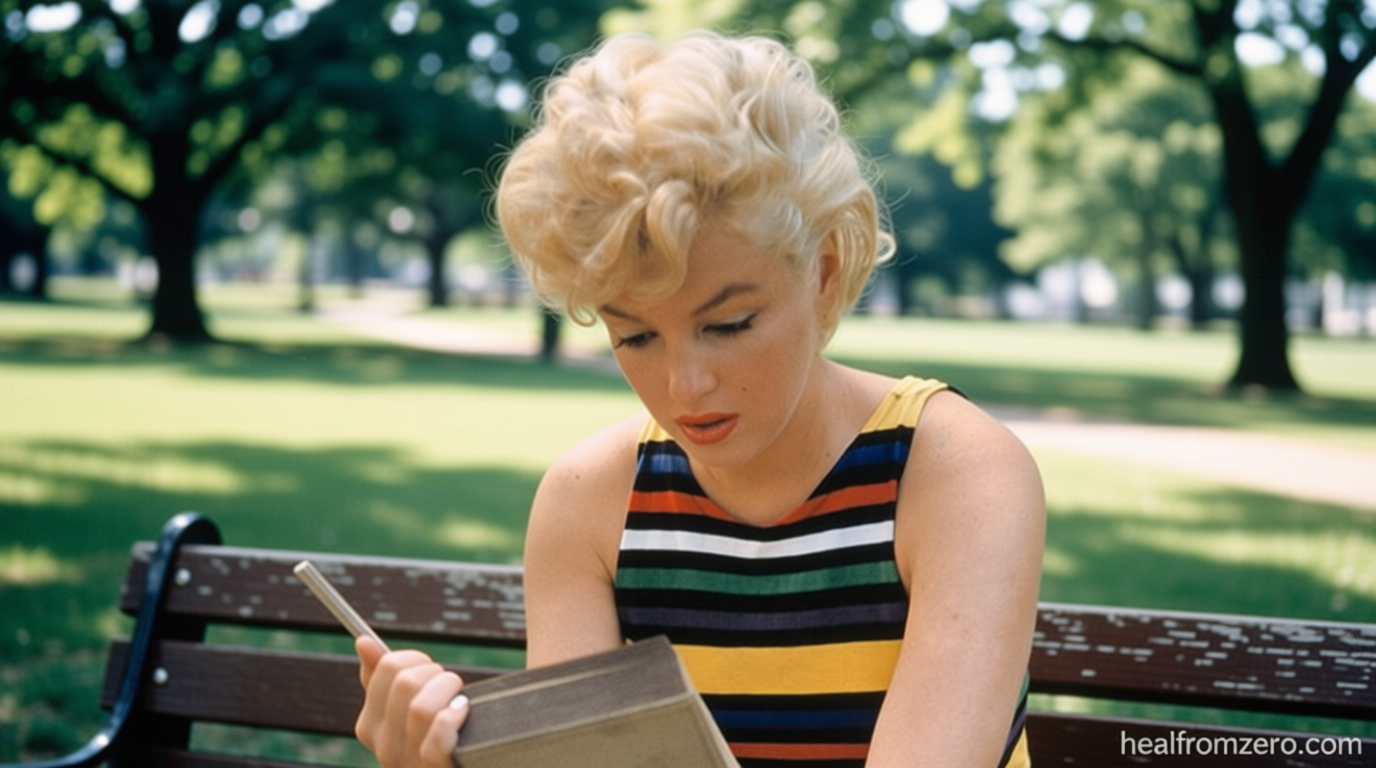
Marilyn Monroe through the female gaze – Every image carries the weight of a moment frozen in time, yet its meaning often evolves with the eyes that interpret it. The National Portrait Gallery in London is currently showcasing a series of photographs that reframe Marilyn Monroe’s legacy, emphasizing her ability to shape her own narrative. One such image, captured in 1955 by Eve Arnold, stands out for its quiet defiance of Hollywood’s usual portrayals. In it, Monroe appears relaxed and unguarded, seated on a simple swing in a sunlit backyard, her face illuminated by the golden tones of summer. The photograph, part of the gallery’s new exhibition, reveals a side of the star that is rarely highlighted in mainstream media: her intellectual curiosity and determination to be seen as more than just a screen idol.
The Image of a Thoughtful Icon
Though the setting is whimsical—a children’s playground with a multi-colored romper and a book in hand—the photograph’s subject is anything but childlike. Monroe, then 29, is depicted reading James Joyce’s Ulysses, a work known for its complex narrative and dense prose. The photo’s contrast between playfulness and seriousness is deliberate, offering a glimpse into her evolving identity. Arnold’s lens captures Monroe in a state of calm focus, her posture relaxed but her expression contemplative. This image, taken on Long Island, New York, represents a turning point in Monroe’s public image, showcasing her as a woman in control of her narrative rather than a passive object of desire.
The photograph’s authenticity is underscored by the details: no studio lighting, no elaborate props, and no makeup. Monroe’s exposed arms and legs suggest a vulnerability that is both physical and intellectual. Yet, the book she holds—Ulysses—speaks to a deeper ambition. Her ability to engage with such a challenging text, just weeks before she began her own film company, signals a shift from the starlet role to that of a serious artist. This image, described by one of Arnold’s grandchildren as a “snap,” becomes a powerful symbol of Monroe’s agency in her own image-making.
Monroe’s Intellectual Legacy
Monroe’s passion for reading is often overlooked in discussions of her public persona. However, her personal library, which included over 400 volumes across poetry, plays, philosophy, and literature, reveals a mind that was far more active than her on-screen roles suggested. The Ulysses photograph, in particular, highlights her engagement with dense, modernist works. According to Michael Arnold, the photographer’s grandson, the book was not a staged prop but a genuine element of Monroe’s routine. “Eve was just setting up her cameras,” he explained, “and she saw Monroe had pulled it out of her bag, reading it while waiting for the shoot to begin.” The moment was spontaneous, yet its significance was unmistakable.
The image’s power lies in its subversion of stereotypes. Monroe, often reduced to the archetype of the “dumb blonde,” is instead portrayed as a woman deeply immersed in thought. Griselda Pollock, a prominent feminist art historian, noted in her 2016 analysis of the photograph that Monroe’s choice to be seen reading the final pages of Ulysses was a deliberate act of self-representation. The novel’s conclusion, where Molly Bloom’s stream-of-consciousness monologue captures the essence of female autonomy, mirrors Monroe’s own aspirations. “Monroe was clearly making a knowing point,” Pollock wrote, “by aligning herself with the inner and sexual life of an uneducated woman, allowing her to have the final say in her own story.”
Agency in the Frame
Monroe’s control over her image extended beyond the camera’s shutter. Unlike the motion pictures that dictated her roles, still photographs gave her the chance to assert her own vision. Georgia Atienza, assistant curator of the exhibition, emphasized this distinction. “With photography, Monroe felt she had more influence over how she was portrayed,” she said. This is evident in her habit of reviewing contact sheets, sometimes marking images with a hairpin to exclude those she disliked. “She wanted to ensure the public saw the version of herself she chose,” Atienza added, highlighting Monroe’s conscious effort to shape her legacy.
The photograph also reflects Monroe’s growing relationship with Arnold, who became a trusted collaborator. Their partnership began years earlier, when Arnold’s 1952 work with Marlene Dietrich—a woman known for her natural, unposed demeanor—captured Monroe’s attention. At a party, Monroe approached Arnold and remarked, “If you can do that well with Marlene, can you imagine what you can do with me?” This exchange marked the start of a decade-long creative alliance, during which Arnold helped Monroe transition from the Hollywood icon to a more nuanced figure. The Ulysses image, taken during this period, serves as a testament to that transformation.
A Bond Beyond Hollywood
Arnold, a self-proclaimed serious photojournalist, initially hesitated to work with Monroe. Yet, the two developed a strong connection, rooted in their shared sense of independence. Michael Arnold described their dynamic as one of mutual respect, noting that his grandmother was drawn to Monroe’s magnetic presence. “There was something about her that made her worth the effort,” he said, adding that their partnership was built on breaking rules and experimenting with form. This collaboration allowed Monroe to explore new dimensions of her identity, from the playful to the profound.
One of their most significant projects was the 1960 shoot for The Misfits, a film that mirrored Monroe’s personal struggles. Her marriage to Arthur Miller was in crisis, and Arnold’s presence provided a source of comfort. The photograph from that period captures Monroe’s emotional complexity, blending the tension of her personal life with the artistry of her craft. Arnold’s ability to capture these layers of emotion earned her the trust of Monroe, who saw in her a kindred spirit—a woman who could translate her inner world into visual language.
A Lasting Impact
The National Portrait Gallery’s exhibition spans Monroe’s entire career, from her early pinups as Norma Jeane to her final photoshoots on Santa Monica’s beach. It offers a narrative that challenges the narrow definitions of her public image, presenting her as a multifaceted individual. The Ulysses photograph, in particular, invites viewers to reconsider how she was perceived. It is not just an image of a star, but a symbol of her intellectual growth and self-determination. Through Arnold’s lens, Monroe becomes a figure of agency, her gaze meeting the viewer with quiet confidence.
Monroe’s legacy, as portrayed in this exhibition, is one of resilience and reinvention. Her ability to transform her image—from the blonde bombshell to the thoughtful artist—underscores her awareness of the power of visual storytelling. As the 2026 centenary of her birth approaches, these photographs remind us that the woman behind the fame was equally complex and compelling. The Ulysses image, with its mix of playfulness and profundity, encapsulates this duality. It is a moment that invites us to see Monroe not just as a symbol of Hollywood glamour, but as a woman who sought to define herself on her own terms.