The USA dares to dream the impossible World Cup dream

The USA dares to dream the impossible World Cup dream
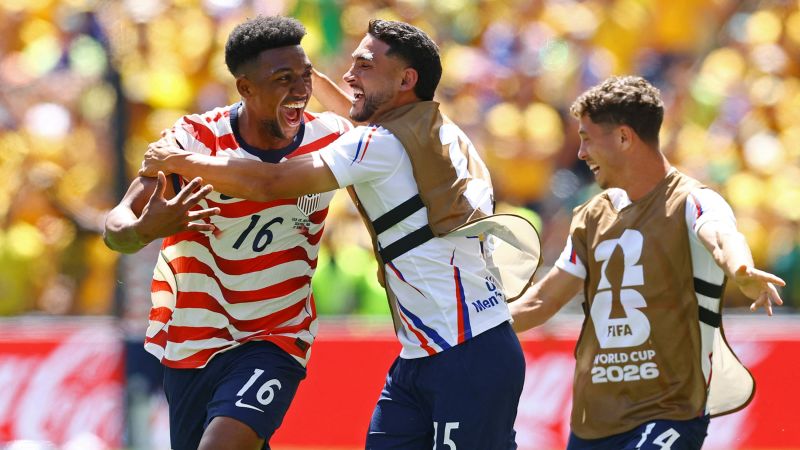
The USA dares to dream the impossible – As the World Cup progressed into its second week, the American soccer team found itself in an unexpected position: on the brink of a historic achievement. Two consecutive victories over Australia and Paraguay have not only secured their place in the knockout rounds but also reignited a conversation that had long been dormant in the soccer community. For the first time since the inaugural tournament in 1930, the United States has managed to win two group-stage matches, a feat that has left fans reeling and analysts debating the implications of this newfound momentum.
A new era of confidence
The recent triumphs have shifted the narrative around American soccer, which has traditionally been viewed as a team of underdogs. While the US has consistently performed well in international competitions, such as the Olympics, where it often competes for top honors, men’s soccer has remained a stage of persistent challenges. This year’s results, however, have sparked a rare sense of optimism, with fans and pundits alike questioning whether the team has finally transcended its reputation as a mid-tier squad.
“The Sméagol-Gollum Dynamic” – a term that captures the duality of American soccer fandom – has taken center stage. On one hand, we acknowledge the long-standing gap between the US and elite soccer nations. On the other, we’re gripped by the belief that this gap might be closing, and that the team could achieve something extraordinary.”
For many loyal supporters, the thrill of World Cup fever has always carried a unique weight. Unlike other sports where the US team often dominates, men’s soccer has been a source of humility for fans. This duality—accepting the team’s limitations while secretly hoping for miracles—is what the author refers to as the Sméagol-Gollum Dynamic. It’s a mental split that has been both a burden and a source of passion for American soccer enthusiasts.
From humble beginnings to bold aspirations
The US team’s journey this tournament has been a slow burn, marked by resilience and strategic execution. After a hard-fought 2-0 win against Australia, they followed it up with a 1-0 victory over Paraguay, ensuring their place at the top of Group D. These results are not just statistical milestones; they symbolize a growing confidence in the team’s ability to compete with the best. Yet, this confidence comes with its own set of questions. Can the US sustain this form against tougher opponents, or is this just a temporary surge?
Historically, the US has struggled against top-tier European teams, often ceding early leads and faltering under pressure. But this tournament has shown a different side of the squad. Their ability to control games, defend effectively, and capitalize on opportunities has led some to argue that the team is no longer just a participant but a contender. The question now is whether this transformation is genuine or merely a product of the tournament’s unique challenges.
The Sméagol-Gollum Dynamic in action
The Sméagol-Gollum Dynamic is more than a metaphor—it’s a reflection of how American soccer fans balance reality with hope. On Friday, the team’s performance gave rise to a flicker of belief, a moment where the Gollum side of the personality emerged. This side is driven by an insatiable desire for success, even if it means temporarily dismissing the team’s historical shortcomings.
“What about that leaky back line?” critics might ask, pointing to past vulnerabilities. Yet, the Gollum side counters with the conviction that the team has the talent and strategy to overcome those weaknesses. It’s a battle of perspectives: one grounded in analysis, the other in aspiration. This dynamic is what keeps the conversation alive, even as the results remain a mix of triumphs and challenges.
Global competition and the road ahead
The World Cup is a stage where the gap between nations is measured in seconds and goals. While the US has made strides, the competition remains fierce. Teams like Germany, which dominated the opening round with a 7-1 dismantling of Curaçao, serve as reminders of the high stakes. The European giants, with their rich histories and deep-rooted traditions, are not easily swayed, and the US will soon face them head-on.
For instance, the Netherlands’ 1-1 draw against Japan, though a point in their favor, highlighted their vulnerability. The ability to concede late goals in a high-pressure match is a concern, especially as they prepare to face Sweden. Meanwhile, Sweden’s 5-1 win over Tunisia has set the stage for a potential clash with the Dutch, one that could decide the group’s fate. These matches are not just about points; they’re about testing the mettle of teams that have long been seen as traditional powerhouses.
As the tournament unfolds, the US team’s next challenge will be a critical test of their newfound confidence. Will they be able to translate their group-stage success into knockout-round brilliance? The answer lies in how they handle the pressure and adapt to the evolving dynamics of the competition. For now, however, the dream remains alive, and the Sméagol-Gollum Dynamic continues to shape the narrative around American soccer.
Footnotes and reflections
For those eager to dive deeper into the US team’s performance, David Close’s analysis from Lumen Field offers valuable insights into their 2-0 victory over Australia. His perspective, rooted in both observation and passion, captures the essence of what fans are feeling: a mix of relief, pride, and anticipation. As the tournament moves forward, the US will face new hurdles, but the momentum they’ve built could be the catalyst for a breakthrough.
While the group stage has been a success, the real test comes in the knockout rounds. Teams like Germany and the Netherlands will bring their full intensity, and the US must rise to the occasion. The journey is far from over, but the dream of a deep World Cup run has taken root, fueled by the Sméagol-Gollum Dynamic. This duality—accepting the challenges while embracing the possibilities—could be the key to unlocking a new chapter in American soccer history.
As the matches continue, one thing is clear: the US team has proven that they are not just capable of competing but of winning. The next steps will determine whether this is the start of a transformative era or a fleeting moment of hope. Either way, the dream is alive, and the soccer world is watching closely.